From theory to practice
When I first heard about the Interreg Volunteer Youth (IVY) programme, I was looking for a way to step out of the purely theoretical world of academia and into something concrete.
As a master’s student in energy engineering and part-time researcher, I had spent the last two years building physical models in simulation environments, running parametric studies, and writing papers that, while rewarding, never left the computer screen. What I was missing was the chance to be part of a real installation, something that actually gets built and makes a difference.
Hi, I’m Greta, and that is exactly what I found with GREENOLIVE, an EU-funded project under the Interreg NEXT MED programme.
I joined the team at the Rome branch of Università eCampus as a volunteer in December 2025. My role is twofold: supporting the modelling activities that shape the technical development of the project, and helping with communication, making sure the project’s story reaches the right audiences. So what is the project trying to solve exactly? The answer, it turns out, involves a pile of hot rubble.
A pile of hot rubble
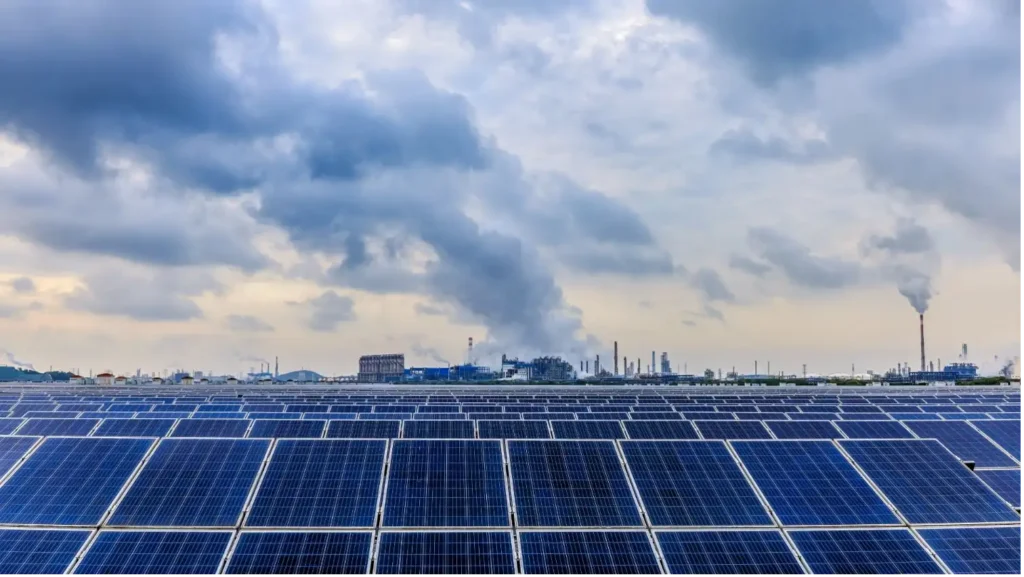
The electrification of industrial heat is, on its face, simple: replace a gas burner with an electric resistance heater or a heat pump. The economic case gets stronger every year as natural gas prices grow more volatile and carbon regulations tighten. But when electricity comes from photovoltaic (PV) panels, a fundamental problem appears: power output is intermittent, while a factory process line needs it around the clock.
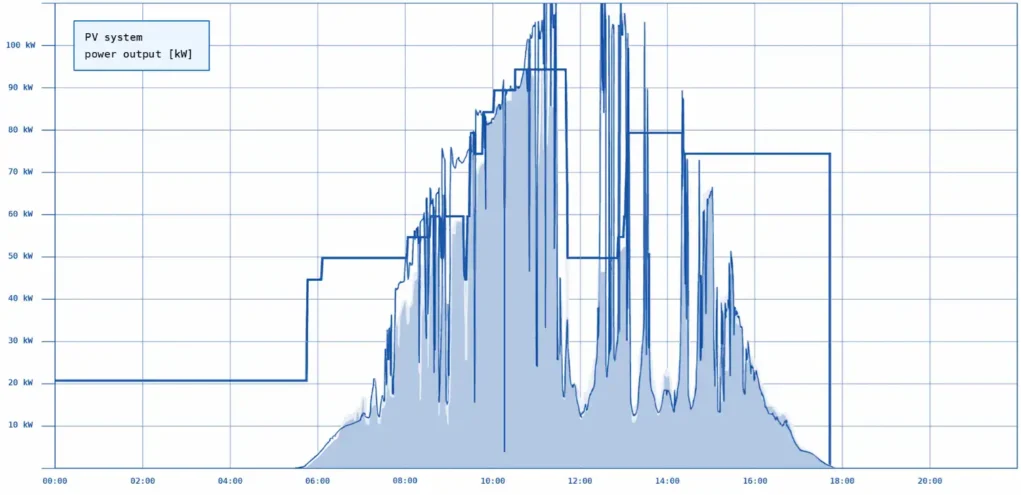
Conventional electrochemical batteries are expensive, resource-dependent, and hard to recycle. GREENOLIVE offers a simpler alternative: storing solar heat directly in a bed of hot rocks at ~300°C. Instead of costly ceramics or molten salts, the system uses locally sourced industrial waste, providing an affordable, circular solution to thermal energy storage.
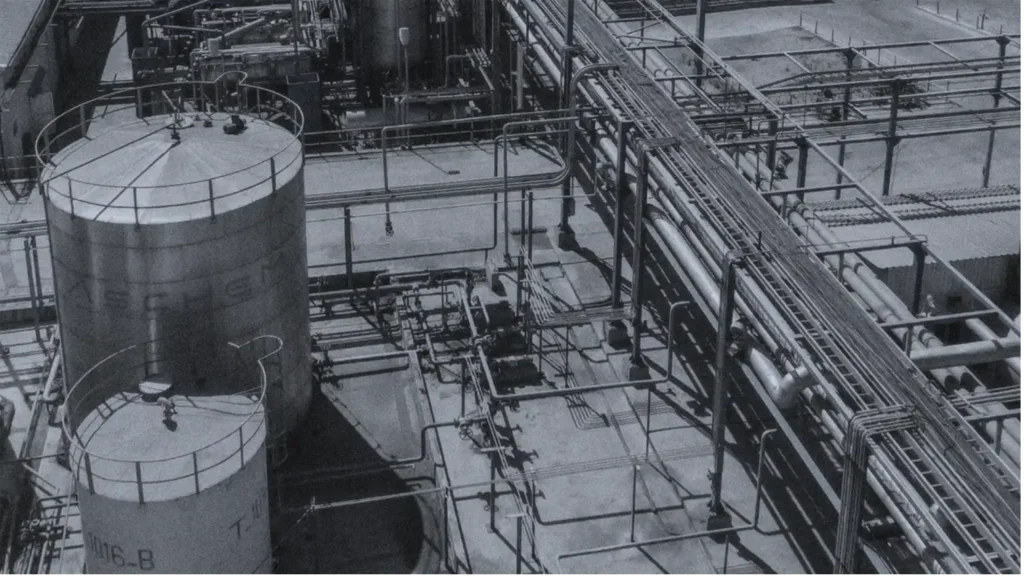
A 600 kW PV pilot is currently being installed at ASCHEM Petrochemical in Türkiye, expected to cut process natural gas consumption by 20%, with smaller open-lab versions under construction in Egypt and Palestine. Ultimately, GREENOLIVE proves that effective decarbonization doesn’t require rare materials or complex supply chains, just robust, locally built technology that handles renewable intermittency without creating new dependencies.
Cross-border dimension
The project consortium includes partners in Italy, Türkiye, Spain, France, Egypt, and Palestine. Each team has its own schedule, priorities, and other projects. Being in different locations means communication is mostly by email, and it takes effort to keep everyone aligned. Coordination can be slow at times, and not everyone is updated on every detail, which is normal when people are juggling multiple responsibilities. Learning to navigate that dynamic has been a useful lesson. The Mediterranean dimension adds a layer of distance, but it also brings together people who share a common technical language and are genuinely interested in making the project work.
Multidisciplinary mix
Writing articles and newsletters is not really my thing, as plain language does not come to me as naturally as I would like it. However, over the past few months I have come to see why it matters, and I have made my peace with not being brilliant at it. If we build a system but nobody knows about it, the impact is limited. Helping to tell the story of GREENOLIVE has forced me to think about who our stakeholders are, what they need to hear, and how to reach them. It is a different kind of challenge, but one that has made me more well-rounded.
Looking ahead
My placement is still ongoing, and there is plenty to do. The pilot plant in Türkiye is moving toward procurement and installation, the laboratory-scale replicas are taking shape in Egypt, and we are preparing for the next round of dissemination events. I am glad to be part of it.
If there is one thing I would tell other young people considering the IVY programme, it is this: expect to be taken outside your comfort zone, and treat that as the point. I came here to see a real system get built. I ended up also learning how to talk about it, how to work across borders and time zones, and how to be useful in ways I had not anticipated. That breadth is the experience.
– Greta, IVY Project Partner at eCampus University, for the Interreg NEXT MED project GREENOLIVE