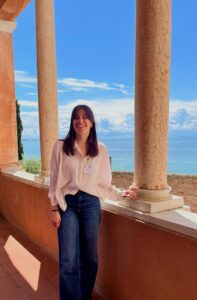
Borders as Connecting Lines: My IVY Experience at Interreg Italy-Croatia
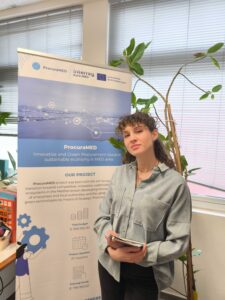
When we learn about borders in Italian school, we are usually taught something along the lines of: “Italy is separated from France by the Alps”, or “Croatia and Italy are separated by the Adriatic Sea”. Borders are described as barriers, stressing the separation of territories. As natural dividers drawn across maps in thick ink. But volunteering at the Interreg Italy-Croatia Programme Managing Authority contributed to changing that perspective. The Role of the Programme Interreg Programmes exists to turn geographical proximity into structured cooperation, pursuing a simple but ambitious goal: tackle shared challenges and promote sustainable development. In short, it helps territories work together not despite the border, but because of it. From the Italian coast, Croatia is not some distant “other side”. The similarities are visible in the mirrored landscapes, in the shared maritime culture, and even in the challenges both sides face: environmental protection, sustainable tourism, blue economy innovation and climate change adaptation. For this reason, the Adriatic should feel more like a bridge, rather than a wall. My Contribution as IVY Reporter: Communication & Events My journey with Interreg started almost by chance. Passing by the Programme headquarters in Venice on my way to university, I noticed the banner outside, looked it up, and soon discovered the world of cross-border cooperation. After completing an internship at the Managing Authority, I continued my experience through the Interreg Volunteer Youth initiative as an IVY Reporter. As a volunteer, I mainly support communication activities and event organisation. One of my first experiences was co-organising the Mediterranean Multi-Programme Meeting in Venice, which brought together 10 Interreg Programmes from across the Mediterranean. Seeing representatives exchange ideas and build synergies made cooperation feel real. Soon after, I participated in Job&Orienta in Verona, where, together with former volunteers, we presented the IVY experience to students. Many had never heard of Interreg before, yet the idea of working across countries on common challenges immediately sparked interest. Moments like this show how important it is to connect young people with European opportunities early on. Over time, I became more involved with Programme projects, supporting seminars for project representatives, organising project study visits for the Monitoring Committee – the Programme’s main decision body – and taking part in initiatives focused on innovation and artificial intelligence. This experience culminated in the conference “Artificial Intelligence, Blue Economy & Interreg Synergies”, held in Bologna in February 2026, which gathered over 200 participants from institutions, research centres and European stakeholders. Finally, I’ve also developed practical skills, like graphic design. I even produced a booklet showcasing Small-Scale Projects, which has already been shared with beneficiaries and is available on the Programme’s website. Through the continuous exchange with the team, I’ve come to understand that communication goes far beyond what we think. It’s not just about promoting projects and Programme initiatives, but about making cooperation understandable and meaningful. The way we communicate ultimately shapes how policies and joint efforts are perceived and valued, helping build a broader understanding of why cross-border cooperation truly matters. Who benefits? The beneficiaries are multiple. Local communities benefit from environmental protection measures and innovation in maritime sectors, SMEs gain access to networks and funding opportunities, public institutions improve their capacity to work across borders, researchers collaborate on shared challenges and young people discover European opportunities they did not know existed. And yes, volunteers like me benefit too. Through Interact courses on social media and storytelling, through hands-on event organisation, through exposure to EU governance in practice, my education in International Relations has moved way beyond theory. A Different Way to See Borders Before this experience, to me a border was a line on a map. Now it feels like a space of interaction. Turns out that sometimes the most ordinary discovery, like noticing a banner on your way to class, can quietly change the way you see an entire region and guide you toward a path you never expected to follow. – Elisa, IVY Reporter for MA Interreg Italy-Croatia.