Did you know that Luxembourg’s population is expected to grow almost 50% by 2060? It is in response to challenges such as these that the Interreg project LATI – Laboratory for Territorial Intelligence was created.
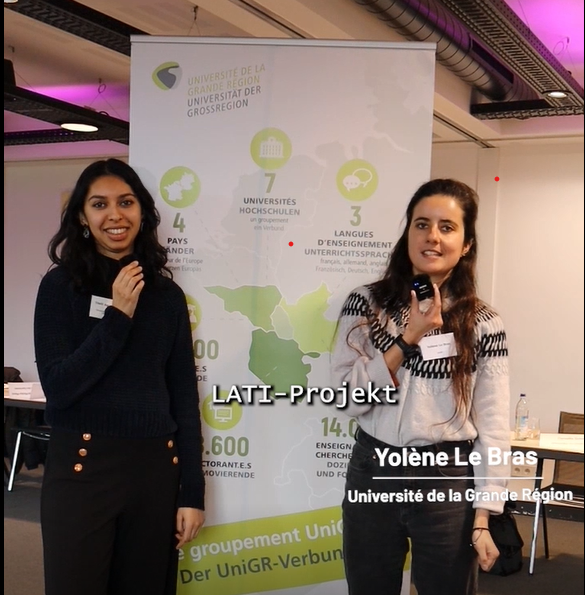
Hallo zusammen! My name is Yolène and I’m from France (de Bretagne pour être précise, la plus belle région du monde ! 😉). I would like to tell you a little more about this project, for which I’m currently volunteering as an IVY at the University of the Greater Region in Saarbrücken, Germany.
First of all, what is the Greater Region?
The Greater Region is a cross-border cooperation area in the heart of Europe, bringing together territories from four countries:
- Germany: Saarland – where I’m working! – and Rhineland-Palatinate
- France: Lorraine and Grand Est
- Belgium: Wallonia, the Wallonia-Brussels Federation and the German-speaking Community
- Luxembourg
The University of the Greater Region (UniGR) is a network of universities located within this territory.
What is the aim of the LATI project and who is involved?
The LATI project brings together cities, municipalities, researchers and citizens from the Greater Region to jointly shape the territorial development of the future. It aims to create practical solutions to current challenges such as climate change, land consumption and mobility. This cross-border cooperation requires multilingual communication, which is also an important aspect of the LATI project.
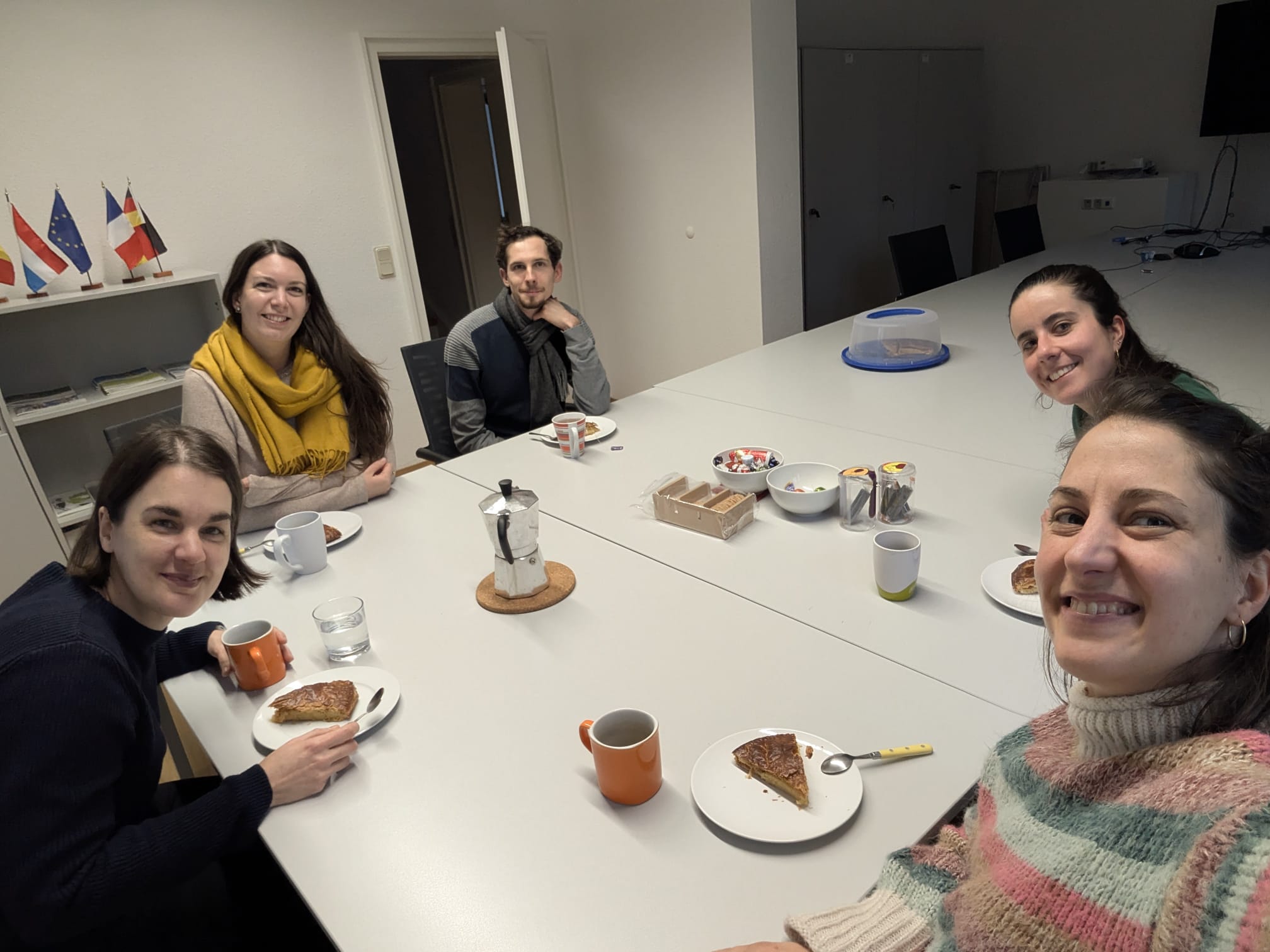
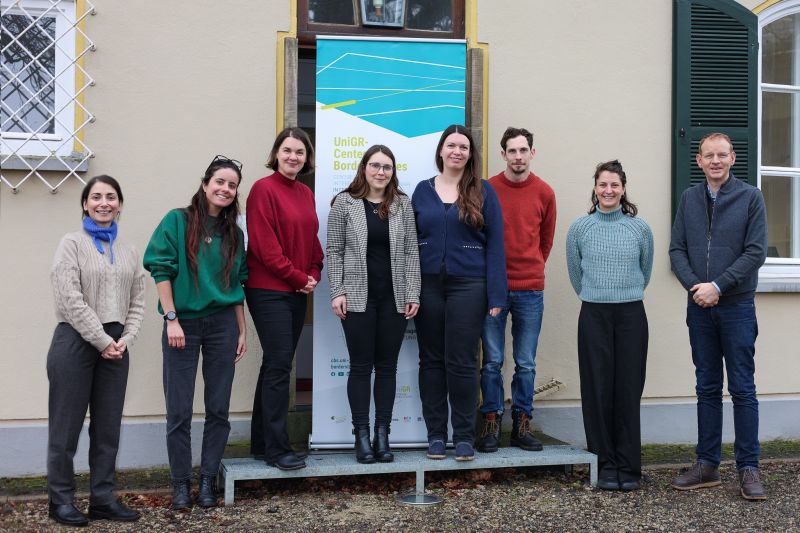
LATI is a partnership between the six member universities of UniGR and many strategic partners from the political and administrative spheres. UniGR is the lead partner, so by working there I have a broad overview of the project and its partners – a real advantage for the role I was given…
My role in the UniGR and LATI teams
I support LATI mainly in terms of communication. Because having a project is one thing… but making it known and understandable to everyone is even better!
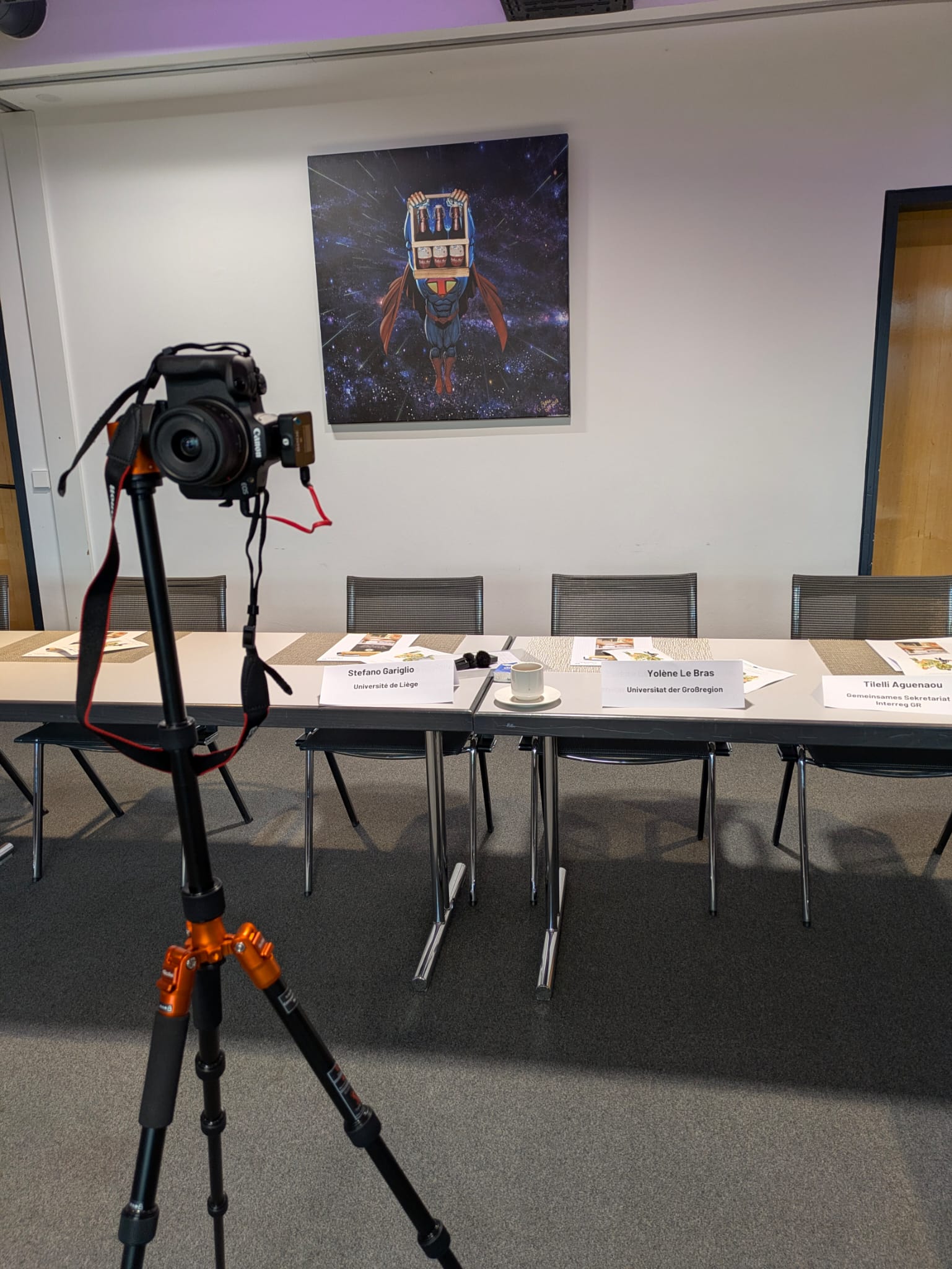
Writing contributions for the website in German, French and English, creating posts for social media, taking pictures during workshops on spatial planning, designing visuals such as posters or brochures, conducting short interviews during the project monitoring committee meetings to introduce the LATI team… my tasks are quite diverse. However, the goal remains the same: to raise awareness of the project’s objectives among as many people as possible.
After a year in the European Solidarity Corps in Germany and an internship at a Luxembourg newspaper, this IVY project is a new opportunity for me to work in an international environment. In addition to improving my language skills, I am developing my writing and graphic design abilities, as well as learning to use various software programs. Step by step, I am also learning to take a more critical look at my own work in order to refine it and achieve higher-quality results.
The importance of cross-border projects
It was during my Franco-German master’s degree in “Cross-border Communication and Cooperation” that I first heard about Interreg projects. Taking part in them made me realize how much organization cross-border projects require, including aspects such as simultaneous interpretation or multilingual glossaries for technical terms.
A cross-border project also relies on effective coordination and trust-based partnerships – trust that has developed over time, as UniGR partners have been collaborating for more than 15 years.
I also realized that cross-border projects exist not only because they are geographically convenient, but also because they provide enriching experiences. By working together, project partners compare perspectives from different cultures, build on what already works in one country and avoid approaches that have proven unsuccessful elsewhere.
This knowledge-sharing is reflected in a compilation of spatial planning documents from every country in the Greater Region. The aim is to better understand how others work and thereby contribute to a more united and sustainable Europe.
In this way, I believe that in 2026 – with environmental policies under threat and nationalist sentiment on the rise – being part of a project like LATI is a way of responding to these challenges. I encourage everyone to try the IVY experience and become part of Europe!
– Yolène, IVY Project Partner at UniGr – Université de la Grande Région, for the Interreg project LATI, under the programme Interreg France-Belgium-Germany-Luxembourg (Grande Région/Großregion).