The most valuable lesson I have learned through my IVY experience is how European cooperation steps in to solve very concrete problems, especially when it comes to cross-border mobility. It is easier and easier to travel across Europe by public transport, but travellers may still face difficulties when crossing borders, depending on how well neighbouring countries and their national railways work together. Ticketing systems have to be harmonised, timetables coordinated to have reasonable waiting times for connections and technical issues addressed, like the different voltage systems used on each side of the border.
These problems are shared by many European countries. That’s why seven partners from six different countries joined forces to launch the Interreg project CROSUSMOB, within the Interreg Europe Programme. Their countries don’t border one another, but each of them has border regions where crossing the border can be difficult. By sharing their experiences, the project aims to improve public policies on cross-border mobility at different levels, to meet local needs and make public transport a more attractive, competitive and sustainable option. Those who benefit most from smoother cross-border connections are everyday workers and students who commute between countries, especially those who live in less well-connected areas, as well as tourists.
The keywords of CROSUSMOB are interoperability and coordination at multiple levels. On the one hand, the project partners work with local stakeholders and with political and technical actors on both sides of their border to make medium- and long-term plans concerning infrastructure and transport service. On the other hand, the partners collaborate closely and regularly among themselves. To see first-hand the cross-border transport services in place and to talk face to face, the partners organise one field visit per semester, each time hosted by a different partner. The partner organising the field visit welcomes a delegation of the other partners and stakeholders and takes them on a cross-border trip by bus or train, to show the difficulties of its border region, the solutions found so far and future projects to improve mobility across the border. In this way partners get to know each other’s situations and can be inspired by solutions that could work in their own territory.
As an IVY project partner, I collected and analysed data on cross-border mobility in the territory between the Alpes-Maritimes, Monaco and the Province of Imperia. Gathering data on each side of the border was essential to understand the importance of connections in a context where several borders meet. The territory was challenging because the coast is heavily trafficked and served by trains used by French and Italian commuters and by tourists, especially towards Monaco. Monaco is a major employment hub, yet its only railway station is served by the French line, hence the Principality relies entirely on another country’s railway service to bring its workers in. The French railway also serves Ventimiglia station, so it actually connects three countries. To complete the picture, I interviewed municipalities, local stakeholders and commuters to understand their views on the transport service provided.
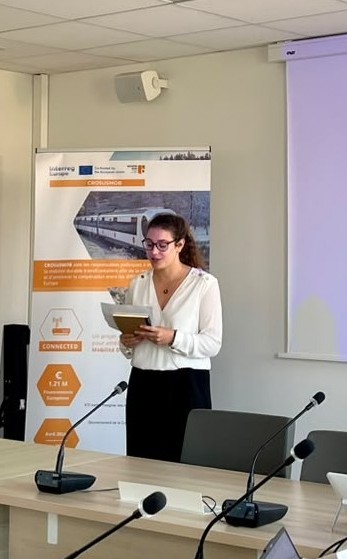
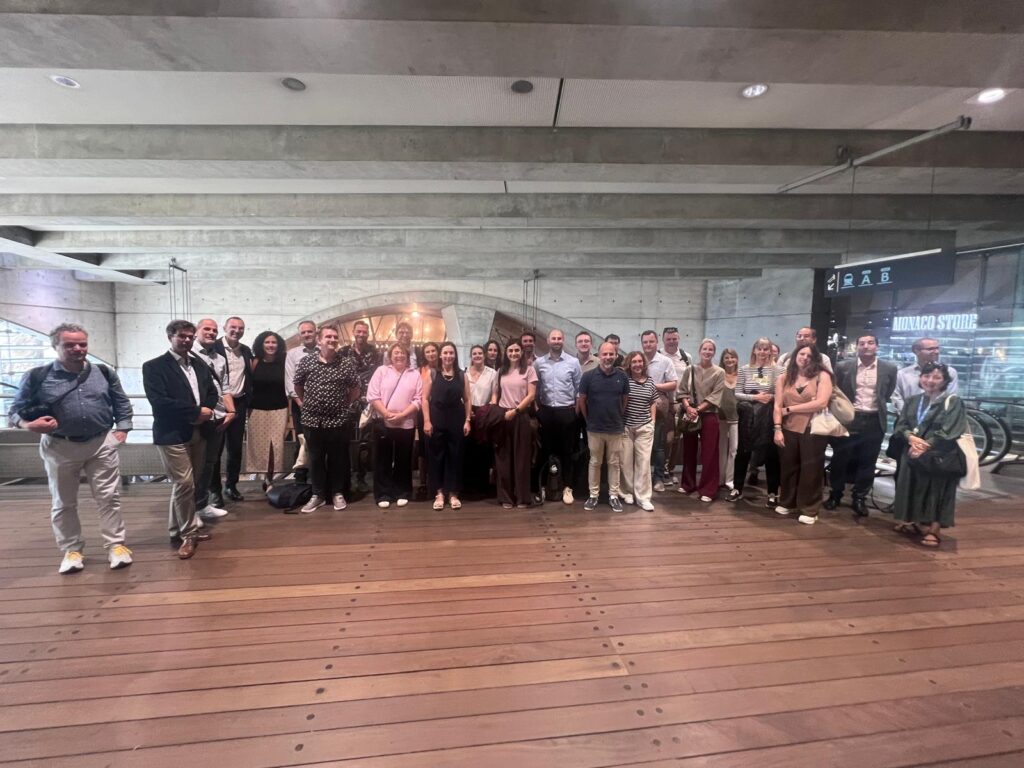
I also took part in the last field visit in Nice, hosted by the Provence-Alpes-Côte d’Azur Region and it was a great chance to meet partners and stakeholders in person, join the trip and attend the meetings. Behind the scenes, I helped organise the event in the weeks before. I stayed in touch with partners and stakeholders, prepared the agenda and the paperwork and worked on the translation of the speeches so that everyone could follow the discussions. I am grateful for the IVY experience which let me take part in this event and see European cooperation from the inside.
– Anna, IVY Project Partner at Region Provence-Alpes-Côte d’Azur – SUD, for the Interreg Europe project CROSUSMOB – Fostering Crossborder Mobility