What is Living Treasures?
Living Treasures is an Interreg-funded Czech–Austrian project tackling one of the quieter biodiversity crises: the disappearance of rheophilic and limnophilic fish species from upper and middle river reaches and adjacent pools. The project’s goal is to support biological diversity in these waterways and to raise awareness among river managers, watershed authorities, and land administrators about what is at stake. It does so through detailed field data collection, species monitoring, shared databases, and the exchange of best practices in river and habitat management.
The real added value lies in the cross-border collaboration between expert teams in hydrology, ichthyology, and limnology on both sides of the Czech–Austrian border. Because rivers, like fish, don’t stop at national borders.
The Team I Work With
Within Living Treasures, I am part of the Zachraň karase! (“Save the Crucian Carp!”) team, which is a Czech initiative dedicated to the protection of the crucian carp (Carassius carassius), once one of the most common fish in village ponds and backwater pools across Central Europe, and today critically threatened.
The story of the crucian carp’s decline is a striking example of how human changes to the landscape ripple through entire ecosystems. The straightening of rivers, intensive pond management, and the introduction of invasive species, particularly the Prussian carp (Carassius gibelio), which reproduces through gynogenesis and outcompetes the native crucian carp. My team’s work is to map remaining populations, identify suitable localities for reintroduction, and build the scientific and public foundation needed to bring this species back.
What I Actually Do
Field and Lab Work
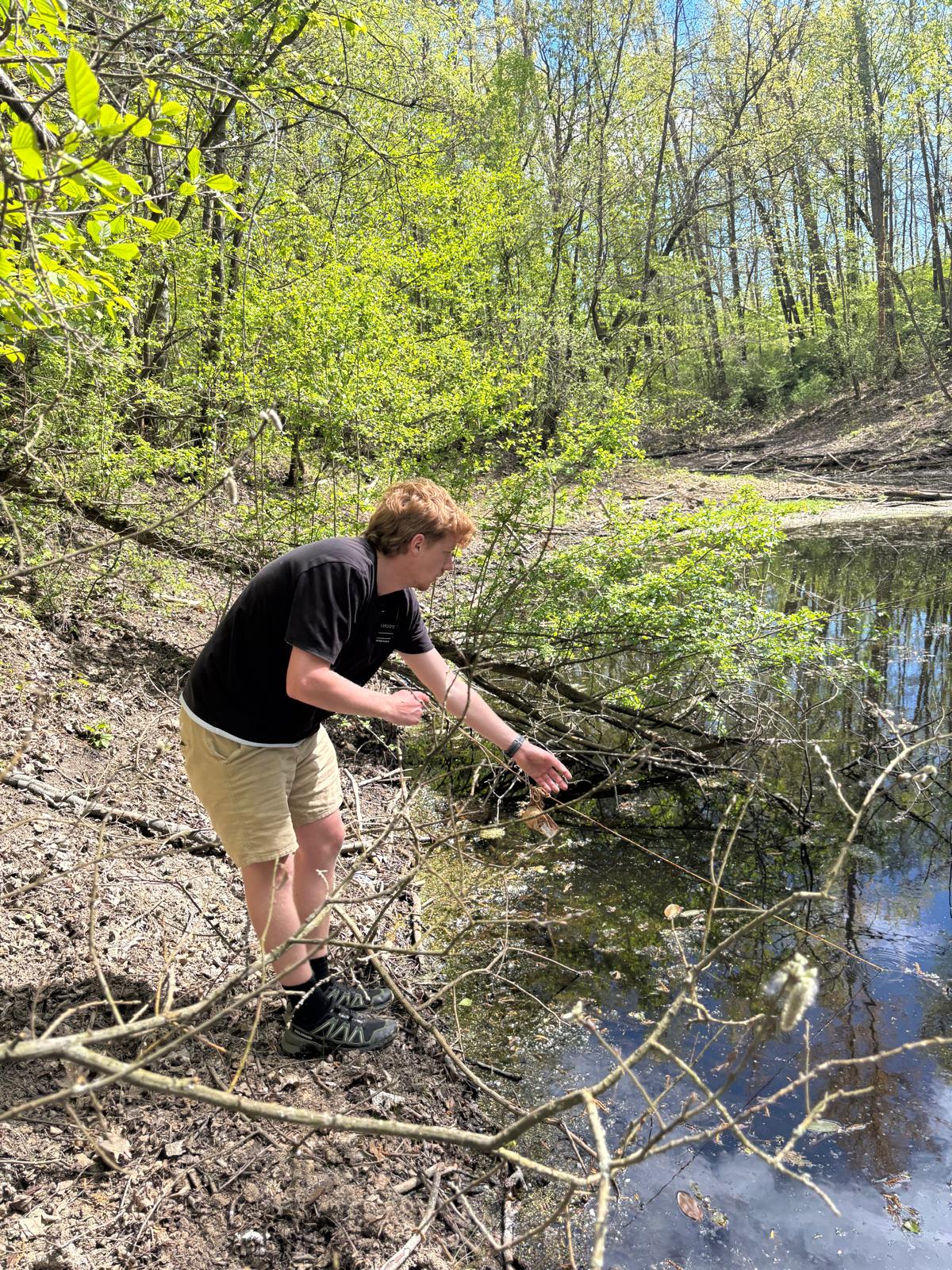
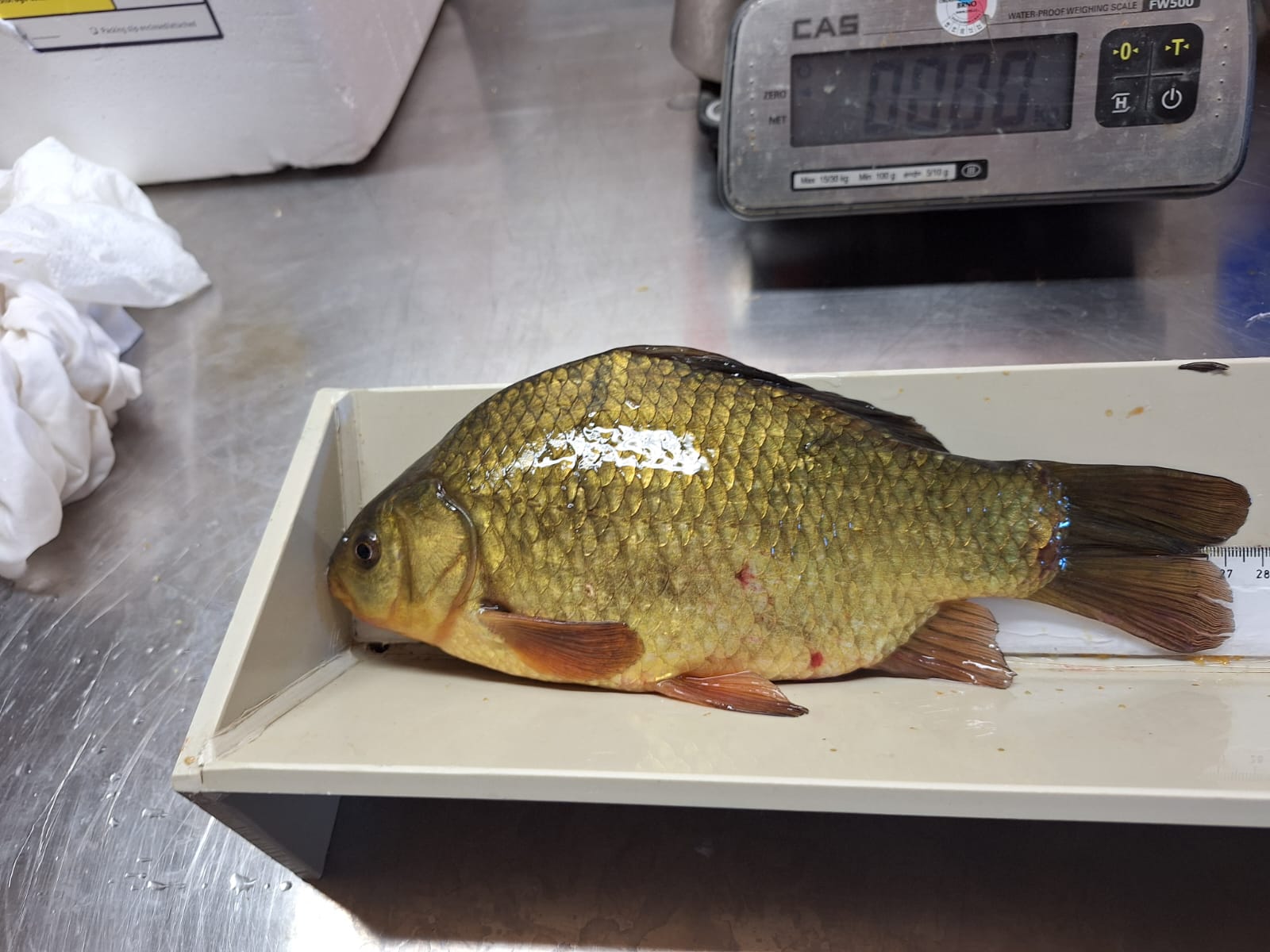
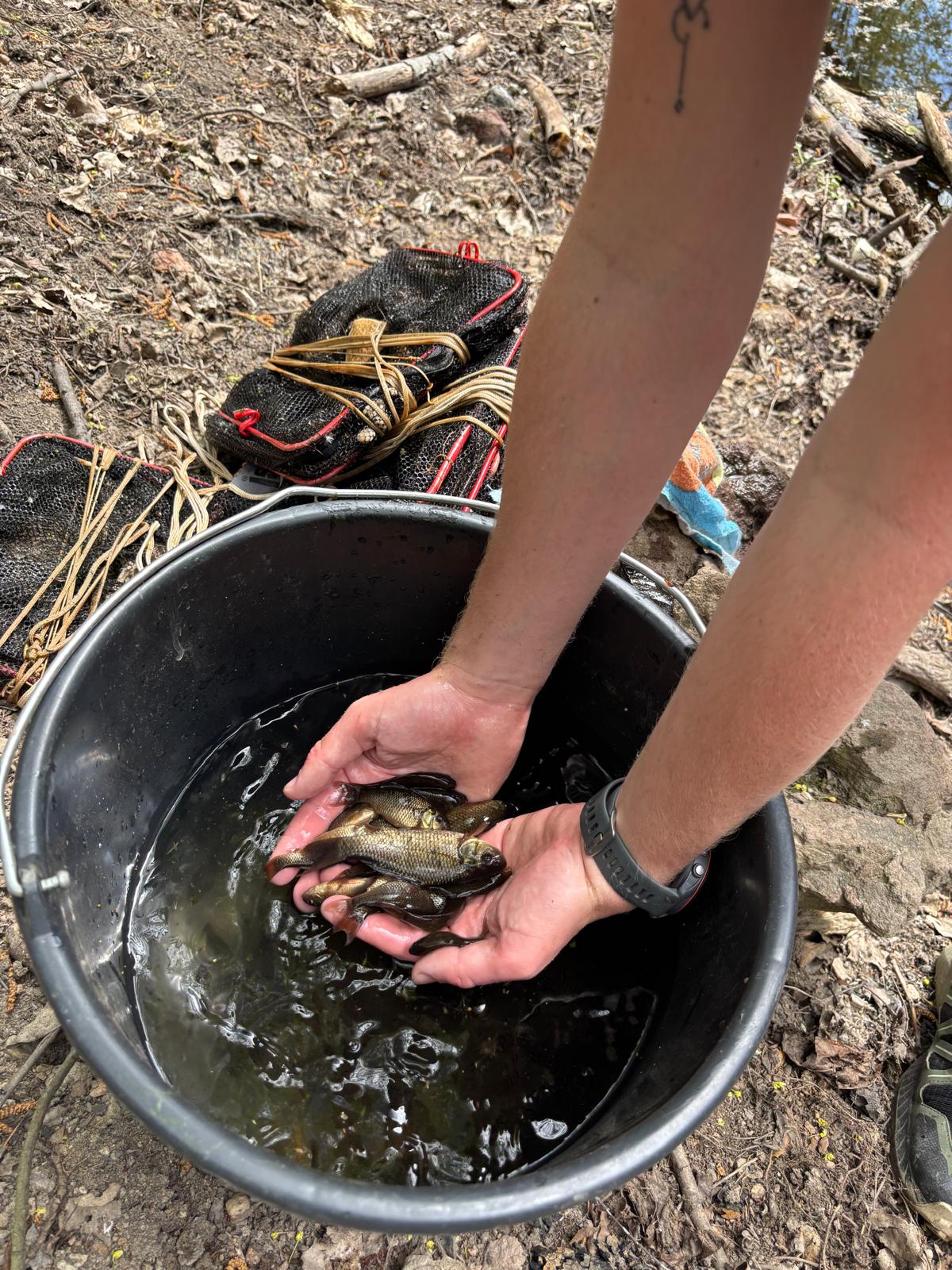
A significant part of my time is spent assisting the team during fieldwork: visiting ponds, backwaters, and other aquatic sites, helping with sampling equipment, and observing species directly in their habitats. Identifying a genuine crucian population, which is distinct from the invasive Prussian carp, can be tricky since they look deceptively similar. Consequently, it requires careful observation and methodical work. Back in the lab, I support basic data processing, help organise the datasets collected in the field, and prepare materials for analysis.
Meetings and Coordination
I participate in team meetings and contribute to the overall coordination of project activities, including note-taking and administrative support. Later this year, a joint meeting with the Austrian project partners is planned. This is an opportunity I am looking forward to, as it will give me a first-hand look at how the cross-border dimension of Interreg cooperation works in practice.
Communicating Science to the Public
One of the core expectations of my IVY placement is to help convey scientific results to the general public in an understandable form. This is a skill the project crucially needs, and preparing for it has been part of my work from the beginning.
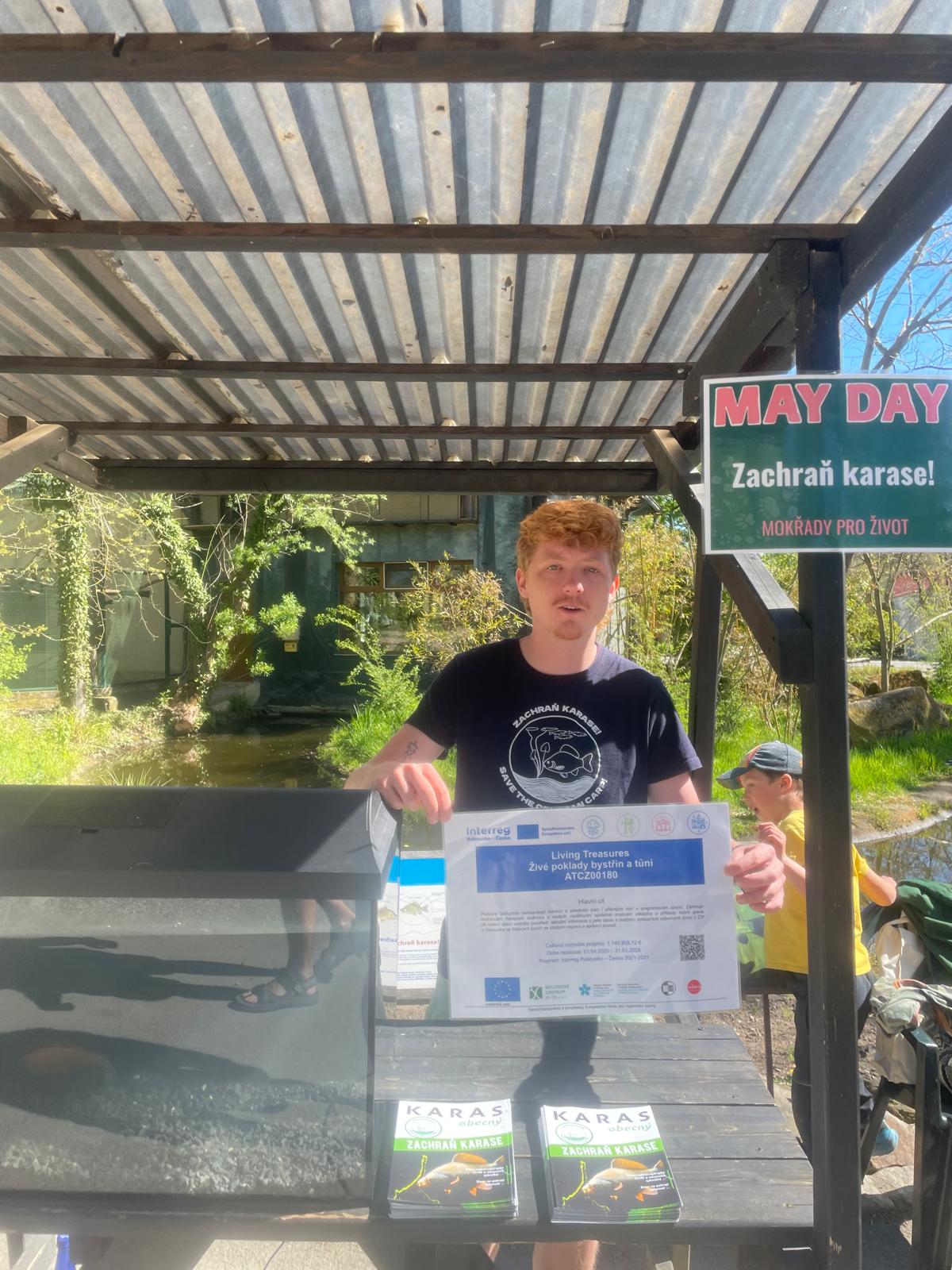
The “Wetlands for Life” event, part of the MAYDAY initiative held at Pilsen Zoo, was a direct application of that preparation. Working in the field, surrounded by the very wetland habitat that crucian carp depend on, I had the opportunity to engage with local communities, school groups, and families explaining what is at stake and why a fish that most people have never heard of matters for the health of the broader landscape.
Furthermore, the crucian carp is not just a conservation target. It is an indicator species. Where crucian carp survive, it usually means the pond or pool is in reasonably good ecological shape. It means that it is unpolluted, with healthy vegetation, with space for other species too. Helping people understand that connection (from a single fish to a whole ecosystem) is exactly the kind of science communication this project needs, and that IVY is asking me to develop.
Who Benefits from my work?
The direct beneficiaries of Living Treasures are the species themselves. Crucian carp, but also the weatherfish, sunbleak, and other threatened fish that share the same habitats. Beyond that, the project’s work reaches river managers, watershed authorities, and land administrators who gain practical, evidence-based tools for better decision-making. Schools and local communities gain awareness. And the broader region gains a shared framework for protecting ecosystems that transcend administrative boundaries.
Interreg and EU Cohesion Policy exist precisely for challenges like this: shared ecosystems that need shared solutions. Living Treasures is a practical, working example of that principle. For me personally, this placement has deepened my understanding of what science is actually for. It is not only about producing data, but it is more about using knowledge in service of something larger.
– Aleš, IVY Project Partner at the Biologické centrum AV ČR / Biology Center CAS, for the Interreg project Living Treasures, under the programme Interreg Austria-Czechia.