Category: Sin categoría

Small islands in the dialogue for nature

My name is Ambre Badiqué. I am currently doing a volunteering experience as an Interreg Project Partner under the AEBR’s IVY programme with the NGO SMILO (Small Islands Organisation) in Marseille. As part of my academic studies, I did a double degree with TBS Education and Sciences Po Toulouse to obtain a Master’s in Management and a Master’s in European Affairs.   Since January this year, I have been working for SMILO, an NGO that supports small islands around the world in the sustainable management of their resources and the protection of their environments, both marine and terrestrial, through 5 areas: waste, water & sanitation, energy, biodiversity and landscape. I am responsible for following up the Dialogue4Nature (D4N) project, which is an institutional dialogue project under the European Interreg Euro-Med programme funded by the European Regional Development Fund (ERDF) as part of the cohesion policy. As a reminder, Interreg Euro-Med is a European Territorial Cooperation Programme which aims to make the Mediterranean region “smarter”, “greener” and to improve governance between its stakeholders. The 7-year budget for this programme is 294 million euros. 14 countries on the northern shore of the Mediterranean are taking part: 10 EU Member States and 4 countries benefiting from the Instrument for Pre-Accession Assistance. The programme is divided into 4 missions: Strengthening the innovative sustainable economy Protecting, restoring and enhancing the natural environment and our heritage Promoting green living areas Improving sustainable tourism   The projects financed under this programme are either thematic projects directly linked to the 4 missions above or governance projects which are community or institutional dialogue projects and which oversee the thematic projects.   The D4N project aims to optimise the transfer and integration of the results of the 13 thematic projects selected for the Interreg Euro-Med mission “Protecting, restoring and enhancing the natural environment and our heritage” into public policies and practices. Within the framework of the project, the NGO SMILO is an associate partner of Plan Bleu, which is a partner in the D4N project. Plan Bleu is working alongside the Region of Crete, which is the project’s lead partner, as well as the IUCN, MedCities, the Autonomous Region of Sardinia, the Marine Institute in Croatia and the Ministry of Ecology, Planning and Urban Development in Montenegro. The 13 thematic projects are divided into three types: 3 study projects, 8 test projects and 2 transfer projects. They meet 2 specific objectives of the programme. There are 5 projects O.S 2.4: Promote adaptation to climate change and disaster risk prevention, resilience, taking into account nature-based approaches (priority “A greener Mediterranean”) and there are 8 projects O.S 2.7: Strengthen the protection and conservation of nature, biodiversity and green infrastructure, including in urban areas, and reduce all forms of pollution. (Priority for a greener Mediterranean). In order to analyse how SMILO could support Plan Bleu in this institutional dialogue project, the first thing to do was to look at the issues addressed and the link with SMILO, so as to be able to contribute actively to the D4N project.   The 6 areas are the following: Managing the risks associated with the effects of climate change, Protecting and restoring the marine environment Reducing human pressures on coastal zones Solutions and tools for wetlands Forest management Soil carbon capture   Of the 6 topics, the first 3 are dealt with by SMILO as part of its work with the islands in its network. Under the topic of “managing the risks associated with the effects of climate change”, the projects deal with drought, flooding, rising sea levels and fires. These are risks on which SMILO is working with the islands in its network, as they are highly vulnerable to the consequences of climate change and need to develop resilience. It could therefore be interesting to discuss these projects with their managers in order to exchange best practice, to see what has already been put in place on the SMILO islands and to see how the specific nature of islands can be integrated into their projects.   Under the theme of “protecting and restoring the marine environment”, projects focus on marine protected areas (MPAs) and Posidonia meadows. Many of the SMILO islands have MPAs. We will therefore be able to contribute to the project on these areas.   Finally, with regard to the topic of “Reducing human pressures on coastal areas”, one project focuses on the sustainability of ports, an element that is always present in our islands. Increased collaboration between the stakeholders of this project and SMILO will therefore be relevant.   At the moment, the 13 thematic projects are only just beginning, and so is D4N. In order to promote the integration of results into public policies, the stakeholders in the 13 projects will soon be brought together in 4 working groups, namely “Conservation by area”, “Adaptation to climate change and mitigation”, “Assessment of the socio-economic value of biodiversity” and “Ecosystem restoration and nature-based solutions”. I will be taking part in these groups to see how SMILO can make its contribution by integrating issues relating to island territories into the discussions. – Ambre, IVY Project Partner for the Interreg Euro-MED project “Dialogue4Med Nature” at the Small Islands Organisation (SMILO) Discover more about the Interreg project Dialogue4Med Nature Click Here Discover more about our host organisation Small Islands Organisation – SMILO Click Here
Read More >

Decision-Making Youth for CB-COOPeration (DEMY-Coop) project to boost youth engagement in the Italy-Croatia cooperation area

Greetings everyone, I am Maria Antonietta, proudly serving as an IVY Volunteer for the Interreg CBC Italy-Croatia DEMY-Coop Project. The project takes steps from the results of the AI-NURECC PLUS project, a joint initiative of the key EUSAIR local and regional stakeholders, aimed, among other things, at supporting a greater and more meaningful youth engagement in the Strategy and at placing young people at the heart of territorial cooperation.   Our project endeavors to capitalize these results by forging robust partnerships between local authorities and youth organisations in Italy and Croatia, with a view to amplify the voices of young people in shaping strategic decision-making processes related to the EUSAIR. At its core, DEMY-Coop pioneers a novel approach to governance—one that champions participation and transcends borders. Through collaborative endeavors, the project aspires to cultivate a shared understanding, fostering synergy between policymakers and youth. The focus lies in making informed choices regarding policies and actions that directly impact the lives of young people. Our comprehensive suite of activities spans awareness-building efforts aimed at both youth and decision-makers alike. By illuminating the intrinsic value of involving young voices in decision-making, we strive to engender a culture of inclusivity and engagement. Moreover, DEMY-Coop seeks to empower local and regional public authorities by equipping them with the tools to navigate legal, administrative, and cultural impediments to participatory governance models effectively. In parallel, our project endeavors to equip young people with the knowledge and skills necessary to navigate the landscape of territorial cooperation and macro-regional processes. By facilitating access to opportunities, we aim to empower youth to become active participants in shaping the future of their communities. Join us on this transformative journey as we pave the way for a more inclusive and collaborative approach to decision-making. Together, let us build a brighter future, where the voices of youth resonate loud and clear across borders. I was in charge of and supported the implementation of the DEMY-COOP project with particular reference to involvement and communication activities. Specifically, during these three months, I supported the project through these tasks and activities: Participation to project meetings, relating with project partners and stakeholders; Support to the mapping and selection of youth organizations in partners areas; Support to the implementation of an awareness raising campaign, including the creation of a project’s graphic image and communication messages Creation of content for the project website with information regarding the project activities and management of project social media. Here are the networks where you can follow us: Website www.italy-croatia.eu/web/demycoop Facebook page: Interreg DEMY-Coop project Thanks to IVY, I am broadening my knowledge of Cohesion Policy and Territorial Cooperation, and I will also have the opportunity to travel between Italy and Croatia, to network with other young people and to practice soft skills (communication and digital, using a foreign language, meeting other young people) and technical skills (supporting with project implementation and more). I am very grateful for this opportunity and at the same time I am thankful for the chance to broaden my knowledge in the world of Interreg projects, which can open new horizons for my studies and work. – Maria Antonietta D’A., IVY Project Partner at Eurelations Eeuropean Economic Interest Grouping – Eurelations EEIG for the Interreg Italy-Croatia project DEMY-COOP Discover more about Interreg project DEMY-Coop Click Here Discover more about Host Organization EURELATIONS Click Here

Read More >

My IVY experience at POCTEFA

It has been two months since I assumed the role of IVY Reporter at the Joint Secretariat POCTEFA as part of the Interreg Volunteer Youth (IVY) Program. The Joint Secretariat POCTEFA is located in Jaca, a small town in the heart of the Pyrenees, which will be my home until the end of May. Interreg POCTEFA is a European cross-border territorial cooperation program between Spain, France, and Andorra. POCTEFA’s main aim is to expand the economic and social integration of this area by co-financing cross-border cooperation projects lead by actors from both sides of the Pyrenees and from the coastal areas participating in the Program. Over the past two months, I have acclimated to a new professional environment while gaining insights into European funding and cooperation. My primary contributions have been in the Communication and Finances department, working both in Spanish and French. Thus far, this experience has proven to be a noteworthy professional journey, introducing me not only to the realm of European cooperation but also demonstrating the practical and beneficial impacts of European funds on the daily lives of inhabitants of the area. Regarding the latter, I recently assisted to the opening of the Centro de interpretación del Camino de Santiago in Jaca as part of the Jacob@ccess project co-financed by Interreg POCTEFA during the period 2014-2020. This project aims to make the Camino de Santiago accessible to people with physical and mental disabilities and represents one of the multiple examples in which European funds and cooperation help to improve the quality of life of the area’s inhabitants. I would also like to highlight that as part of my participation on the IVY Program, I was recently invited by the Interact Program to share my experience as an IVY Reporter during the XVIII Jornadas of the CIPFP Ausiàs March in València. Throughout the day, representatives from various European initiatives and opportunities provided information to young attendees about mobility opportunities in Europe. Having the opportunity to inspire young students and future leaders filled my heart as I strongly believe that Interreg is an exceptional program that deserves broader recognition. – Marina Alda L., IVY Reporter at the Joint Secretariat Interreg Spain-France-Andorra POCTEFA Discover more about Interreg POCTEFA Click Here

Read More >

Volunteering for the Interreg Europe project CEI BOOST

The CEI BOOST Interreg project represents a strategic initiative aimed at harmonizing the twin transitions towards green growth and digital transformation across Europe. By aligning regional policies with EU objectives such as the Green Deal and the Digital Agenda, the project seeks to drive sustainable economic development. At its core, CEI BOOST focuses on enhancing policies and fostering the application of emerging digital innovations to support the growth of the circular economy. This involves collaborative efforts among diverse stakeholders, including policymakers, industry leaders, and innovation ecosystem actors, to improve policy conditions and promote the adoption of circular business models through digitalization. Through a comprehensive approach, CEI BOOST aims to strengthen regional digital and circular innovation ecosystems, particularly in non-metropolitan, rural, and emerging regions. By investigating, testing, and adapting intervention approaches, the project seeks to address challenges and optimize resource use within industries. Partnerships play a crucial role in the project’s success, with knowledge exchange, testing, and adaptation, as well as policy advocacy, forming the basis of collaboration among project partners. Ultimately, the project benefits regions, industries, businesses, and policymakers by enhancing competitiveness, fostering economic growth, and contributing to the overall coherence and sustainability of regional economies. As a volunteer for the CEI BOOST project, I have been actively involved in advancing the project’s objectives through various initiatives. One notable engagement was my participation in the Patras IQ Event, where I manned a dedicated kiosk aimed at disseminating information about the project. Through this role, I had the opportunity to raise awareness and engage with attendees, fostering connections and garnering interest in the project’s goals. Additionally, I have been committed to attending stakeholder meetings, where I actively engage with relevant parties and contribute to discussions aimed at shaping the project’s direction. Furthermore, my involvement extended to the creation of a comprehensive questionnaire designed to gather valuable feedback from stakeholders, ensuring their perspectives are incorporated into project planning. Overall, my volunteer efforts have been instrumental in driving the CEI BOOST project forward, facilitating meaningful dialogue, and enhancing its impact within the community. – Odysseas K., IVY Project Partner at “ATHENA Research Center / Industrial Systems Institute” for the Interreg Europe project CEI BOOST Discover more about the Interreg project CEI BOOST Click Here Discover more about Host Organization ATHENA Research Center / Industrial Systems Institute Click Here

Read More >

Diving into my IVY story alongside the Dialogue4LivingAreas Project 

Hi there, I am María Belén Benzaquén, an Italian Argentinian. I started my journey as IVY in the “Dialogue 4 Living Areas” project two months ago. Since then, I have had the unique opportunity to deepen my understanding of Interreg Euro-MED and actively contribute to the aim core’s project to the transformation of Mediterranean territories into resilient Green Living Areas at Metropolis Nice Côte d’Azur, the project’s lead partner in Nice, France. The essence of Dialogue4LivingAreas lies in its commitment to transferring policies by fostering dialogue among policymakers and public stakeholders. This approach is centered on continual policy refinement and transformation, with a primary focus on establishing long-term cooperation at the Euro-Mediterranean level, for an improved quality of life of citizens. Our collaborative efforts with Community4LivingAreas run in parallel, providing concrete and effective implementation of policies across various aspects of Green Living Areas (Environment, Energy, Mobility, Water & Waste Management, and Buildings). In my capacity as IVY Project Partner, I am actively involved in the meticulous management process, working closely with the Dialogue for Green Living Areas Mission Consortium on a peer-to-peer basis. One of our course activities involves developing a comprehensive methodology roadmap and databases for policies that support the Thematic Projects of the Community4LivingAreas. How do we proceed? Designing criteria, and indicators, and assessing the adaptability of policies at the Local, Regional, and National Mediterranean Levels. Our goal is to contribute to the prioritization and capitalization of Thematic Community Projects by comprehensively understanding and addressing their impact. As I pursue my Master’s Degree in Journalism and Digital Communication, my focus is on efficiently fostering cooperation within the project, gaining expertise in strategic research, and enhancing communication strategies to shape the capitalization of essential steps collaboratively. – María Belén B, IVY Project Partner at Metropole Nice Cote d’Azur for the Interreg Euro-MED project Dialogue 4 Living Areas Discover more about the Interreg project Dialogue 4 Living Areas Click Here Discover more about the Host Organization Click Here

Read More >

Navigating Cross-Border Cooperation – My mission for accessible community support

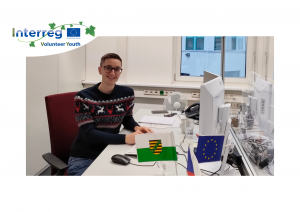
Hello, my name is Moritz and I am 25 years old. After completing my Master’s degree in Border Studies in the Greater Region on the border between Luxembourg, Saarland and Lorraine, I am now a volunteer at the joint secretariat of Interreg Saxony-Czech Republic in Dresden. The border region here is characterized above all by rural areas, but also by increasingly close ties, mutual support and great commitment on the part of the neighbours. The programme’s joint secretariat receives ideas and applications for numerous projects that aim to strengthen cross-border cooperation. The applicants receive all the necessary information and advice for a successful application and implementation of the project. The secretariat also ensures that all regulations are adhered to. To ensure that as many people as possible learn about the opportunities for cross-border projects and that the results are widely shared, the secretariat is also responsible for public relations work for the programme. This is also my main area of responsibility: I support my colleagues in disseminating information via the website and am mainly responsible for ensuring that it is up to date and looks good. I also make sure that information on the project cycle is presented in an understandable and accessible way in guidelines or flow charts. At regular intervals, the Monitoring Committee also takes place, where various stakeholders with voting rights from Saxony and the Czech Republic decide on the funding of new projects. I play an active role in its organization and running. During this work, I have become aware of how many procedures and processes take place in the background of the Interreg programme. These are often lengthy and bureaucratic. This makes it all the more important for me to support the projects through the joint secretariat, so that nobody has to be afraid of the project cycle and all citizens of the border region have access to it. Many people can benefit from the project ideas and often disadvantaged regions receive the necessary attention and resources to implement innovative projects. The IVY experience is great for me as I studied borders and cross-border cooperation before. I knew many projects, their goals, problems and outcomes. But I never had insights into the perspective of the administrative organizations. Thanks to IVY I could broaden my horizon under this aspect. It also enabled me to get to know a great team and exciting stakeholders. I am pleased that I will remain part of the team in the future and can continue to support the cross-border cooperation. – Moritz Schneider, IVY Reporter for the Interreg Germany/Saxony-Czechia Discover more about the Interreg Programme Germany/Saxony – Czechia Click Here

Read More >

Small islands in the dialogue for nature

My name is Ambre Badiqué. I am currently doing a volunteering experience as an Interreg Project Partner under the AEBR’s IVY programme with the NGO SMILO (Small Islands Organisation) in Marseille. As part of my academic studies, I did a double degree with TBS Education and Sciences Po Toulouse to obtain a Master’s in Management and a Master’s in European Affairs.   Since January this year, I have been working for SMILO, an NGO that supports small islands around the world in the sustainable management of their resources and the protection of their environments, both marine and terrestrial, through 5 areas: waste, water & sanitation, energy, biodiversity and landscape. I am responsible for following up the Dialogue4Nature (D4N) project, which is an institutional dialogue project under the European Interreg Euro-Med programme funded by the European Regional Development Fund (ERDF) as part of the cohesion policy. As a reminder, Interreg Euro-Med is a European Territorial Cooperation Programme which aims to make the Mediterranean region “smarter”, “greener” and to improve governance between its stakeholders. The 7-year budget for this programme is 294 million euros. 14 countries on the northern shore of the Mediterranean are taking part: 10 EU Member States and 4 countries benefiting from the Instrument for Pre-Accession Assistance. The programme is divided into 4 missions: Strengthening the innovative sustainable economy Protecting, restoring and enhancing the natural environment and our heritage Promoting green living areas Improving sustainable tourism   The projects financed under this programme are either thematic projects directly linked to the 4 missions above or governance projects which are community or institutional dialogue projects and which oversee the thematic projects.   The D4N project aims to optimise the transfer and integration of the results of the 13 thematic projects selected for the Interreg Euro-Med mission “Protecting, restoring and enhancing the natural environment and our heritage” into public policies and practices. Within the framework of the project, the NGO SMILO is an associate partner of Plan Bleu, which is a partner in the D4N project. Plan Bleu is working alongside the Region of Crete, which is the project’s lead partner, as well as the IUCN, MedCities, the Autonomous Region of Sardinia, the Marine Institute in Croatia and the Ministry of Ecology, Planning and Urban Development in Montenegro. The 13 thematic projects are divided into three types: 3 study projects, 8 test projects and 2 transfer projects. They meet 2 specific objectives of the programme. There are 5 projects O.S 2.4: Promote adaptation to climate change and disaster risk prevention, resilience, taking into account nature-based approaches (priority “A greener Mediterranean”) and there are 8 projects O.S 2.7: Strengthen the protection and conservation of nature, biodiversity and green infrastructure, including in urban areas, and reduce all forms of pollution. (Priority for a greener Mediterranean). In order to analyse how SMILO could support Plan Bleu in this institutional dialogue project, the first thing to do was to look at the issues addressed and the link with SMILO, so as to be able to contribute actively to the D4N project.   The 6 areas are the following: Managing the risks associated with the effects of climate change, Protecting and restoring the marine environment Reducing human pressures on coastal zones Solutions and tools for wetlands Forest management Soil carbon capture   Of the 6 topics, the first 3 are dealt with by SMILO as part of its work with the islands in its network. Under the topic of “managing the risks associated with the effects of climate change”, the projects deal with drought, flooding, rising sea levels and fires. These are risks on which SMILO is working with the islands in its network, as they are highly vulnerable to the consequences of climate change and need to develop resilience. It could therefore be interesting to discuss these projects with their managers in order to exchange best practice, to see what has already been put in place on the SMILO islands and to see how the specific nature of islands can be integrated into their projects.   Under the theme of “protecting and restoring the marine environment”, projects focus on marine protected areas (MPAs) and Posidonia meadows. Many of the SMILO islands have MPAs. We will therefore be able to contribute to the project on these areas.   Finally, with regard to the topic of “Reducing human pressures on coastal areas”, one project focuses on the sustainability of ports, an element that is always present in our islands. Increased collaboration between the stakeholders of this project and SMILO will therefore be relevant.   At the moment, the 13 thematic projects are only just beginning, and so is D4N. In order to promote the integration of results into public policies, the stakeholders in the 13 projects will soon be brought together in 4 working groups, namely “Conservation by area”, “Adaptation to climate change and mitigation”, “Assessment of the socio-economic value of biodiversity” and “Ecosystem restoration and nature-based solutions”. I will be taking part in these groups to see how SMILO can make its contribution by integrating issues relating to island territories into the discussions. – Ambre, IVY Project Partner for the Interreg Euro-MED project “Dialogue4Med Nature” at the Small Islands Organisation (SMILO) Discover more about the Interreg project Dialogue4Med Nature Click Here Discover more about our host organisation Small Islands Organisation – SMILO Click Here
Read More >

Decision-Making Youth for CB-COOPeration (DEMY-Coop) project to boost youth engagement in the Italy-Croatia cooperation area

Greetings everyone, I am Maria Antonietta, proudly serving as an IVY Volunteer for the Interreg CBC Italy-Croatia DEMY-Coop Project. The project takes steps from the results of the AI-NURECC PLUS project, a joint initiative of the key EUSAIR local and regional stakeholders, aimed, among other things, at supporting a greater and more meaningful youth engagement in the Strategy and at placing young people at the heart of territorial cooperation.   Our project endeavors to capitalize these results by forging robust partnerships between local authorities and youth organisations in Italy and Croatia, with a view to amplify the voices of young people in shaping strategic decision-making processes related to the EUSAIR. At its core, DEMY-Coop pioneers a novel approach to governance—one that champions participation and transcends borders. Through collaborative endeavors, the project aspires to cultivate a shared understanding, fostering synergy between policymakers and youth. The focus lies in making informed choices regarding policies and actions that directly impact the lives of young people. Our comprehensive suite of activities spans awareness-building efforts aimed at both youth and decision-makers alike. By illuminating the intrinsic value of involving young voices in decision-making, we strive to engender a culture of inclusivity and engagement. Moreover, DEMY-Coop seeks to empower local and regional public authorities by equipping them with the tools to navigate legal, administrative, and cultural impediments to participatory governance models effectively. In parallel, our project endeavors to equip young people with the knowledge and skills necessary to navigate the landscape of territorial cooperation and macro-regional processes. By facilitating access to opportunities, we aim to empower youth to become active participants in shaping the future of their communities. Join us on this transformative journey as we pave the way for a more inclusive and collaborative approach to decision-making. Together, let us build a brighter future, where the voices of youth resonate loud and clear across borders. I was in charge of and supported the implementation of the DEMY-COOP project with particular reference to involvement and communication activities. Specifically, during these three months, I supported the project through these tasks and activities: Participation to project meetings, relating with project partners and stakeholders; Support to the mapping and selection of youth organizations in partners areas; Support to the implementation of an awareness raising campaign, including the creation of a project’s graphic image and communication messages Creation of content for the project website with information regarding the project activities and management of project social media. Here are the networks where you can follow us: Website www.italy-croatia.eu/web/demycoop Facebook page: Interreg DEMY-Coop project Thanks to IVY, I am broadening my knowledge of Cohesion Policy and Territorial Cooperation, and I will also have the opportunity to travel between Italy and Croatia, to network with other young people and to practice soft skills (communication and digital, using a foreign language, meeting other young people) and technical skills (supporting with project implementation and more). I am very grateful for this opportunity and at the same time I am thankful for the chance to broaden my knowledge in the world of Interreg projects, which can open new horizons for my studies and work. – Maria Antonietta D’A., IVY Project Partner at Eurelations Eeuropean Economic Interest Grouping – Eurelations EEIG for the Interreg Italy-Croatia project DEMY-COOP Discover more about Interreg project DEMY-Coop Click Here Discover more about Host Organization EURELATIONS Click Here

Read More >

My IVY experience at POCTEFA

It has been two months since I assumed the role of IVY Reporter at the Joint Secretariat POCTEFA as part of the Interreg Volunteer Youth (IVY) Program. The Joint Secretariat POCTEFA is located in Jaca, a small town in the heart of the Pyrenees, which will be my home until the end of May. Interreg POCTEFA is a European cross-border territorial cooperation program between Spain, France, and Andorra. POCTEFA’s main aim is to expand the economic and social integration of this area by co-financing cross-border cooperation projects lead by actors from both sides of the Pyrenees and from the coastal areas participating in the Program. Over the past two months, I have acclimated to a new professional environment while gaining insights into European funding and cooperation. My primary contributions have been in the Communication and Finances department, working both in Spanish and French. Thus far, this experience has proven to be a noteworthy professional journey, introducing me not only to the realm of European cooperation but also demonstrating the practical and beneficial impacts of European funds on the daily lives of inhabitants of the area. Regarding the latter, I recently assisted to the opening of the Centro de interpretación del Camino de Santiago in Jaca as part of the Jacob@ccess project co-financed by Interreg POCTEFA during the period 2014-2020. This project aims to make the Camino de Santiago accessible to people with physical and mental disabilities and represents one of the multiple examples in which European funds and cooperation help to improve the quality of life of the area’s inhabitants. I would also like to highlight that as part of my participation on the IVY Program, I was recently invited by the Interact Program to share my experience as an IVY Reporter during the XVIII Jornadas of the CIPFP Ausiàs March in València. Throughout the day, representatives from various European initiatives and opportunities provided information to young attendees about mobility opportunities in Europe. Having the opportunity to inspire young students and future leaders filled my heart as I strongly believe that Interreg is an exceptional program that deserves broader recognition. – Marina Alda L., IVY Reporter at the Joint Secretariat Interreg Spain-France-Andorra POCTEFA Discover more about Interreg POCTEFA Click Here

Read More >

Volunteering for the Interreg Europe project CEI BOOST

The CEI BOOST Interreg project represents a strategic initiative aimed at harmonizing the twin transitions towards green growth and digital transformation across Europe. By aligning regional policies with EU objectives such as the Green Deal and the Digital Agenda, the project seeks to drive sustainable economic development. At its core, CEI BOOST focuses on enhancing policies and fostering the application of emerging digital innovations to support the growth of the circular economy. This involves collaborative efforts among diverse stakeholders, including policymakers, industry leaders, and innovation ecosystem actors, to improve policy conditions and promote the adoption of circular business models through digitalization. Through a comprehensive approach, CEI BOOST aims to strengthen regional digital and circular innovation ecosystems, particularly in non-metropolitan, rural, and emerging regions. By investigating, testing, and adapting intervention approaches, the project seeks to address challenges and optimize resource use within industries. Partnerships play a crucial role in the project’s success, with knowledge exchange, testing, and adaptation, as well as policy advocacy, forming the basis of collaboration among project partners. Ultimately, the project benefits regions, industries, businesses, and policymakers by enhancing competitiveness, fostering economic growth, and contributing to the overall coherence and sustainability of regional economies. As a volunteer for the CEI BOOST project, I have been actively involved in advancing the project’s objectives through various initiatives. One notable engagement was my participation in the Patras IQ Event, where I manned a dedicated kiosk aimed at disseminating information about the project. Through this role, I had the opportunity to raise awareness and engage with attendees, fostering connections and garnering interest in the project’s goals. Additionally, I have been committed to attending stakeholder meetings, where I actively engage with relevant parties and contribute to discussions aimed at shaping the project’s direction. Furthermore, my involvement extended to the creation of a comprehensive questionnaire designed to gather valuable feedback from stakeholders, ensuring their perspectives are incorporated into project planning. Overall, my volunteer efforts have been instrumental in driving the CEI BOOST project forward, facilitating meaningful dialogue, and enhancing its impact within the community. – Odysseas K., IVY Project Partner at “ATHENA Research Center / Industrial Systems Institute” for the Interreg Europe project CEI BOOST Discover more about the Interreg project CEI BOOST Click Here Discover more about Host Organization ATHENA Research Center / Industrial Systems Institute Click Here

Read More >

Diving into my IVY story alongside the Dialogue4LivingAreas Project 

Hi there, I am María Belén Benzaquén, an Italian Argentinian. I started my journey as IVY in the “Dialogue 4 Living Areas” project two months ago. Since then, I have had the unique opportunity to deepen my understanding of Interreg Euro-MED and actively contribute to the aim core’s project to the transformation of Mediterranean territories into resilient Green Living Areas at Metropolis Nice Côte d’Azur, the project’s lead partner in Nice, France. The essence of Dialogue4LivingAreas lies in its commitment to transferring policies by fostering dialogue among policymakers and public stakeholders. This approach is centered on continual policy refinement and transformation, with a primary focus on establishing long-term cooperation at the Euro-Mediterranean level, for an improved quality of life of citizens. Our collaborative efforts with Community4LivingAreas run in parallel, providing concrete and effective implementation of policies across various aspects of Green Living Areas (Environment, Energy, Mobility, Water & Waste Management, and Buildings). In my capacity as IVY Project Partner, I am actively involved in the meticulous management process, working closely with the Dialogue for Green Living Areas Mission Consortium on a peer-to-peer basis. One of our course activities involves developing a comprehensive methodology roadmap and databases for policies that support the Thematic Projects of the Community4LivingAreas. How do we proceed? Designing criteria, and indicators, and assessing the adaptability of policies at the Local, Regional, and National Mediterranean Levels. Our goal is to contribute to the prioritization and capitalization of Thematic Community Projects by comprehensively understanding and addressing their impact. As I pursue my Master’s Degree in Journalism and Digital Communication, my focus is on efficiently fostering cooperation within the project, gaining expertise in strategic research, and enhancing communication strategies to shape the capitalization of essential steps collaboratively. – María Belén B, IVY Project Partner at Metropole Nice Cote d’Azur for the Interreg Euro-MED project Dialogue 4 Living Areas Discover more about the Interreg project Dialogue 4 Living Areas Click Here Discover more about the Host Organization Click Here

Read More >

Navigating Cross-Border Cooperation – My mission for accessible community support

Hello, my name is Moritz and I am 25 years old. After completing my Master’s degree in Border Studies in the Greater Region on the border between Luxembourg, Saarland and Lorraine, I am now a volunteer at the joint secretariat of Interreg Saxony-Czech Republic in Dresden. The border region here is characterized above all by rural areas, but also by increasingly close ties, mutual support and great commitment on the part of the neighbours. The programme’s joint secretariat receives ideas and applications for numerous projects that aim to strengthen cross-border cooperation. The applicants receive all the necessary information and advice for a successful application and implementation of the project. The secretariat also ensures that all regulations are adhered to. To ensure that as many people as possible learn about the opportunities for cross-border projects and that the results are widely shared, the secretariat is also responsible for public relations work for the programme. This is also my main area of responsibility: I support my colleagues in disseminating information via the website and am mainly responsible for ensuring that it is up to date and looks good. I also make sure that information on the project cycle is presented in an understandable and accessible way in guidelines or flow charts. At regular intervals, the Monitoring Committee also takes place, where various stakeholders with voting rights from Saxony and the Czech Republic decide on the funding of new projects. I play an active role in its organization and running. During this work, I have become aware of how many procedures and processes take place in the background of the Interreg programme. These are often lengthy and bureaucratic. This makes it all the more important for me to support the projects through the joint secretariat, so that nobody has to be afraid of the project cycle and all citizens of the border region have access to it. Many people can benefit from the project ideas and often disadvantaged regions receive the necessary attention and resources to implement innovative projects. The IVY experience is great for me as I studied borders and cross-border cooperation before. I knew many projects, their goals, problems and outcomes. But I never had insights into the perspective of the administrative organizations. Thanks to IVY I could broaden my horizon under this aspect. It also enabled me to get to know a great team and exciting stakeholders. I am pleased that I will remain part of the team in the future and can continue to support the cross-border cooperation. – Moritz Schneider, IVY Reporter for the Interreg Germany/Saxony-Czechia Discover more about the Interreg Programme Germany/Saxony – Czechia Click Here

Read More >