Category: Sin categoría

My volunteering experience for RE-ACTIVE

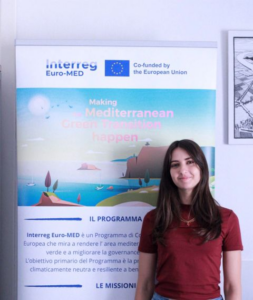
I’m Michela, an Italian IVY volunteer operating in Slovenia at PiNA. I had already spent a year at the same organization during my ESC experience, a project that allowed me to get a broader view of the organization’s projects and the city. Through that I met another IVY volunteer who was working on a question that stuck with me: who actually looks after the Karst forests along the border? And if a fire breaks out, which country do you even call? Watching partners and professionals with different backgrounds and nationalities come together to give that need a voice, opened up a whole world I’d never thought about before. That’s how the second opportunity came along: my colleagues, noticing my interest in environmental topics, education for young people and communication, suggested I join RE-ACTIVE, an Italy-Slovenia cross-border cooperation project. Compared to my ESC experience, the focus here shifted: I mostly work on reading, understanding project content, alongside creating custom made visual communication for the open calls and social media. One thing I didn’t expect was how useful my native language would turn out to be. Knowing the nuances of Italian allowed me to help the team find new ways to communicate to the public, choosing words that made calls and selection results feel warmer and less bureaucratic. Together we turned online communications that started off quite institutional into messages that felt more welcoming, built for people who didn’t know the project yet. A concrete example: when the Participatory Academy call didn’t reach the number of participants we’d hoped for, I started a small analysis process with my colleagues to rethink the communication. The idea was simple: we didn’t send just a long text to someone who didn’t know anything about the project yet, instead we paired it with clear, well-designed infographics that summarized the strong points. Above all, we focused on what the project could actually offer in terms of personal and professional growth to them. Helping the team every day, and feeling like my ideas genuinely carry weight in the workflow, has probably been the most rewarding part of this. I’ve also had the chance to get to know other projects, other minds, other ways of working. I also had the opportunity to join another interesting initiative led by PiNA during my holidays, the Ideathon. There I learnt a method for encouraging youth participation in the social community and I couldn’t wait to try it out to build an idea of my own, the Sus Lab, a project I’d like to launch before my time here is up. It’s still about sustainability, but through short workshops that bring together art and care for the environment, showing how some sustainable practices (like making recycled paper) are more accessible than they seem, and can be reproduced on a small scale by anyone at home, or in a dedicated lab. Volunteering on a project like this gives me a really interesting vantage point: close enough to see how the pieces fit together, but still new enough to notice how much room there is to grow, especially when it comes to visual communication that actually builds participation. I still have a lot to give, and I can’t wait to keep contributing to PiNA and to RE-ACTIVE. – Michela, IVY Project Partner at Kulturno izobraževalno društvo PiNA / Association for culture and education PiNA, for the Interreg project RE-ACTIVE, under the programme Interreg Italy-Slovenia.
Read More >

Helping to bring unknown romanesque Catalans churches back to life : myexperience as an IVY volunteer on the ROMTUR project (Interreg POCTEFA)

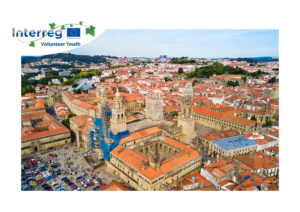
If you adventure across the catalan landscape, from Barcelona to Lleida until Perpignan, you’ll pass dozens of small romanesque churches that most bypassers never stop for. These millenary old beautifully built monuments are mainly unknown outside their vicinity. That’s exactly the issue ROMTUR, the project I’ve been volunteering for the last three months, is working on. ROMTUR is co-financed by the European Union through Interreg VI-A Spain-France-Andorra (POCTEFA 2021-2027), one of many Interreg programmes under the EU’s Cohesion Policy. The whole purpose is to strengthen economic and social ties across the Spain-France-Andorra border area, to help regions grow together, despite the pyrenees mountains. To achieve this mission, ROMTUR has a concrete goal: use digital tools to document and promote 50 lesser-known romanesques monuments scattered across Catalonia, so these rural areas can benefit from sustainable historic tourism. While it does happen that locally some municipal funds already addressed the problem and already created punctual information to valorize the historical landmark, what makes Romtur an Interreg project is the net of monuments behind it, highlighting the joint history of these European regions. Seven partners work together across the border: the Universitat de Lleida (which coordinates the project), the Universitat de Barcelona, the Université de Perpignan Via Domitia, the Institut d’Estudis Catalans, Turalcat, the tourism board of Aspres-Thuir and the Chamber of Commerce of Pyrénées-Orientales. Historians, tourism professionals and technicians from both sides of the border meet, share research, and build common tools : two of them are an online database and a virtual museum. My own role is on the research side: I help digitize the sources, gathering historical and artistic information on each site that eventually feeds the project’s. I also got to visit monuments on site.The part I like most, honestly, is discovering the local heritage and history myself. Each monument is a testimony of how these communities built, worshipped and lived centuries ago. And in the end, getting to help make that knowledge public also makes me more knowledgeable. If you’re ever driving through the catalan landscape and see a small stone church with a QR code by the door, that’s the result of ROMTUR and the European Union footprint. Scan it: you might be looking at a piece of history and get a grasp of what the European joint effort can achieve. – Anna, IVY Project Partner at the Universitat de Lleida, for the Interreg project ROMTUR, under the programme Interreg POCTEFA.

Read More >

Making cooperation visible: my IVY journey at the Interreg Greece-Italy Joint Secretariat

Hello everyone! My name is Miriam, I’m 26 years old and I’m an IVY Reporter at the Joint Secretariat of Interreg Greece-Italy in Bari. Almost three months have already flown by since I started this volunteering experience, and I can honestly say it has been a great learning experience. I have already gained so much, and I’m sure there will be many more opportunities ahead to deepen my understanding of how cross-border cooperation works in practice, while being part of a great team. We often perceive the European Union as something distant, but in reality, it is much closer to us than we think: it is part of our everyday life. Every day, I contribute to the storytelling of Interreg Greece-Italy projects, helping to give them more visibility. At the moment, the Programme has 37 ongoing projects, spanning from agriculture to textiles to nature preservation… small drops contributing to a wider sea of cooperation. Through this experience, I am discovering what is happening across the Italian and Greek eligible areas of the Programme, learning about what projects have already achieved and what is currently in progress, especially in my own region. As an IVY, I am gaining hands-on experience in institutional communication. Being a creative and proactive person, I always try to explore new ways to communicate projects and make them more engaging. I design and create tailored posts and stories to enhance their visibility and bring them closer to people. I work closely with the Communication Officer, supporting the coordination and management of content from the projects, adapting it to our editorial line, and publishing it across our channels. This often means translating technical content into something clear and accessible, so that citizens can better understand the impact of cohesion policy on their territories. At the same time, I am also gaining valuable insights into the institutional side of the Programme. In addition to project-related content, our channels also communicate Programme-level activities. I have had the opportunity to attend both project events and institutional meetings, such as the VI Monitoring Committee of Interreg Greece-Italy held in Matera. Experiences like this have allowed me to better understand how decisions are made behind the scenes. One of the most interesting activities I am involved in is supporting the organization of the “Communication Officers Network”, a series of meetings that brings together communication officers from all Interreg Greece-Italy projects. I see this as a great opportunity to exchange ideas, share perspectives, and reflect on how to improve the communication of cross-border projects. I am personally curating the visual materials, and during the first meeting on June 25th, I had the chance to present on effective visual communication, focusing on photos and videos. The next meeting will take place on July 30th, and I am currently helping to prepare the upcoming activities. I’m really looking forward to what the next months will bring. Thanks to this journey, I am becoming more and more interested in the world of regional and international cooperation. This experience is helping me grow both professionally and personally, and I’m excited to keep learning, creating, and contributing to making Interreg known and understood by a wider audience. – Miriam, IVY Reporter at Regione Puglia, for the programme Interreg Greece-Italy.

Read More >

Volunteering for Interreg AQUAMAN

Hi I’m Ornella, currently volunteering as IVY with SMILO (Small Islands Organisation) in Marseille as part of the AQUAMAN project, supported by Interreg EURO-MED.   Thanks to IVY, I had the incredible opportunity to go to Athens with SMILO during my first week of volunteering in May. I assisted and got straight to the heart of the matter by attending the 9th edition of Circle The Med forum focused on climate neutrality, green transition, and sustainable development. The aim was to address circular and blue economies under the Union for the Mediterranean but also to work and progress on AQUAMAN project with our European partners.   But why this project (which is not a superhero)? AQUAMAN (AQUAtic systems’ evaluation for the Mitigation of wAter scarcity in mediterranean islaNds and coastal tourist destinations under severe pressure) is a collaborative project uniting partners from Mediterranean countries (as one of the world’s most climate-sensitive regions) and includes ministries, research bodies, island municipalities and others such as associations. The aim is to promote sustainable water management on European small islands which are facing an important touristic pressure, specially during summer. My main role is to support the SMILO team on this European project which includes a cooperation between six European countries: Italy, Spain, Greece, France, Malta and Portugal. To reach the AQUAMAN goals we are all working together to benchmark existing solutions to improve water management in different territories.   For this purpose, SMILO has different missions to promote sustainable actions through our islands network. The following highlights some noteworthy examples. We are currently working with Greeks to develop solutions for a better water infiltration on islands inspired from ancient practices. I am also creating with the help of Spanish and Maltese contributors a Women island network to promote the work accomplished by European female islanders. Besides SMILO developed new links with some islands, notably thanks to AQUAMAN project, we are working with the Ponza island in Italy and Halki in Greece so that they can enter the SMILO network, in addition to making progress in the water management field.   Finally, in Porquerolles island in France (next to Marseille) we want to work with a study office to look into the hydrology of the island so that we could help the stakeholders to develop actions for a better management of the resource. Recently, Porquerolles welcomed more than 50 international students on the island for a Science and Policy Workshop, SMILO had the opportunity to present the SERIOUS GAME developed in partnership with the French “Conservatoire du littoral” to raise awareness on water scarcity on islands.   The overall objectives of AQUAMAN project is that all the work done benefits to stakeholders of the islands, obviously for generations to come and local residents who suffer from tourism pressure and already limited water supplies. The sharing of knowledge from successful EU initiatives helps to support coastal and island authorities in adopting sustainable practices.     Thanks to this unique experience, I have now a clearer sense of how EU-funded projects operate. It demonstrates the power of Europe and how it helps partners from different countries to cooperate across boundaries. Volunteering helps me to develop several of my skills and to live unique experiences on different sites.    I am so happy to help to safeguard precious water resources and protect the Mediterranean’s unique lifestyle and environment. As I am a scientist it also allows me enlarging my skills about cooperation and European affairs. – Ornella, IVY Project Partner at SMILO, for the Interreg project AQUAMAN, under the programme Interreg Euro-MED.

Read More >

Behind the Scenes of European Territorial Cooperation: My IVY Experience at theNational Contact Point of the Interreg Euro-MED Programme

Hello everyone! My name is Claudia, I’m 25 years old, I’m from Italy and I’m currently an IVY Reporter at the italian National Contact Point of the Interreg Euro-MED programme, hosted by Regione Toscana, in the beautiful city of Florence. Having a background in International Cooperation and Development, I have always been particularly interested in the dynamics of European cooperation. For years, both professionally and personally, I’ve been passionate about two things: European Cohesion Policies and Mediterranean history, culture and nature. Fair to say that the programme I’m currently working on is the perfect combination of these two aspects. What is the Interreg Euro-MED Programme? Euro-MED is a Territorial Cooperation Programme that covers the territories along the northern coast of the Mediterranean, bringing together a total of 69 regions from 10 European countries and 4 IPA countries (EU candidate countries). Like other Interreg programmes, Euro-MED is one of the ways in which the European Union promotes the objectives of European Cohesion Policy, focusing on enhancing a sustainable economy and tourism, protecting natural heritage and promoting green living areas. What about the Italian National Contact Point? The Italian National Contact Point (NCP) is the main point of reference for all Italian beneficiaries of the Euro-MED programme and is currently managed by Regione Toscana (Region of Tuscany). The NCP provides support on the technical and administrative requirements for the implementation of the programme and contributes to its promotion, providing information on funding calls and opportunities.  My tasks? As an IVY reporter, my role mainly focuses on supporting communication and dissemination activities. Over the past three months, I have primarily been working on the creation of a newsletter, promotional content, as well as social media activities and campaigns. Recently, I’ve been working on communication related to the 7th Euro-MED call within the Mediterranean Multi-Programme Mechanism (MMM), an initiative that aims to connect projects from 10 different Interreg Programmes, also covering territories in partner countries outside the EU. The focus is on sustainable tourism, a topic I feel particularly connected to, as the effects of mass tourism are extremely visible, especially across the European Mediterranean region. My Experience What I have appreciated the most about this experience is, first of all, the opportunity to work behind the scenes of European territorial cooperation mechanisms, attending meetings, discussions and exchanges involving different stakeholders, both Italian and European. Equally important has been the great collaboration with the team at my host organisation, who have supported and trained me, introducing me to the functioning and the objectives of the programme. Most importantly, they have given me the opportunity to express my creativity in communication and to contribute with my own ideas and perspective. – Claudia Zorzetto, IVY Reporter at Regione Toscana, National Contact Point for the Programme Interreg Euro-MED.

Read More >

My Experience with the “Desafios Jovens” Volunteership Progra

Hello everyone! My name is David, and I’m a 20-year-old law student from Santiago de Compostela, Galicia. I’m currently volunteering as an IVY Project Partner for the Interreg “Desafios Jovens” program.The General Directorate of Youth is my host organization, a department of the regional government of Galicia which develops several programs for the Galician youth. What is “Desafios Jovens” About?The “Desafios Jovens” project aims to promote quality employment and improve working conditions within the Galicia-North Portugal euroregion. It places a strong emphasis on supporting rural youth as well as green and social economy. Who’s Involved?This collaborative effort involves five main partners: General Directorate of Youth (Galicia) Official Chamber of Commerce, Industry, Services and Navigation from Santiago de Compostela (Galicia) Northern Regional Directorate of IPDJ (Portugal) National Federation of Youth Associations (FNAJ) (Portugal) Northern Regional Delegation (Portugal) How Are We Making an Impact? One of our key initiatives has been the itinerant office, which has visited several rural areas across Galicia. Its purpose is to provide young people with valuable information about job opportunities in both Galicia and Portugal, offer guidance on personal brand improvement, and provide training in digital competencies. My Role as a VolunteerMy two months on the project have been a truly positive and enriching experience. With my background in law, I’ve been able to assist with both activity promotion and the management of contracts. I also got the opportunity of interacting with people from different countries, mainly Portugal, with the same interests in volunteering programs as me. – David, IVY Project Partner at DIRECCIÓN XERAL DE XUVENTUDE, CONSELLERÍA DE CULTURA, LINGUA E XUVENTUDE (XUNTA DE GALICIA), for the Interreg project DESAFIOS JOVENS (YOUTH CHALLENGES), under the programme Interreg POCTEP. Learn more about Xunta de Galicia Click Here Learn more about Interreg project DESAFIOS JOVENS Click Here

Read More >

My volunteering experience for RE-ACTIVE

I’m Michela, an Italian IVY volunteer operating in Slovenia at PiNA. I had already spent a year at the same organization during my ESC experience, a project that allowed me to get a broader view of the organization’s projects and the city. Through that I met another IVY volunteer who was working on a question that stuck with me: who actually looks after the Karst forests along the border? And if a fire breaks out, which country do you even call? Watching partners and professionals with different backgrounds and nationalities come together to give that need a voice, opened up a whole world I’d never thought about before. That’s how the second opportunity came along: my colleagues, noticing my interest in environmental topics, education for young people and communication, suggested I join RE-ACTIVE, an Italy-Slovenia cross-border cooperation project. Compared to my ESC experience, the focus here shifted: I mostly work on reading, understanding project content, alongside creating custom made visual communication for the open calls and social media. One thing I didn’t expect was how useful my native language would turn out to be. Knowing the nuances of Italian allowed me to help the team find new ways to communicate to the public, choosing words that made calls and selection results feel warmer and less bureaucratic. Together we turned online communications that started off quite institutional into messages that felt more welcoming, built for people who didn’t know the project yet. A concrete example: when the Participatory Academy call didn’t reach the number of participants we’d hoped for, I started a small analysis process with my colleagues to rethink the communication. The idea was simple: we didn’t send just a long text to someone who didn’t know anything about the project yet, instead we paired it with clear, well-designed infographics that summarized the strong points. Above all, we focused on what the project could actually offer in terms of personal and professional growth to them. Helping the team every day, and feeling like my ideas genuinely carry weight in the workflow, has probably been the most rewarding part of this. I’ve also had the chance to get to know other projects, other minds, other ways of working. I also had the opportunity to join another interesting initiative led by PiNA during my holidays, the Ideathon. There I learnt a method for encouraging youth participation in the social community and I couldn’t wait to try it out to build an idea of my own, the Sus Lab, a project I’d like to launch before my time here is up. It’s still about sustainability, but through short workshops that bring together art and care for the environment, showing how some sustainable practices (like making recycled paper) are more accessible than they seem, and can be reproduced on a small scale by anyone at home, or in a dedicated lab. Volunteering on a project like this gives me a really interesting vantage point: close enough to see how the pieces fit together, but still new enough to notice how much room there is to grow, especially when it comes to visual communication that actually builds participation. I still have a lot to give, and I can’t wait to keep contributing to PiNA and to RE-ACTIVE. – Michela, IVY Project Partner at Kulturno izobraževalno društvo PiNA / Association for culture and education PiNA, for the Interreg project RE-ACTIVE, under the programme Interreg Italy-Slovenia.
Read More >

Helping to bring unknown romanesque Catalans churches back to life : myexperience as an IVY volunteer on the ROMTUR project (Interreg POCTEFA)

If you adventure across the catalan landscape, from Barcelona to Lleida until Perpignan, you’ll pass dozens of small romanesque churches that most bypassers never stop for. These millenary old beautifully built monuments are mainly unknown outside their vicinity. That’s exactly the issue ROMTUR, the project I’ve been volunteering for the last three months, is working on. ROMTUR is co-financed by the European Union through Interreg VI-A Spain-France-Andorra (POCTEFA 2021-2027), one of many Interreg programmes under the EU’s Cohesion Policy. The whole purpose is to strengthen economic and social ties across the Spain-France-Andorra border area, to help regions grow together, despite the pyrenees mountains. To achieve this mission, ROMTUR has a concrete goal: use digital tools to document and promote 50 lesser-known romanesques monuments scattered across Catalonia, so these rural areas can benefit from sustainable historic tourism. While it does happen that locally some municipal funds already addressed the problem and already created punctual information to valorize the historical landmark, what makes Romtur an Interreg project is the net of monuments behind it, highlighting the joint history of these European regions. Seven partners work together across the border: the Universitat de Lleida (which coordinates the project), the Universitat de Barcelona, the Université de Perpignan Via Domitia, the Institut d’Estudis Catalans, Turalcat, the tourism board of Aspres-Thuir and the Chamber of Commerce of Pyrénées-Orientales. Historians, tourism professionals and technicians from both sides of the border meet, share research, and build common tools : two of them are an online database and a virtual museum. My own role is on the research side: I help digitize the sources, gathering historical and artistic information on each site that eventually feeds the project’s. I also got to visit monuments on site.The part I like most, honestly, is discovering the local heritage and history myself. Each monument is a testimony of how these communities built, worshipped and lived centuries ago. And in the end, getting to help make that knowledge public also makes me more knowledgeable. If you’re ever driving through the catalan landscape and see a small stone church with a QR code by the door, that’s the result of ROMTUR and the European Union footprint. Scan it: you might be looking at a piece of history and get a grasp of what the European joint effort can achieve. – Anna, IVY Project Partner at the Universitat de Lleida, for the Interreg project ROMTUR, under the programme Interreg POCTEFA.

Read More >

Making cooperation visible: my IVY journey at the Interreg Greece-Italy Joint Secretariat

Hello everyone! My name is Miriam, I’m 26 years old and I’m an IVY Reporter at the Joint Secretariat of Interreg Greece-Italy in Bari. Almost three months have already flown by since I started this volunteering experience, and I can honestly say it has been a great learning experience. I have already gained so much, and I’m sure there will be many more opportunities ahead to deepen my understanding of how cross-border cooperation works in practice, while being part of a great team. We often perceive the European Union as something distant, but in reality, it is much closer to us than we think: it is part of our everyday life. Every day, I contribute to the storytelling of Interreg Greece-Italy projects, helping to give them more visibility. At the moment, the Programme has 37 ongoing projects, spanning from agriculture to textiles to nature preservation… small drops contributing to a wider sea of cooperation. Through this experience, I am discovering what is happening across the Italian and Greek eligible areas of the Programme, learning about what projects have already achieved and what is currently in progress, especially in my own region. As an IVY, I am gaining hands-on experience in institutional communication. Being a creative and proactive person, I always try to explore new ways to communicate projects and make them more engaging. I design and create tailored posts and stories to enhance their visibility and bring them closer to people. I work closely with the Communication Officer, supporting the coordination and management of content from the projects, adapting it to our editorial line, and publishing it across our channels. This often means translating technical content into something clear and accessible, so that citizens can better understand the impact of cohesion policy on their territories. At the same time, I am also gaining valuable insights into the institutional side of the Programme. In addition to project-related content, our channels also communicate Programme-level activities. I have had the opportunity to attend both project events and institutional meetings, such as the VI Monitoring Committee of Interreg Greece-Italy held in Matera. Experiences like this have allowed me to better understand how decisions are made behind the scenes. One of the most interesting activities I am involved in is supporting the organization of the “Communication Officers Network”, a series of meetings that brings together communication officers from all Interreg Greece-Italy projects. I see this as a great opportunity to exchange ideas, share perspectives, and reflect on how to improve the communication of cross-border projects. I am personally curating the visual materials, and during the first meeting on June 25th, I had the chance to present on effective visual communication, focusing on photos and videos. The next meeting will take place on July 30th, and I am currently helping to prepare the upcoming activities. I’m really looking forward to what the next months will bring. Thanks to this journey, I am becoming more and more interested in the world of regional and international cooperation. This experience is helping me grow both professionally and personally, and I’m excited to keep learning, creating, and contributing to making Interreg known and understood by a wider audience. – Miriam, IVY Reporter at Regione Puglia, for the programme Interreg Greece-Italy.

Read More >

Volunteering for Interreg AQUAMAN

Hi I’m Ornella, currently volunteering as IVY with SMILO (Small Islands Organisation) in Marseille as part of the AQUAMAN project, supported by Interreg EURO-MED.   Thanks to IVY, I had the incredible opportunity to go to Athens with SMILO during my first week of volunteering in May. I assisted and got straight to the heart of the matter by attending the 9th edition of Circle The Med forum focused on climate neutrality, green transition, and sustainable development. The aim was to address circular and blue economies under the Union for the Mediterranean but also to work and progress on AQUAMAN project with our European partners.   But why this project (which is not a superhero)? AQUAMAN (AQUAtic systems’ evaluation for the Mitigation of wAter scarcity in mediterranean islaNds and coastal tourist destinations under severe pressure) is a collaborative project uniting partners from Mediterranean countries (as one of the world’s most climate-sensitive regions) and includes ministries, research bodies, island municipalities and others such as associations. The aim is to promote sustainable water management on European small islands which are facing an important touristic pressure, specially during summer. My main role is to support the SMILO team on this European project which includes a cooperation between six European countries: Italy, Spain, Greece, France, Malta and Portugal. To reach the AQUAMAN goals we are all working together to benchmark existing solutions to improve water management in different territories.   For this purpose, SMILO has different missions to promote sustainable actions through our islands network. The following highlights some noteworthy examples. We are currently working with Greeks to develop solutions for a better water infiltration on islands inspired from ancient practices. I am also creating with the help of Spanish and Maltese contributors a Women island network to promote the work accomplished by European female islanders. Besides SMILO developed new links with some islands, notably thanks to AQUAMAN project, we are working with the Ponza island in Italy and Halki in Greece so that they can enter the SMILO network, in addition to making progress in the water management field.   Finally, in Porquerolles island in France (next to Marseille) we want to work with a study office to look into the hydrology of the island so that we could help the stakeholders to develop actions for a better management of the resource. Recently, Porquerolles welcomed more than 50 international students on the island for a Science and Policy Workshop, SMILO had the opportunity to present the SERIOUS GAME developed in partnership with the French “Conservatoire du littoral” to raise awareness on water scarcity on islands.   The overall objectives of AQUAMAN project is that all the work done benefits to stakeholders of the islands, obviously for generations to come and local residents who suffer from tourism pressure and already limited water supplies. The sharing of knowledge from successful EU initiatives helps to support coastal and island authorities in adopting sustainable practices.     Thanks to this unique experience, I have now a clearer sense of how EU-funded projects operate. It demonstrates the power of Europe and how it helps partners from different countries to cooperate across boundaries. Volunteering helps me to develop several of my skills and to live unique experiences on different sites.    I am so happy to help to safeguard precious water resources and protect the Mediterranean’s unique lifestyle and environment. As I am a scientist it also allows me enlarging my skills about cooperation and European affairs. – Ornella, IVY Project Partner at SMILO, for the Interreg project AQUAMAN, under the programme Interreg Euro-MED.

Read More >

Behind the Scenes of European Territorial Cooperation: My IVY Experience at theNational Contact Point of the Interreg Euro-MED Programme

Hello everyone! My name is Claudia, I’m 25 years old, I’m from Italy and I’m currently an IVY Reporter at the italian National Contact Point of the Interreg Euro-MED programme, hosted by Regione Toscana, in the beautiful city of Florence. Having a background in International Cooperation and Development, I have always been particularly interested in the dynamics of European cooperation. For years, both professionally and personally, I’ve been passionate about two things: European Cohesion Policies and Mediterranean history, culture and nature. Fair to say that the programme I’m currently working on is the perfect combination of these two aspects. What is the Interreg Euro-MED Programme? Euro-MED is a Territorial Cooperation Programme that covers the territories along the northern coast of the Mediterranean, bringing together a total of 69 regions from 10 European countries and 4 IPA countries (EU candidate countries). Like other Interreg programmes, Euro-MED is one of the ways in which the European Union promotes the objectives of European Cohesion Policy, focusing on enhancing a sustainable economy and tourism, protecting natural heritage and promoting green living areas. What about the Italian National Contact Point? The Italian National Contact Point (NCP) is the main point of reference for all Italian beneficiaries of the Euro-MED programme and is currently managed by Regione Toscana (Region of Tuscany). The NCP provides support on the technical and administrative requirements for the implementation of the programme and contributes to its promotion, providing information on funding calls and opportunities.  My tasks? As an IVY reporter, my role mainly focuses on supporting communication and dissemination activities. Over the past three months, I have primarily been working on the creation of a newsletter, promotional content, as well as social media activities and campaigns. Recently, I’ve been working on communication related to the 7th Euro-MED call within the Mediterranean Multi-Programme Mechanism (MMM), an initiative that aims to connect projects from 10 different Interreg Programmes, also covering territories in partner countries outside the EU. The focus is on sustainable tourism, a topic I feel particularly connected to, as the effects of mass tourism are extremely visible, especially across the European Mediterranean region. My Experience What I have appreciated the most about this experience is, first of all, the opportunity to work behind the scenes of European territorial cooperation mechanisms, attending meetings, discussions and exchanges involving different stakeholders, both Italian and European. Equally important has been the great collaboration with the team at my host organisation, who have supported and trained me, introducing me to the functioning and the objectives of the programme. Most importantly, they have given me the opportunity to express my creativity in communication and to contribute with my own ideas and perspective. – Claudia Zorzetto, IVY Reporter at Regione Toscana, National Contact Point for the Programme Interreg Euro-MED.

Read More >

My Experience with the “Desafios Jovens” Volunteership Progra

Hello everyone! My name is David, and I’m a 20-year-old law student from Santiago de Compostela, Galicia. I’m currently volunteering as an IVY Project Partner for the Interreg “Desafios Jovens” program.The General Directorate of Youth is my host organization, a department of the regional government of Galicia which develops several programs for the Galician youth. What is “Desafios Jovens” About?The “Desafios Jovens” project aims to promote quality employment and improve working conditions within the Galicia-North Portugal euroregion. It places a strong emphasis on supporting rural youth as well as green and social economy. Who’s Involved?This collaborative effort involves five main partners: General Directorate of Youth (Galicia) Official Chamber of Commerce, Industry, Services and Navigation from Santiago de Compostela (Galicia) Northern Regional Directorate of IPDJ (Portugal) National Federation of Youth Associations (FNAJ) (Portugal) Northern Regional Delegation (Portugal) How Are We Making an Impact? One of our key initiatives has been the itinerant office, which has visited several rural areas across Galicia. Its purpose is to provide young people with valuable information about job opportunities in both Galicia and Portugal, offer guidance on personal brand improvement, and provide training in digital competencies. My Role as a VolunteerMy two months on the project have been a truly positive and enriching experience. With my background in law, I’ve been able to assist with both activity promotion and the management of contracts. I also got the opportunity of interacting with people from different countries, mainly Portugal, with the same interests in volunteering programs as me. – David, IVY Project Partner at DIRECCIÓN XERAL DE XUVENTUDE, CONSELLERÍA DE CULTURA, LINGUA E XUVENTUDE (XUNTA DE GALICIA), for the Interreg project DESAFIOS JOVENS (YOUTH CHALLENGES), under the programme Interreg POCTEP. Learn more about Xunta de Galicia Click Here Learn more about Interreg project DESAFIOS JOVENS Click Here

Read More >