Volunteering for the Interreg Europe project CEI BOOST
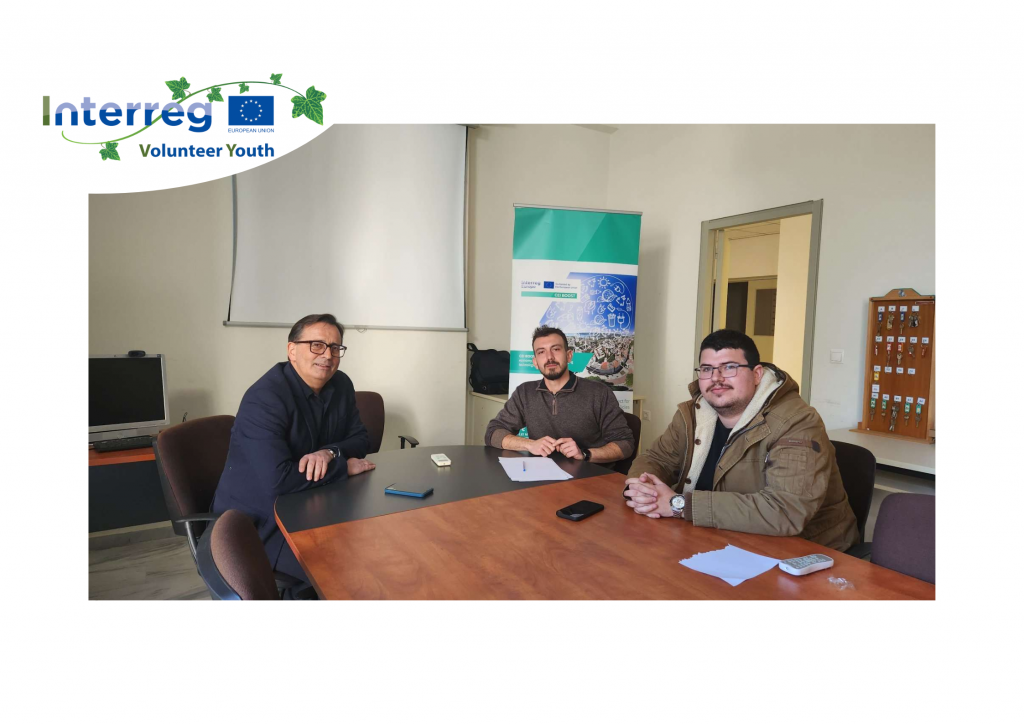
The CEI BOOST Interreg project represents a strategic initiative aimed at harmonizing the twin transitions towards green growth and digital transformation across Europe. By aligning regional policies with EU objectives such as the Green Deal and the Digital Agenda, the project seeks to drive sustainable economic development. At its core, CEI BOOST focuses on enhancing policies and fostering the application of emerging digital innovations to support the growth of the circular economy. This involves collaborative efforts among diverse stakeholders, including policymakers, industry leaders, and innovation ecosystem actors, to improve policy conditions and promote the adoption of circular business models through digitalization. Through a comprehensive approach, CEI BOOST aims to strengthen regional digital and circular innovation ecosystems, particularly in non-metropolitan, rural, and emerging regions. By investigating, testing, and adapting intervention approaches, the project seeks to address challenges and optimize resource use within industries. Partnerships play a crucial role in the project’s success, with knowledge exchange, testing, and adaptation, as well as policy advocacy, forming the basis of collaboration among project partners. Ultimately, the project benefits regions, industries, businesses, and policymakers by enhancing competitiveness, fostering economic growth, and contributing to the overall coherence and sustainability of regional economies. As a volunteer for the CEI BOOST project, I have been actively involved in advancing the project’s objectives through various initiatives. One notable engagement was my participation in the Patras IQ Event, where I manned a dedicated kiosk aimed at disseminating information about the project. Through this role, I had the opportunity to raise awareness and engage with attendees, fostering connections and garnering interest in the project’s goals. Additionally, I have been committed to attending stakeholder meetings, where I actively engage with relevant parties and contribute to discussions aimed at shaping the project’s direction. Furthermore, my involvement extended to the creation of a comprehensive questionnaire designed to gather valuable feedback from stakeholders, ensuring their perspectives are incorporated into project planning. Overall, my volunteer efforts have been instrumental in driving the CEI BOOST project forward, facilitating meaningful dialogue, and enhancing its impact within the community. – Odysseas K., IVY Project Partner at “ATHENA Research Center / Industrial Systems Institute” for the Interreg Europe project CEI BOOST Discover more about the Interreg project CEI BOOST Click Here Discover more about Host Organization ATHENA Research Center / Industrial Systems Institute Click Here
Diving into my IVY story alongside the Dialogue4LivingAreas Project
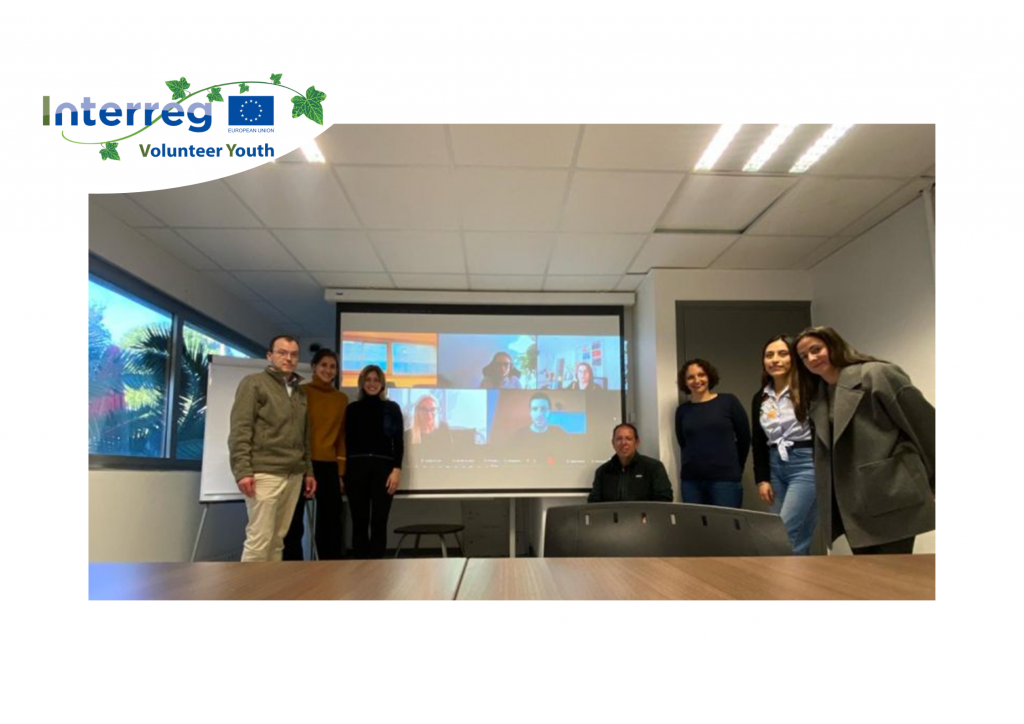
Hi there, I am María Belén Benzaquén, an Italian Argentinian. I started my journey as IVY in the “Dialogue 4 Living Areas” project two months ago. Since then, I have had the unique opportunity to deepen my understanding of Interreg Euro-MED and actively contribute to the aim core’s project to the transformation of Mediterranean territories into resilient Green Living Areas at Metropolis Nice Côte d’Azur, the project’s lead partner in Nice, France. The essence of Dialogue4LivingAreas lies in its commitment to transferring policies by fostering dialogue among policymakers and public stakeholders. This approach is centered on continual policy refinement and transformation, with a primary focus on establishing long-term cooperation at the Euro-Mediterranean level, for an improved quality of life of citizens. Our collaborative efforts with Community4LivingAreas run in parallel, providing concrete and effective implementation of policies across various aspects of Green Living Areas (Environment, Energy, Mobility, Water & Waste Management, and Buildings). In my capacity as IVY Project Partner, I am actively involved in the meticulous management process, working closely with the Dialogue for Green Living Areas Mission Consortium on a peer-to-peer basis. One of our course activities involves developing a comprehensive methodology roadmap and databases for policies that support the Thematic Projects of the Community4LivingAreas. How do we proceed? Designing criteria, and indicators, and assessing the adaptability of policies at the Local, Regional, and National Mediterranean Levels. Our goal is to contribute to the prioritization and capitalization of Thematic Community Projects by comprehensively understanding and addressing their impact. As I pursue my Master’s Degree in Journalism and Digital Communication, my focus is on efficiently fostering cooperation within the project, gaining expertise in strategic research, and enhancing communication strategies to shape the capitalization of essential steps collaboratively. – María Belén B, IVY Project Partner at Metropole Nice Cote d’Azur for the Interreg Euro-MED project Dialogue 4 Living Areas Discover more about the Interreg project Dialogue 4 Living Areas Click Here Discover more about the Host Organization Click Here
A Sea of Opportunities: Cross-Border Cooperation between Italy and Croatia
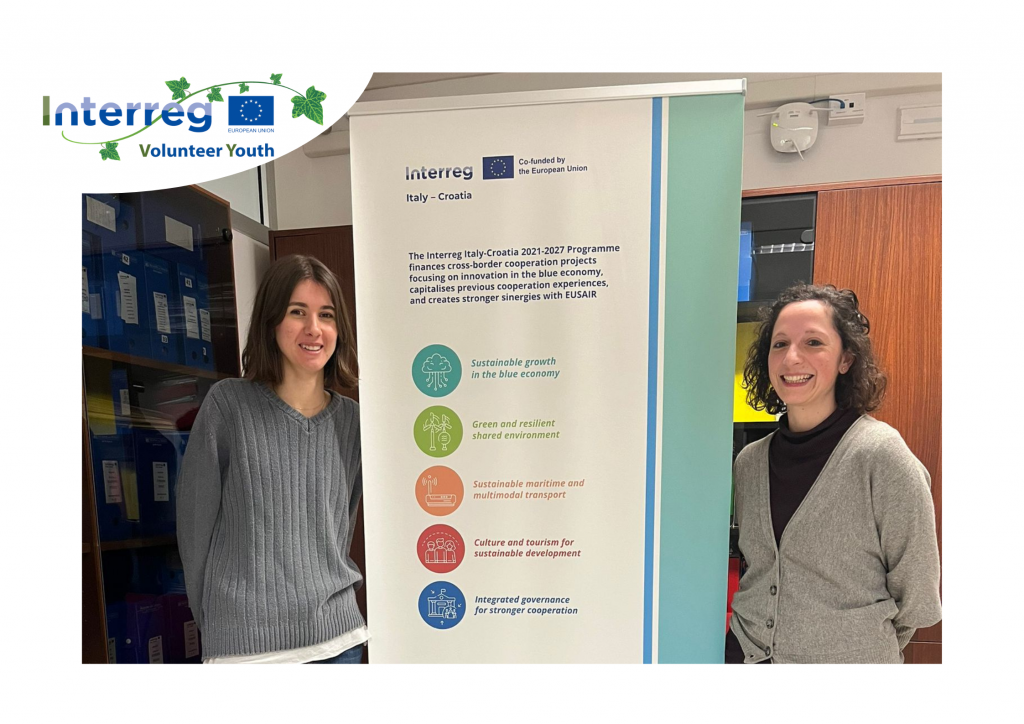
Hello everyone! I am Sara, I am 25 years old, and I am currently an IVY Volunteer at the Interreg Italy-Croatia Cross-Border Cooperation Programme. I have finished my studies in Intercultural Development of Tourism Systems at the Ca’ Foscari University in Venice and I am really motived in my current experience at the Managing Authority of the Programme. I started my volunteering just two months ago, but I had already done my internship at the same programme so I already knew that it was a great place to learn. However, in this new experience I have different tasks, more connected to the Communication field, and I am really loving every moment of it! /*! elementor – v3.19.0 – 28-02-2024 */ .elementor-widget-image{text-align:center}.elementor-widget-image a{display:inline-block}.elementor-widget-image a img[src$=”.svg”]{width:48px}.elementor-widget-image img{vertical-align:middle;display:inline-block} But, what about the Programme? The Interreg IT-HR program aims to strengthen cross-border cooperation between the coastal regions of Italy and Croatia to address common challenges and exploit opportunities for sustainable development. The Programme finances cross-border cooperation projects that focus on innovation in the blue economy and it capitalises previous projects, creating stronger synergies with EUSAIR. In particular, it focuses on five thematic priorities: blue innovation, security and resilience, natural and cultural heritage, transport and connectivity, and governance. Partnership projects are identified and financed to reach the Programme objectives: all applicants who wants to participate are invited by public calls for proposals and their applications is assessed on the basis of selection criteria formally approved by the Programme Monitoring Committee. In the programme, I specifically try to ensure higher visibility and communicating about Operations of Strategic Importance (OSI) and their achievements. Moreover, I try to prepare supporting documents to be published on the site of the Programme in a way that may be easy to understand for all, especially young people and citizens. What I love most about this experience is the possibility to attend meetings with the Monitoring Committee or with other programmes to create synergies: these events are a great opportunity to learn more about different realities that can be found in Europe. I think that IVY is a great chance to venture in the world of work: it provides you with the opportunity to acquire new knowledge and skills; in addition, it is very important to me to be involved in the communication field because I want the Programme to be as famous as possible among the youth since it is a great opportunity that cannot be missed! – Sara, IVY Reporter for the Managing Authority Interreg Italy-Croatia Discover more about the Interreg programme Italy – Croatia Click Here
Taking concrete steps towards carbon neutrality with the Ar2CorD project
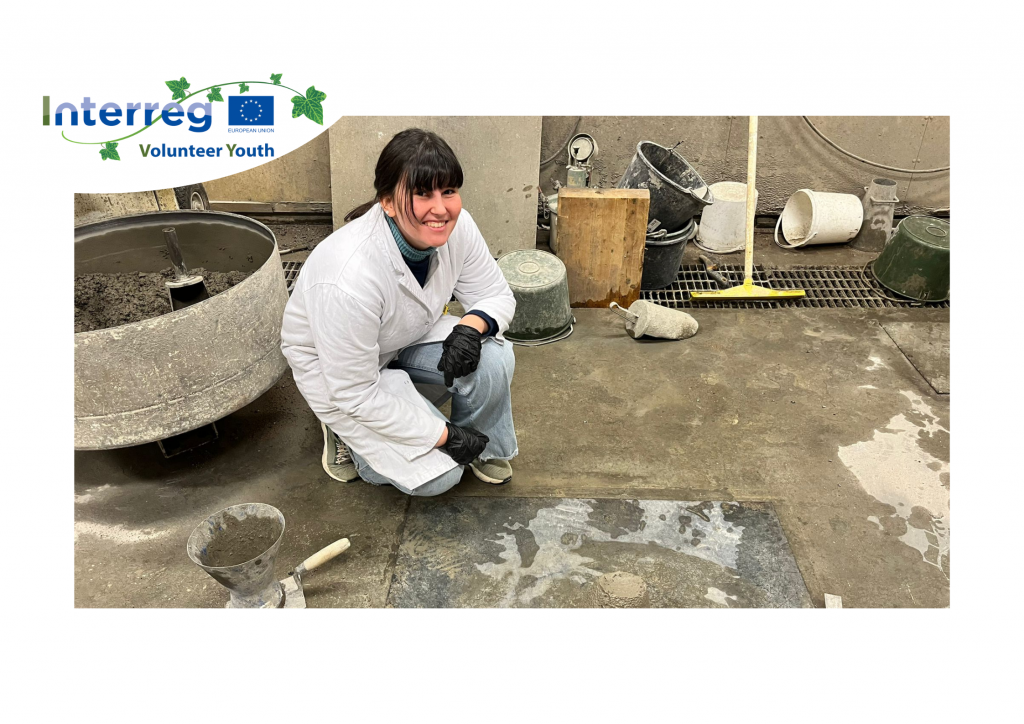
A glimpse into the aims of the Ar2CorD programme Concrete is paradoxically both one of the most polluting materials on Earth, and one of the wonders of human architecture across history. Prehistoric forms of its use have been dated back to the Syrian and Yugoslavian Stone Ages, and archeologists have suggested that concrete floors were commonplace in the Chinese Bronze Ages. You may be familiar with the structure of the Roman Pantheon, still standing almost 2000 years after its construction, as evidence of the sturdiness of early forms of lime-based mortars! Unfortunately, modern day Portland cement, birthed in 1871 out of the Industrial revolution in the U.S., has exhaled disastrous amounts of CO₂ onto Planet Earth: its recipe is no longer viable for a sober, sustainable way of life. The Ar2CorD programme was born out of an Interreg partnership between researching entities in the Arctic and Sub-Arctic regions who recognise that, if concrete cannot be replaced, it must be improved. The project involves new mix designs, using byproducts of local industries as alternative cementitious materials, for example, to provide a form of low-carbon concrete that is resistant to freeze-and-thaw cycle. Cost-efficient, more durable, and environmentally-friendly, Ar2CorD’s low carbon concrete aims to strengthen climate adaptation and resource efficiency for its communities across Finland, Sweden, Norway, Greenland, and Iceland. Volunteering for the project A little about me and my experience as an IVY volunteer: my name is Pauline, I am French and I am fascinated with the concept of environmental storytelling. I’ve been volunteering as a Project Partner to the Ar2CorD project for a little over two months, now, and have found it a truly purpose-generating experience. This initiative is as interdisciplinary as it is international. There are so many lenses to look at ecological concrete from. There is a very technical side to it, a very scientific approach to determining the optimal combination of materials for a sustainable result. There is a very interesting historic and artistic aspect to it, too: concrete is a very long-lived, ever-changing material. And there is a very idealistic, futuristic take on its applications. What could a green, environmentally-friendly city look like? I am based at Luleå Tekniska Universitet, in Sweden, a beautiful place where I assist the project wherever I can. My missions are varied: between writing pop science articles, organising events, occasionally assisting in the lab and working on disseminating results, I am part of a truly cooperative ecosystem. “Cohesion” is the main keyword of this experience. Each branch has its own expertise and its own goals, but all these research entities (and their shared landscapes, weather, values and history) come together under the banner of sustainability. It’s a beautiful display of interregional cooperation policies, and I am grateful to be a part of it! – Pauline G., IVY Project Partner at the Lulea University of Technology for the Interreg Northern Periphery and Arctic project Ar2CorD Discover more about the AR2CORD project Click Here Discover more about UiT Click Here
Two months as a project partner for IVY
Hello! My name is Anastasia, I am 19 years old and I am a university student. I am from Komotini, a city in Northern Greece and it’s the place in which my volunteering experience is currently taking place. I volunteer for the Region of East Macedonia and Thrace as an Interreg Project Partner and I wanted to share my experience with you. Firstly, the region of East Macedonia and Thrace is one of the thirteen administrative regions of Greece, it consists of the northeastern parts of the country and my hometown, Komotini, is its capital. A significant number of projects is being implemented by the Region of East Macedonia and Thrace, mainly through INTERREG PROGRAMMES and HORIZON EUROPE. The overall goal of the SMS-CBA project (from which I am engaged as IVY) is to systematically plan and organize the smart promotion of the cross-border area as a natural heritage destination. The project entitled “Smart marketing strategies for tourism in the cross-border region” with the acronym ‘SMS-CBA’ is implemented within the framework of the INTERREG V-A Cooperation Program “Greece – Bulgaria 2014-2020” and is part of Priority Axis 2. A sustainable and climate-adaptable cross-border Region, Investment Priority 6c. Preservation, protection, promotion and development of natural and cultural heritage. The project combines tourism with Information and Communication Technologies, focusing on the promotion of the natural resources of the cross-border area of Greece and Bulgaria through an updated, professionally designed and executed marketing plan and campaign. Tourism has proven to be the most shock-resistant industry worldwide. It plays an important role for the local economy of the cross-border area, with all relevant policy makers placing it at the core of their strategic planning. A traveler’s experience begins online long before they reach the desired destination. A destination can gain more market share with targeted advertising and promotion, as more than 90% of prospective travelers take other travelers’ reviews into consideration when booking. Our region was not amongst the most popular destinations in Greece, when it comes to sights, mainly due to the distance from the main urban centers of Greece. This has rapidly changed during the last decade, because of the new vertical transport axis connecting the Greek mainland with the Republic of Bulgaria. So, with this project, we are trying to help our local economy by attracting more tourists, and consequently gaining added value. I, as a Project Partner, assist to the communication and dissemination activities, according to the foreseen tasks by the Agreement. I am very excited to see people from different countries and institutions collaborating towards achieving a joint objective. To my point of view this is a unique experience which is expected to contribute to my soft skills in a positive way. Volunteering in INTERREG Project as IVY, has been a great opportunity for me to learn more about the potential of my region and its strategic view in the years to come. I am grateful that I had the chance to see behind-the-scenes of a project before its finalization. I learned how to challenge myself by trying my best to keep up with many responsibilities and I found a way to help my birthplace and its people gain some appreciation outside of the regional borders. I got the opportunity to assist colleagues and people in general, and this to my point of view is the most important thing. – Anastasia Banioti, IVY Project Partner at the Region of East Macedonia and Thrace Discover more about SMS-CBA Interreg project Click Here Discover more about Region of East Macedonia and Thrace Click Here
Volunteering to boost green hydrogen mobility in the Alpine Region
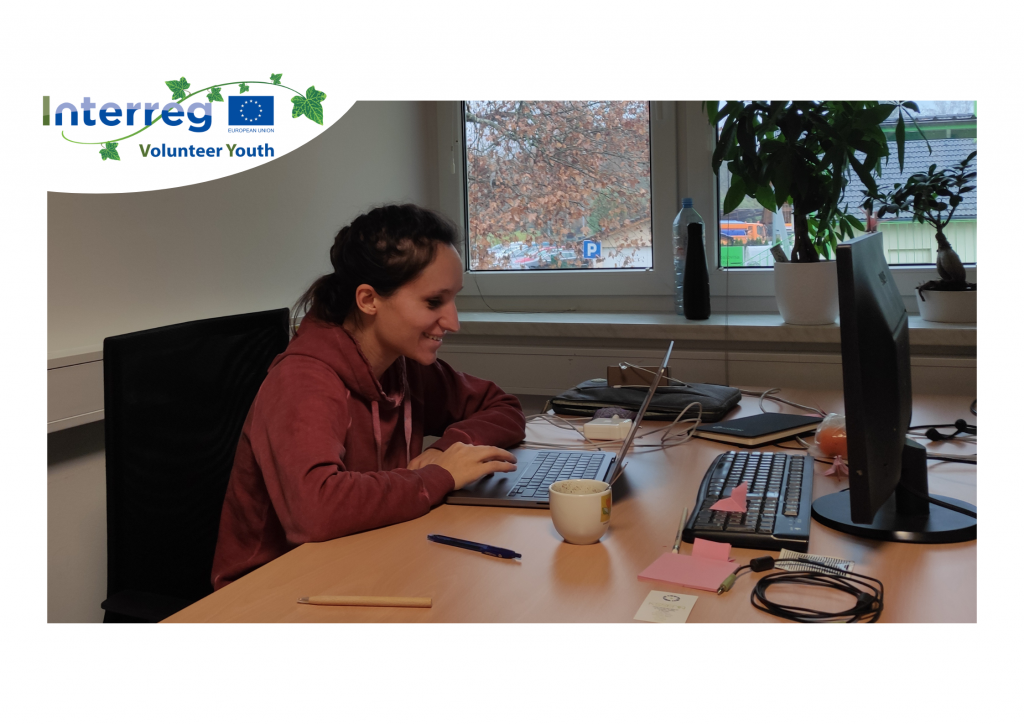
Hello everyone! I am Eliana, currently an IVY Project Partner for the H2MA project under the INTERREG Alpine Space programme. For the past two months, I have been living in Velenje, a small city with three lakes surrounded by Slovenian nature and mountains. Here, I am volunteering at the leading organization of the H2MA project. But what does H2MA mean? The H2MA initiative stands for “Green Hydrogen Mobility for Alpine Region Transportation”. The project aims to foster the development of green hydrogen mobility infrastructures within the Alpine region; through the development of cooperation mechanisms, strategies, tools, and resources, it seeks to increase the capacities of territorial public authorities and stakeholders to overcome existing barriers and collaboratively plan and pilot test transalpine zero-emission H2 routes. H2MA partners come from five different countries in the Alpine Space (SI, IT, DE, FR, AT), and together they are working to achieve the project goals: improving the governance of green hydrogen mobility, boosting the uptake of green H2 for heavy-duty transportation across the Alpine space, unlocking green financing and improving the cooperation framework between public authorities and businesses involved in green H2 mobility. My role at the organization is to support communication within the framework of the project, to gather information and prepare creative graphic material to share the project’s advancements on social media. I joined the project in its second year of existence, for now I have only met the partners during the online meetings, but I hope to participate in face-to-face meetings in the next months! Since I arrived here I have been warmly welcomed! I am enjoying the experience here and I am grateful to have the opportunity to creatively support the organization, and live a small city surrounded by nature. Moving to beautiful Slovenia has been a great decision for me. As we are halfway through the project’s life, I look forward to seeing what the future months will bring. – Eliana C., IVY Project Partner for the Interreg Alpine Space project “H2MA”, at the Energy Agency of Savinjska, Šaleška and Koroška region (KSSENA) Discover more about the Interreg Alpine Space project H2MA Click Here Discover more about KSSENA Click Here