Month: November 2026

My IVY experience at the URBACT Secretariat: Building bridges between European cities

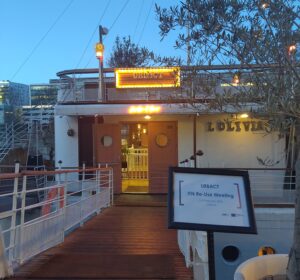
When I joined the URBACT Secretariat in Paris as an Interreg Volunteer, I knew I would be stepping into the world of European cooperation, but I didn’t fully anticipate how rewarding it would be to contribute to something that genuinely connects cities across the continent. What is URBACT? URBACT is an Interreg programme that enables cities to work together on developing sustainable solutions to common urban challenges. With over 20 years of experience, the programme supports cities of all sizes across Europe in sharing knowledge, good practices, and innovative approaches to make urban areas better places to live. From climate action to inclusive urban planning, URBACT networks tackle the issues that matter most to local communities. The programme currently involves hundreds of cities from all EU Member States, plus cities from EU accession countries. Through its different type of networks and various capacity-building activities, URBACT creates spaces where city officials, practitioners, and stakeholders can learn from each other and co-develop solutions that work. My Role at the Secretariat Based at the URBACT Secretariat in Paris, I volunteered within the Networks and Capacity Building unit. My tasks were varied and hands-on: I supported the delivery of online training courses. I also contributed to updating the URBACT Toolbox, a key online resource offering practical guidance to cities across Europe. Additionally, I helped with the organisation of major events, including the launch of new Transfer Networks and training sessions for Innovation Transfer Networks. What Made It Special What struck me most was how my daily volunteering tasks directly contributed to cooperation between European cities. Every email sent, every tool updated, every event organised was part of a larger effort to share knowledge and build a more connected urban network across Europe. The highlight of my experience was participating in URBACT’s in-person events. Seeing city representatives from every corner of Europe, from Portugal to Poland, from Sweden to Greece, gathered in the same room, exchanging ideas and learning from one another, made the value of this programme tangible. It’s a true win-win: cities bring their challenges and leave with solutions, new contacts, and fresh inspiration. Why It Matters URBACT embodies what European cohesion policy is about: helping local communities thrive through collaboration. For anyone curious about how the EU works on the ground, programmes like this show that cooperation isn’t an abstract concept, it’s cities learning from cities, people connecting with people. I’m grateful for this IVY experience and proud to have played a small part in building bridges between European cities. – Francesco, IVY Reporter for URBACT
Read More >

My IVY experience in the Interreg Europe GREENHEALTH Project

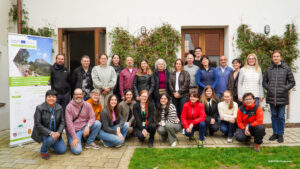
My name is Laura Franco and currently I am an IVY volunteer at the EUROPARC Federation. Taking part in the IVY programme has been a meaningful experience for me so far. Through my involvement in the GREENHEALTH project, I am starting to understand more concretely how cooperation between different European regions works and how these collaborations can have a real impact on people’s lives. GREENHEALTH is an Interreg Europe project focused on improving regional policies by strengthening the link between the environment, health and well-being. It explores how greener spaces, biodiversity and more sustainable choices can support healthier communities and improve quality of life. What I find especially interesting is how this idea is shared across different regions, with each partner bringing their own perspective and experience. In my role as a volunteer, I support communication activities and help share the project’s work. I contribute to creating content, spreading information and making the project’s goals more visible. This has allowed me to better understand not only the project itself, but also how important communication is in making these initiatives effective. Recently, I had the opportunity to support the organisation of the 7th Transnational Meeting of the GREENHEALTH project in Regensburg, Germany. It was a very valuable experience, as I could see more closely how these international meetings are organised and how partners come together to exchange ideas and move the project forward. The two days were full of discussions and moments of exchange, where different partners shared good practices and reflected on how to improve policies in their own regions. At the same time, there were also more informal and enjoyable moments, like a walk through the parks of Regensburg and a guided tour of the city, which made the experience even more engaging and helped create a stronger connection between participants. Overall, this experience is helping me grow both personally and professionally. I feel that I am contributing, even in a small way, to something that promotes healthier, more sustainable and more liveable communities across Europe, and that makes this experience even more valuable to me.   – Laura, IVY Project Parter at Europarc federation, for the Interreg Europe project GREENHEALTH – Sustainable protected areas as a key value for human well

Read More >

Behind the Scenes of Interreg: My Journey as an IVY Reporter in Budapest

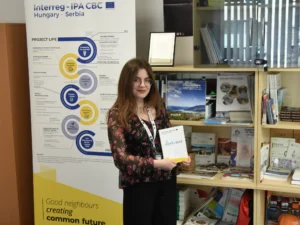
Hello everyone, My name is Federica, I am 28 and I am from Italy. About two months ago, I started my volunteering experience as an IVY Reporter through the IVY (Interreg Volunteer Youth) programme. I am based at the Interreg IV-A IPA Hungary-Serbia Joint Secretariat in Budapest. The Programme I am supporting aims to foster and encourage the harmonious cross-border development of the involved countries, by following the priorities of a greener region, the enhancement of human and cultural values, as well as strengthened cross-border institutional and civil cooperation. Within this framework, my role mainly consists of communication-related tasks, primarily focusing on contributing to the development of the programme’s communication strategy and revamping its social media channels to improve its visibility, strengthen the engagement and expand the audience reach. This includes, among others, designing graphic materials and create content for the programme’s social media platforms, writing articles, recording interviews, and supporting the preparation of communication activities for events, but also regular participation in online meetings and trainings sessions organized by Interact to stay up to date with their communication initiatives and contribute to promoting them. Despite having started this experience only recently, I can already say that IVY has represented a meaningful opportunity, both personally and professionally. Thanks to this experience, I am not only strengthening my skills in audiovisual editing, event organization, and stakeholder engagement, but I am also continually reinforcing my belief in the importance of communicating complex topics in a clear and accessible way, adapting messages carefully to different audiences. I am convinced that effective communication can bridge the gap between institutions and citizens, making policies and initiatives more relatable and meaningful. Therefore, the IVY Reporter role is essential in helping people truly understand the tangible impact these projects have, often extending far beyond their formal completion. During this period, I am also deepening my appreciation of the European Union’s active role in improving cross-border cooperation and everyday life in border regions. What I find particularly motivating, and that gives a strong sense of purpose to what I am doing,  is being able to see how each project, meeting, and initiative contributes to concrete and visible outcomes, efforts that truly impact people’s daily lives in a positive way. Adding to that, this experience is broadening my understanding of what Cohesion Policy means in practice. It is inspiring to see how partners who come together for a project often build long-term relationships, and how beneficiaries can experience life-changing impacts through their participation in project activities. Witnessing how collaboration strengthens communities, fosters mutual understanding, and delivers tangible results motivates me a lot. I see every day as an incredible opportunity to learn and, without any doubt, this experience is helping me to further cultivate my interest in territorial cooperation and regional development while feeling rewarded that the work I do can make a real difference. For these reasons, I would definitely recommend it to all young people who are looking for an opportunity to engage actively in initiatives that generate tangible impact! – Federica, IVY Communication Reporter at the Interreg IV-A IPA Hungary-Serbia Joint Secretariat, supporting cross-border cooperation and regional development

Read More >

Intermittency and the case against lithium−ion, My IVY experience with the GREENOLIVE project

From theory to practice When I first heard about the Interreg Volunteer Youth (IVY) programme, I was looking for a way to step out of the purely theoretical world of academia and into something concrete. As a master’s student in energy engineering and part-time researcher, I had spent the last two years building physical models in simulation environments, running parametric studies, and writing papers that, while rewarding, never left the computer screen. What I was missing was the chance to be part of a real installation, something that actually gets built and makes a difference. Hi, I’m Greta, and that is exactly what I found with GREENOLIVE, an EU-funded project under the Interreg NEXT MED programme. I joined the team at the Rome branch of Università eCampus as a volunteer in December 2025. My role is twofold: supporting the modelling activities that shape the technical development of the project, and helping with communication, making sure the project’s story reaches the right audiences. So what is the project trying to solve exactly? The answer, it turns out, involves a pile of hot rubble. A pile of hot rubble The electrification of industrial heat is, on its face, simple: replace a gas burner with an electric resistance heater or a heat pump. The economic case gets stronger every year as natural gas prices grow more volatile and carbon regulations tighten. But when electricity comes from photovoltaic (PV) panels, a fundamental problem appears: power output is intermittent, while a factory process line needs it around the clock. Conventional electrochemical batteries are expensive, resource-dependent, and hard to recycle. GREENOLIVE offers a simpler alternative: storing solar heat directly in a bed of hot rocks at ~300°C. Instead of costly ceramics or molten salts, the system uses locally sourced industrial waste, providing an affordable, circular solution to thermal energy storage. A 600 kW PV pilot is currently being installed at ASCHEM Petrochemical in Türkiye, expected to cut process natural gas consumption by 20%, with smaller open-lab versions under construction in Egypt and Palestine. Ultimately, GREENOLIVE proves that effective decarbonization doesn’t require rare materials or complex supply chains, just robust, locally built technology that handles renewable intermittency without creating new dependencies. Cross-border dimension The project consortium includes partners in Italy, Türkiye, Spain, France, Egypt, and Palestine. Each team has its own schedule, priorities, and other projects. Being in different locations means communication is mostly by email, and it takes effort to keep everyone aligned. Coordination can be slow at times, and not everyone is updated on every detail, which is normal when people are juggling multiple responsibilities. Learning to navigate that dynamic has been a useful lesson. The Mediterranean dimension adds a layer of distance, but it also brings together people who share a common technical language and are genuinely interested in making the project work. Multidisciplinary mix Writing articles and newsletters is not really my thing, as plain language does not come to me as naturally as I would like it. However, over the past few months I have come to see why it matters, and I have made my peace with not being brilliant at it. If we build a system but nobody knows about it, the impact is limited. Helping to tell the story of GREENOLIVE has forced me to think about who our stakeholders are, what they need to hear, and how to reach them. It is a different kind of challenge, but one that has made me more well-rounded. Looking ahead My placement is still ongoing, and there is plenty to do. The pilot plant in Türkiye is moving toward procurement and installation, the laboratory-scale replicas are taking shape in Egypt, and we are preparing for the next round of dissemination events. I am glad to be part of it. If there is one thing I would tell other young people considering the IVY programme, it is this: expect to be taken outside your comfort zone, and treat that as the point. I came here to see a real system get built. I ended up also learning how to talk about it, how to work across borders and time zones, and how to be useful in ways I had not anticipated. That breadth is the experience. – Greta, IVY Project Partner at eCampus University, for the Interreg NEXT MED project GREENOLIVE

Read More >

Connecting Sicily and Malta through Cultural Heritage: My IVY experience with the CHORAL Project

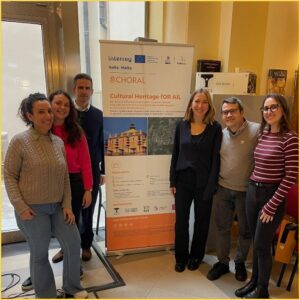
My name is Gabrielle, I am from France, and for the past 2 months I have been based in Palermo to take part in the Interreg Italy-Malta CHORAL (Cultural Heritage for All) project, as an IVY Project Partner. After graduating from a binational Master’s degree focused on Euro-Mediterranean relations, and having lived in both Malta and Italy, joining this cross-border initiative felt like a natural continuation of both my academic and personal journey. CHORAL: Enhancing Cultural Heritage The CHORAL project focuses on promoting cultural heritage while improving accessibility and digitalisation, bringing together partners from Sicily and Malta. The partnership combines complementary expertise: ARCES coordinates the project and facilitates cooperation among partners; Le Vie dei Tesori promotes heritage sites to wider audiences; Heritage Malta, the national agency responsible for museums and heritage sites, contributes its expertise in preservation and public engagement; while the University of Palermo and the University of Malta provide academic research and technological support. The goal of CHORAL is to improve both physical and digital accessibility to cultural heritage sites in Palermo and Malta. Officially launched in March 2025 at the Rabat Catacombs in Malta, the project explores new ways of experiencing heritage through workshops, collaborative activities, and innovative tools. One of its key outcomes will be the creation of 3D reconstructions of cultural sites, available in open access on a dedicated digital platform. In addition, informational totems will be installed in Palermo and Malta to guide visitors and provide accessible content, while educational resources will make the experience engaging for different audiences. These initiatives respond to a growing need for cultural heritage to move beyond traditional documentation of sites, buildings, and artefacts. By combining digital technologies with on-site interpretation, CHORAL seeks to create more inclusive and sustainable ways of discovering heritage. My role as IVY Project Partner Within ARCES, I support stakeholder coordination and contribute to several project activities, while learning from an experienced team in European project management. One of the most concrete tasks I have been involved in so far is linked to the accessibility of the Real Casina Cinese in Palermo, a unique royal residence located in the Parco della Favorita. As part of this work, in February we took part in activities to promote sustainable ways of accessing the site, encouraging visitors to use walking and cycling routes across Palermo. Through this experience, I am also discovering how EU Cohesion Policy works in practice. Projects like CHORAL demonstrate how European cooperation programmes can directly support local communities, promote cultural heritage, and strengthen connections between neighbouring regions such as Sicily and Malta. Personal and professional growth Deeply attached to the region and its cultural diversity, this experience is both enriching and inspiring. My ambition is to continue contributing to cross-border initiatives that promote accessibility and empower younger generations to engage in cooperation settings. In this perspective, joining the CHORAL project and ARCES team in Palermo has been an important step for both my personal and professional development. With a few more months ahead in my IVY experience, I look forward to continuing to learn from my colleagues and to seeing how the project evolves! – Gabrielle, IVY Project Partner at Ente Morale Associazione A.R.C.E.S, for the Interreg Italy-Malta project CHORAL – Cultural Heritage fOR AlL

Read More >

Volunteering at IVY Project CeMeWE: Is Education Enough to Integrate Immigrant Women Into the European Job Market?

Who would have known that only travelling to another country would reveal the real issue It is hard enough to land a job in your own country, but what about the environment with a completely new culture and a bizarre language you simply cannot comprehend? However, there is a way to reduce the stress and ease the transition, and I am a part of it. My name is Julita Viļuma, and as a part of the CeMeWE project team, I promote the opportunities for career growth and motivate other women to join the labor market by writing articles and being a helping hand for the project. Central Baltic Mentoring for Migrant Women seeking Employment or CeMeWE project is focused on integrating immigrant women into the workforce of the European labor markets by offering useful workshops and engaging activities that allow participants to build meaningful networks. Moreover, the project is implemented in 4 different countries – Sweden, Finland, Latvia, and Estonia – which allows it to reach a wider audience and help women with different backgrounds. The organized events vary from peer support mentoring groups to CV creation workshops. Though one thing stays the same- all of the events are tailored for skills improvement and career opportunity exploration. As part of the CeMeWE project, implemented at Laurea University in Finland, I had the opportunity to see how dedication can open doors to possibilities that seemed impossible and to gain valuable experience in writing and event management. As the Finnish branch is offering various peer support groups, I had the opportunity to see the progress of women with different backgrounds and needs. The most surprising group was the one in which women had no education. Even though they also struggled the most, the steps that they took towards finding their job were truly inspiring and showed how effort allows one to reach new heights. Of course, apart from seeing how women achieve their goals, I also had to write about their journey and the events that the CeMeWE project held. It was intriguing to see which conclusions the participants came to after the events and how they decided to act on the acquired knowledge For instance, Ukrainian women in the Zemgale planning region had created their own beauty salon after visiting events of the CeMeWE.  Furthermore, as I had participated in some events of this project even before joining the team as a volunteer, I had noticed such an effect on myself, as the LinkedIn workshop had inspired me to create a good LinkedIn profile, and the CV workshop, as well as the Photoshop workshop, helped me expand my network and learn new skills that I can use. All in all, I do truly believe that the goal of the CeMeWE project is within our reach, and I am really glad to be a part of the team with such a helpful mission. And now, the moment you have been waiting for, dear reader, yes, the education does indeed help immigrant women get integrated into the job market. Though by education I mean personal development, the process of learning new skills, and learning about the career opportunities that are available in the chosen country. – Julita, IVY Project Partner at Laurea University of Applied Sciences, for the Interreg Central Baltic project CeMeWe – The Central Baltic Mentoring for Migrant Women seeking Employment

Read More >

My IVY experience at the URBACT Secretariat: Building bridges between European cities

When I joined the URBACT Secretariat in Paris as an Interreg Volunteer, I knew I would be stepping into the world of European cooperation, but I didn’t fully anticipate how rewarding it would be to contribute to something that genuinely connects cities across the continent. What is URBACT? URBACT is an Interreg programme that enables cities to work together on developing sustainable solutions to common urban challenges. With over 20 years of experience, the programme supports cities of all sizes across Europe in sharing knowledge, good practices, and innovative approaches to make urban areas better places to live. From climate action to inclusive urban planning, URBACT networks tackle the issues that matter most to local communities. The programme currently involves hundreds of cities from all EU Member States, plus cities from EU accession countries. Through its different type of networks and various capacity-building activities, URBACT creates spaces where city officials, practitioners, and stakeholders can learn from each other and co-develop solutions that work. My Role at the Secretariat Based at the URBACT Secretariat in Paris, I volunteered within the Networks and Capacity Building unit. My tasks were varied and hands-on: I supported the delivery of online training courses. I also contributed to updating the URBACT Toolbox, a key online resource offering practical guidance to cities across Europe. Additionally, I helped with the organisation of major events, including the launch of new Transfer Networks and training sessions for Innovation Transfer Networks. What Made It Special What struck me most was how my daily volunteering tasks directly contributed to cooperation between European cities. Every email sent, every tool updated, every event organised was part of a larger effort to share knowledge and build a more connected urban network across Europe. The highlight of my experience was participating in URBACT’s in-person events. Seeing city representatives from every corner of Europe, from Portugal to Poland, from Sweden to Greece, gathered in the same room, exchanging ideas and learning from one another, made the value of this programme tangible. It’s a true win-win: cities bring their challenges and leave with solutions, new contacts, and fresh inspiration. Why It Matters URBACT embodies what European cohesion policy is about: helping local communities thrive through collaboration. For anyone curious about how the EU works on the ground, programmes like this show that cooperation isn’t an abstract concept, it’s cities learning from cities, people connecting with people. I’m grateful for this IVY experience and proud to have played a small part in building bridges between European cities. – Francesco, IVY Reporter for URBACT
Read More >

My IVY experience in the Interreg Europe GREENHEALTH Project

My name is Laura Franco and currently I am an IVY volunteer at the EUROPARC Federation. Taking part in the IVY programme has been a meaningful experience for me so far. Through my involvement in the GREENHEALTH project, I am starting to understand more concretely how cooperation between different European regions works and how these collaborations can have a real impact on people’s lives. GREENHEALTH is an Interreg Europe project focused on improving regional policies by strengthening the link between the environment, health and well-being. It explores how greener spaces, biodiversity and more sustainable choices can support healthier communities and improve quality of life. What I find especially interesting is how this idea is shared across different regions, with each partner bringing their own perspective and experience. In my role as a volunteer, I support communication activities and help share the project’s work. I contribute to creating content, spreading information and making the project’s goals more visible. This has allowed me to better understand not only the project itself, but also how important communication is in making these initiatives effective. Recently, I had the opportunity to support the organisation of the 7th Transnational Meeting of the GREENHEALTH project in Regensburg, Germany. It was a very valuable experience, as I could see more closely how these international meetings are organised and how partners come together to exchange ideas and move the project forward. The two days were full of discussions and moments of exchange, where different partners shared good practices and reflected on how to improve policies in their own regions. At the same time, there were also more informal and enjoyable moments, like a walk through the parks of Regensburg and a guided tour of the city, which made the experience even more engaging and helped create a stronger connection between participants. Overall, this experience is helping me grow both personally and professionally. I feel that I am contributing, even in a small way, to something that promotes healthier, more sustainable and more liveable communities across Europe, and that makes this experience even more valuable to me.   – Laura, IVY Project Parter at Europarc federation, for the Interreg Europe project GREENHEALTH – Sustainable protected areas as a key value for human well

Read More >

Behind the Scenes of Interreg: My Journey as an IVY Reporter in Budapest

Hello everyone, My name is Federica, I am 28 and I am from Italy. About two months ago, I started my volunteering experience as an IVY Reporter through the IVY (Interreg Volunteer Youth) programme. I am based at the Interreg IV-A IPA Hungary-Serbia Joint Secretariat in Budapest. The Programme I am supporting aims to foster and encourage the harmonious cross-border development of the involved countries, by following the priorities of a greener region, the enhancement of human and cultural values, as well as strengthened cross-border institutional and civil cooperation. Within this framework, my role mainly consists of communication-related tasks, primarily focusing on contributing to the development of the programme’s communication strategy and revamping its social media channels to improve its visibility, strengthen the engagement and expand the audience reach. This includes, among others, designing graphic materials and create content for the programme’s social media platforms, writing articles, recording interviews, and supporting the preparation of communication activities for events, but also regular participation in online meetings and trainings sessions organized by Interact to stay up to date with their communication initiatives and contribute to promoting them. Despite having started this experience only recently, I can already say that IVY has represented a meaningful opportunity, both personally and professionally. Thanks to this experience, I am not only strengthening my skills in audiovisual editing, event organization, and stakeholder engagement, but I am also continually reinforcing my belief in the importance of communicating complex topics in a clear and accessible way, adapting messages carefully to different audiences. I am convinced that effective communication can bridge the gap between institutions and citizens, making policies and initiatives more relatable and meaningful. Therefore, the IVY Reporter role is essential in helping people truly understand the tangible impact these projects have, often extending far beyond their formal completion. During this period, I am also deepening my appreciation of the European Union’s active role in improving cross-border cooperation and everyday life in border regions. What I find particularly motivating, and that gives a strong sense of purpose to what I am doing,  is being able to see how each project, meeting, and initiative contributes to concrete and visible outcomes, efforts that truly impact people’s daily lives in a positive way. Adding to that, this experience is broadening my understanding of what Cohesion Policy means in practice. It is inspiring to see how partners who come together for a project often build long-term relationships, and how beneficiaries can experience life-changing impacts through their participation in project activities. Witnessing how collaboration strengthens communities, fosters mutual understanding, and delivers tangible results motivates me a lot. I see every day as an incredible opportunity to learn and, without any doubt, this experience is helping me to further cultivate my interest in territorial cooperation and regional development while feeling rewarded that the work I do can make a real difference. For these reasons, I would definitely recommend it to all young people who are looking for an opportunity to engage actively in initiatives that generate tangible impact! – Federica, IVY Communication Reporter at the Interreg IV-A IPA Hungary-Serbia Joint Secretariat, supporting cross-border cooperation and regional development

Read More >

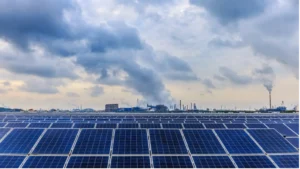
Intermittency and the case against lithium−ion, My IVY experience with the GREENOLIVE project

From theory to practice When I first heard about the Interreg Volunteer Youth (IVY) programme, I was looking for a way to step out of the purely theoretical world of academia and into something concrete. As a master’s student in energy engineering and part-time researcher, I had spent the last two years building physical models in simulation environments, running parametric studies, and writing papers that, while rewarding, never left the computer screen. What I was missing was the chance to be part of a real installation, something that actually gets built and makes a difference. Hi, I’m Greta, and that is exactly what I found with GREENOLIVE, an EU-funded project under the Interreg NEXT MED programme. I joined the team at the Rome branch of Università eCampus as a volunteer in December 2025. My role is twofold: supporting the modelling activities that shape the technical development of the project, and helping with communication, making sure the project’s story reaches the right audiences. So what is the project trying to solve exactly? The answer, it turns out, involves a pile of hot rubble. A pile of hot rubble The electrification of industrial heat is, on its face, simple: replace a gas burner with an electric resistance heater or a heat pump. The economic case gets stronger every year as natural gas prices grow more volatile and carbon regulations tighten. But when electricity comes from photovoltaic (PV) panels, a fundamental problem appears: power output is intermittent, while a factory process line needs it around the clock. Conventional electrochemical batteries are expensive, resource-dependent, and hard to recycle. GREENOLIVE offers a simpler alternative: storing solar heat directly in a bed of hot rocks at ~300°C. Instead of costly ceramics or molten salts, the system uses locally sourced industrial waste, providing an affordable, circular solution to thermal energy storage. A 600 kW PV pilot is currently being installed at ASCHEM Petrochemical in Türkiye, expected to cut process natural gas consumption by 20%, with smaller open-lab versions under construction in Egypt and Palestine. Ultimately, GREENOLIVE proves that effective decarbonization doesn’t require rare materials or complex supply chains, just robust, locally built technology that handles renewable intermittency without creating new dependencies. Cross-border dimension The project consortium includes partners in Italy, Türkiye, Spain, France, Egypt, and Palestine. Each team has its own schedule, priorities, and other projects. Being in different locations means communication is mostly by email, and it takes effort to keep everyone aligned. Coordination can be slow at times, and not everyone is updated on every detail, which is normal when people are juggling multiple responsibilities. Learning to navigate that dynamic has been a useful lesson. The Mediterranean dimension adds a layer of distance, but it also brings together people who share a common technical language and are genuinely interested in making the project work. Multidisciplinary mix Writing articles and newsletters is not really my thing, as plain language does not come to me as naturally as I would like it. However, over the past few months I have come to see why it matters, and I have made my peace with not being brilliant at it. If we build a system but nobody knows about it, the impact is limited. Helping to tell the story of GREENOLIVE has forced me to think about who our stakeholders are, what they need to hear, and how to reach them. It is a different kind of challenge, but one that has made me more well-rounded. Looking ahead My placement is still ongoing, and there is plenty to do. The pilot plant in Türkiye is moving toward procurement and installation, the laboratory-scale replicas are taking shape in Egypt, and we are preparing for the next round of dissemination events. I am glad to be part of it. If there is one thing I would tell other young people considering the IVY programme, it is this: expect to be taken outside your comfort zone, and treat that as the point. I came here to see a real system get built. I ended up also learning how to talk about it, how to work across borders and time zones, and how to be useful in ways I had not anticipated. That breadth is the experience. – Greta, IVY Project Partner at eCampus University, for the Interreg NEXT MED project GREENOLIVE

Read More >

Connecting Sicily and Malta through Cultural Heritage: My IVY experience with the CHORAL Project

My name is Gabrielle, I am from France, and for the past 2 months I have been based in Palermo to take part in the Interreg Italy-Malta CHORAL (Cultural Heritage for All) project, as an IVY Project Partner. After graduating from a binational Master’s degree focused on Euro-Mediterranean relations, and having lived in both Malta and Italy, joining this cross-border initiative felt like a natural continuation of both my academic and personal journey. CHORAL: Enhancing Cultural Heritage The CHORAL project focuses on promoting cultural heritage while improving accessibility and digitalisation, bringing together partners from Sicily and Malta. The partnership combines complementary expertise: ARCES coordinates the project and facilitates cooperation among partners; Le Vie dei Tesori promotes heritage sites to wider audiences; Heritage Malta, the national agency responsible for museums and heritage sites, contributes its expertise in preservation and public engagement; while the University of Palermo and the University of Malta provide academic research and technological support. The goal of CHORAL is to improve both physical and digital accessibility to cultural heritage sites in Palermo and Malta. Officially launched in March 2025 at the Rabat Catacombs in Malta, the project explores new ways of experiencing heritage through workshops, collaborative activities, and innovative tools. One of its key outcomes will be the creation of 3D reconstructions of cultural sites, available in open access on a dedicated digital platform. In addition, informational totems will be installed in Palermo and Malta to guide visitors and provide accessible content, while educational resources will make the experience engaging for different audiences. These initiatives respond to a growing need for cultural heritage to move beyond traditional documentation of sites, buildings, and artefacts. By combining digital technologies with on-site interpretation, CHORAL seeks to create more inclusive and sustainable ways of discovering heritage. My role as IVY Project Partner Within ARCES, I support stakeholder coordination and contribute to several project activities, while learning from an experienced team in European project management. One of the most concrete tasks I have been involved in so far is linked to the accessibility of the Real Casina Cinese in Palermo, a unique royal residence located in the Parco della Favorita. As part of this work, in February we took part in activities to promote sustainable ways of accessing the site, encouraging visitors to use walking and cycling routes across Palermo. Through this experience, I am also discovering how EU Cohesion Policy works in practice. Projects like CHORAL demonstrate how European cooperation programmes can directly support local communities, promote cultural heritage, and strengthen connections between neighbouring regions such as Sicily and Malta. Personal and professional growth Deeply attached to the region and its cultural diversity, this experience is both enriching and inspiring. My ambition is to continue contributing to cross-border initiatives that promote accessibility and empower younger generations to engage in cooperation settings. In this perspective, joining the CHORAL project and ARCES team in Palermo has been an important step for both my personal and professional development. With a few more months ahead in my IVY experience, I look forward to continuing to learn from my colleagues and to seeing how the project evolves! – Gabrielle, IVY Project Partner at Ente Morale Associazione A.R.C.E.S, for the Interreg Italy-Malta project CHORAL – Cultural Heritage fOR AlL

Read More >

Volunteering at IVY Project CeMeWE: Is Education Enough to Integrate Immigrant Women Into the European Job Market?

Who would have known that only travelling to another country would reveal the real issue It is hard enough to land a job in your own country, but what about the environment with a completely new culture and a bizarre language you simply cannot comprehend? However, there is a way to reduce the stress and ease the transition, and I am a part of it. My name is Julita Viļuma, and as a part of the CeMeWE project team, I promote the opportunities for career growth and motivate other women to join the labor market by writing articles and being a helping hand for the project. Central Baltic Mentoring for Migrant Women seeking Employment or CeMeWE project is focused on integrating immigrant women into the workforce of the European labor markets by offering useful workshops and engaging activities that allow participants to build meaningful networks. Moreover, the project is implemented in 4 different countries – Sweden, Finland, Latvia, and Estonia – which allows it to reach a wider audience and help women with different backgrounds. The organized events vary from peer support mentoring groups to CV creation workshops. Though one thing stays the same- all of the events are tailored for skills improvement and career opportunity exploration. As part of the CeMeWE project, implemented at Laurea University in Finland, I had the opportunity to see how dedication can open doors to possibilities that seemed impossible and to gain valuable experience in writing and event management. As the Finnish branch is offering various peer support groups, I had the opportunity to see the progress of women with different backgrounds and needs. The most surprising group was the one in which women had no education. Even though they also struggled the most, the steps that they took towards finding their job were truly inspiring and showed how effort allows one to reach new heights. Of course, apart from seeing how women achieve their goals, I also had to write about their journey and the events that the CeMeWE project held. It was intriguing to see which conclusions the participants came to after the events and how they decided to act on the acquired knowledge For instance, Ukrainian women in the Zemgale planning region had created their own beauty salon after visiting events of the CeMeWE.  Furthermore, as I had participated in some events of this project even before joining the team as a volunteer, I had noticed such an effect on myself, as the LinkedIn workshop had inspired me to create a good LinkedIn profile, and the CV workshop, as well as the Photoshop workshop, helped me expand my network and learn new skills that I can use. All in all, I do truly believe that the goal of the CeMeWE project is within our reach, and I am really glad to be a part of the team with such a helpful mission. And now, the moment you have been waiting for, dear reader, yes, the education does indeed help immigrant women get integrated into the job market. Though by education I mean personal development, the process of learning new skills, and learning about the career opportunities that are available in the chosen country. – Julita, IVY Project Partner at Laurea University of Applied Sciences, for the Interreg Central Baltic project CeMeWe – The Central Baltic Mentoring for Migrant Women seeking Employment

Read More >