Month: November 2026

My experience as an IVY Reporter in the HIBA+ project with the Finnova Foundation

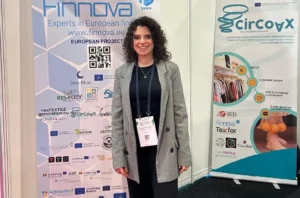
Hello! My name is Nuria Oller Vivet and I am currently an IVY Reporter volunteer at the Finnova Foundation, based in Brussels (Belgium), as part of the Interreg Volunteer Youth (IVY) programme within the Hub Iberia Agrotech (HIBA+) project, a cross-border cooperation initiative between Spain and Portugal. “Interreg” refers to European Territorial Cooperation (ETC), one of the two main objectives of the European Union’s Cohesion Policy, which aims to reduce disparities between regions and countries. Interreg seeks to implement joint actions and policy exchanges between EU Member States through different programmes like ours. The main goal of the HIBA+ project is to drive the digital transformation of the agri-food sector in the Spain-Portugal cross-border region. It focuses on creating an open, collaborative and multisectoral digital innovation ecosystem that fosters entrepreneurship and the internationalisation of SMEs. As an IVY volunteer, I work closely with the communication and marketing departments, contributing to the development of the project’s communication strategy: from creating content for social media to designing graphic materials for training sessions and events, producing and recording videos for the YouTube channel, and helping organise events. All materials and actions aim to maximise the project’s outreach and reach as many beneficiaries as possible. Thanks to this experience, I have been able to strengthen key skills such as intercultural communication, digital event management, audiovisual editing, multilingual institutional writing, and teamwork in multicultural and high-pressure environments. Every day is an opportunity to learn, both on a technical and a personal level. In addition, being part of Finnova has allowed me to contribute to other European projects led by the foundation from its offices in Brussels and Spain, broadening my perspective and understanding of the European innovation and cooperation ecosystem. This experience has been key in confirming my interest in continuing to develop my career in European communication, territorial innovation, and international cooperation projects. I want to keep following this path while remaining open to exploring new sectors where I can apply what I’ve learned, continue growing, and acquire new skills. My time at HIBA+ has been enriching in every sense, and I am truly grateful for the opportunity to learn, contribute, and be part of a project with such transformative potential. -Nuria, IVY Project Partner at Finnova Foundation for the Interreg POCTEP project HIBA+
Read More >

Preserving Tradition, Empowering SMEs: My IVY Journey with SMEOrigin

Hello everyone! I’m Emmanouela from Greece, and for the past two months, I have been part of the Interreg Europe programme as an IVY volunteer, participating in the SMEOrigin project (SMEs and European Original Geographical Indications). The SMEOrigin project seeks to contribute to regional development by strengthening small and medium-sized enterprises (SMEs) operating in the food sector. It focuses on supporting products with Protected Designation of Origin (PDO) and Protected Geographical Indication (PGI) status, promoting higher quality standards, encouraging digital innovation, and preserving the unique character of traditional products from the participating regions. Throughout my volunteering experience, I have helped prepare and organise stakeholder and interregional meetings and contributed to the development of regional thematic reports. These activities have allowed me to explore a range of local and regional food products and better understand the ways in which different regions promote their culinary traditions and protect their local identity. Official stakeholder meetings take place every six months, complemented by a variety of thematic meetings organised as part of the project. An important part of my experience involves exploring legal challenges related to PDO and PGI products. One example is Mavrodaphne, a sweet wine with PDO status that cannot currently be produced in a dry version due to existing legal restrictions, even though there is interest in such a product from both producers and consumers. SMEOrigin is actively examining this issue and explore the possibility of addressing it. I am pleased to support the project team in researching legal matters concerning PDO and PGI products in the Western Greece Region. This activity, combined with other project initiatives and resources, can help strengthen the recognition and competitiveness of these products, while also supporting local businesses and contributing to the region’s economic development. My responsibilities also include contributing to the project’s communication activities. I am involved in reviewing its communication strategy and assisting with updates to the project website. Furthermore, I help promote the project through social media, translate relevant information into Greek, and prepare Greek-language versions of dissemination materials and presentations of the project’s main achievements. So far, being part of the IVY programme has been a valuable and enjoyable experience. I am happy to continue contributing to the SMEOrigin project while gaining new insights, developing my skills, and growing on both a professional and personal level. – Emmanouela, IVY Project Partner at the University of Patras for the Interreg Europe project SMEOrigin – SMEs & European Original Geographical Indications

Read More >

Stories of Cooperation – Follow-up, presentation and article submission deadline

Hello! My name is Monica, and I am about to complete my experience as an Interreg Volunteer Youth at SVI.MED. – EuroMediterranean Center for Sustainable Development, within the Interreg NEXT Italy–Tunisia project “STEP-OL”. Today, the olive tree—one of the most iconic crops of the Mediterranean—is under serious threat from climate change, which is causing droughts and the emergence of new diseases and pests, such as Xylella, while also reshaping agricultural practices. The project’s objective is therefore twofold: on the one hand, to improve the capacity to prevent and detect olive tree diseases at an early stage; on the other, to optimize the use of water resources by adapting irrigation practices to new climate conditions. To achieve this, “STEP-OL” adopts an innovative approach based on collaboration among researchers, producers, and local communities in Sicily and Tunisia. A key element of the project is the exchange of knowledge among these actors, also made possible through citizen science activities. Within this framework, researchers collect field data; farmers gain tools and knowledge to face new challenges; and local communities become active participants in protecting their territory and its resources. As an IVY volunteer, I was responsible for establishing initial contacts with Sicilian olive-growing companies, presenting the project, and collecting the required documentation. I also supported the monitoring of citizen science activities by managing logistical aspects, facilitating data collection, and acting as a link between researchers and farmers. In parallel, I contributed to communication and dissemination activities through social media channels, newsletter writing, and drafting reports to share the project’s results. This experience allowed me to better understand how cooperation among the scientific community, producers, and citizens from different countries can generate innovative solutions and tangible impacts at the local level. At the same time, I had the opportunity to strengthen my professional skills and develop new ones, particularly in the field of communication. – Monica, IVY Project Partner at SVI.MED. – EuroMediterranean Center for the Sustainable Development – ETS , for the Interreg Next Italie-Tunisie project STEP-OL – STEP-OL Stratégies partagées pour la surveillance, la prévention et le diagnostic précoce des maladies de l’olivier et l’adaptation au changement climatique pour une oléiculture résiliente

Read More >

What I learned about European cities’ cooperation as an IVY Reporter at URBACT

When arriving in Paris last October, I wasn’t that familiar with the workings of the URBACT Interreg programme. My mission an as an IVY Reporter at the URBACT Joint Secretariat allowed me to learn much about the diversity of initiatives of Cohesion Policy initiatives and outlier programmes like URBACT while simultaneously supporting the daily and strategic activities of the managing organisation from within their Communication and Knowledge team. While assisting with the planning of the 2026 URBACT City Festival, the programme’s flagship event for urban policymakers and European cities, I was able to dive into the goals of URBACT, who it supports, and how. Unlike traditional Interreg programmes that focus on cohesion in border regions, URBACT is one of a few transnational Interreg programmes alongside Interreg Europe, Interreg North Sea, and others. This means that every region of the EU is involved in projects and can be beneficiaries. Beyond that, URBACT is even open to European countries outside of the EU27 including Norway, Switzerland, the Western Balkan countries, and recently Ukraine and Moldova. In a time when so many neighbouring countries are engaged in accession negotiations with the EU, reaching out the regions there now is more important than ever, and tailored programmes like URBACT Pioneers Accelerator specifically for the Western Balkans helps to accelerate their exchanges with existing Member States. Beyond just an expanded scope, URBACT is also unique in its target audience. Rather than focusing on larger regions, URBACT beneficiaries are cities – ranging from small municipalities of just a few thousand inhabitants to the largest cities of Europe with millions of inhabitants, and all of those in the middle. This is the core of URBACT’S mission: promoting, enabling, and supporting sustainable urban development in Europe. To do this, URBACT’s projects take on the form of city networks centred around thematic topics of sustainable urban development. These closely align to the EU’s key activities, ranging from the green and digital transitions to social cohesion, innovation, participative governance, mobility, and housing. In networks ranging from five to ten partners, partners collaborate in transnational meetings to exchange ideas from all corners of Europe, go on joint study visits to learn from good practices, engage locally with the URBACT Methodology, and launch pilot projects to tackle the pressing issues facing European urban regions today. Meanwhile, they are supported by URBACT’s suite of specialised experts, training events and meetings, and platform to gain the skills and knowledge necessary to tackle their topics. At the end of their two-year journeys, the networks share what they have learned collectively in guides, policy paper, videos, podcasts, and international events. Some of these events include those by URBACT, like the semi-annual URBACT City Festival. As an IVY Reporter at URBACT, I helped the Joint Secretariat in planning the event next taking place in Nicosia, Cyprus to share the results of the latest networks to complete their URBACT journeys and showcase the work they’ve done. Supporting the communications team, I helped prepare the posters that over 300 beneficiary cities will use to showcase their work, organised with URBACT experts to prepare the key exchanges of the thematic sessions that will be held, and more. Beyond the Festival, I assisted URBACT with their other communication activities, such as its press releases, exchanges with partner institutions, and even presenting the programme to other Interreg projects at the Interreg Europe Let’s cooperate! 2026 event in Copenhagen. My time as an IVY at the URBACT Joint Secretariat was a unique opportunity to learn more about the unique activities of URBACT within the EU’s Cohesion Policy and how cities in Europe collaborate on critical issues, all the while gaining experience in communication and knowledge-building for a diverse European programme. I can safely say that, if given the opportunity to do it again, I would so in a heartbeat – and am sure any future IVY will feel the same way! – Quentin, IVY Reporter for URBACT

Read More >

My IVY Experience with Interreg Italy–Slovenia

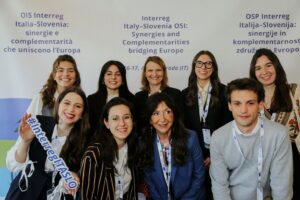
Hi everyone! My name is Silvia, and I am volunteering as an IVY Project Partner for the Interreg Italy-Slovenia Programme in Trieste. As an IVY volunteer, I support communication activities for the Autonomous Region of Friuli Venezia Giulia and its regional beneficiaries within the TA4 project. I started my journey in November 2025, moving from Rome to Trieste: a city I had never visited before, but soon became familiar. What is Interreg, and why is cooperation between Italy and Slovenia important? The Interreg Italy-Slovenia is a cross-border cooperation Programme that includes regions along the Italian and Slovenian border. Its main goal is to strengthen collaboration between the two countries by addressing shared challenges and promoting sustainable development. This is particularly important in a region where cultures, histories, landscapes, and communities are deeply interconnected, and where national minorities live on both sides of the border. One of the most valuable aspects of this experience has been the opportunity to see how different partners cooperate across borders. Institutions, organizations, and professionals from both countries work together to develop projects that benefit local communities, businesses, and the environment. Being part of the Programme’s communication office allowed me to observe this cooperation from a broader perspective, understanding how partners collaborate to achieve their goals and ensure the success of their projects. My role in the communication office My daily tasks include writing articles for the official regional website, supporting the communication team, contributing to the 2025 communication report, and updating information on the progress of the state of the art of the 75 projects co-funded by the Programme. In the final phase of my experience, I was also deeply involved in the organization of the Annual Event “OSI Interreg Italy-Slovenia: Synergies and Complementarities Bridging Europe”. The trust my colleagues gave me, and the success of the event, were the perfect way to conclude this incredible journey. What I enjoy most about this experience is the supportive and welcoming environment of my team. From the very beginning, my colleagues involved me in meetings, project events, and Monitoring Committee sessions in Ljubljana and Lignano. They encouraged me to take initiative and gave me the confidence to grow both professionally and personally. As I approach the end of my IVY experience, I feel enriched, grateful, and proud of what I have achieved and of all the people I had the opportunity to meet and work with. Thank you IVY, and thank you Interreg Italy-Slovenia! – Silvia, IVYProject Partner at Friuli Venezia Giulia Autonomous Region / Regione autonoma Friuli Venezia Giulia, for the Interreg Italy-Slovenia project Italy-FVG-TA4 (21-27) – Technical assistence project in order to support the Autonomous Region Friuli Venezia Giulia

Read More >

My Experience as an Ivy Volunteer with the project  “C.A.R.E”

Hello everyone!I’m Sofia, I’m 23 years old and I’m from Italy. I’ve just completed a six-month volunteer experience within the Alcotra – C.A.R.E. project, carried out in collaboration with France. The main goal of the project is to promote interaction between the two socio-health ecosystems, with a particular focus on the factors that influence how health systems function in cross-border areas. These include aspects such as territorial and proximity healthcare, as well as the role of prevention and health promotion. CARE also aims to overcome regulatory differences by focusing on shared operational needs, in order to better support those most at risk of isolation and loss of autonomy. Another important objective is to compensate for each other’s gaps, for example by addressing shortages of professionals in certain sectors, including general practitioners, and by recognizing the role of volunteers as a “third pillar” of the socio-health system. The project partners cooperate through constant communication, shared responsibilities, and the organization of joint initiatives. This collaborative approach allows each partner to bring their own expertise, ensuring that the project runs smoothly and effectively. I contributed by supporting daily organizational tasks, facilitating communication between team members and project partners, and helping to coordinate meetings and events. I also took part in preparing materials and monitoring the progress of ongoing activities, making sure everything stayed aligned with the project’s objectives. What I appreciated most about this experience was the opportunity to volunteer in an international context, meet people from different backgrounds, and contribute to a meaningful project. It allowed me to develop important skills such as communication, adaptability, and teamwork, while also giving me a deeper understanding of how collaborative projects operate.   Bisous! 🙂   – Sofia, IVY Project Partner at Metropolitan City of Turin – Direzione sviluppo rurale e montano, for the Interreg Alcotra project C.A.R.E. – Communauté pour Aider la Résilience des Ecosystèmes socio-sanitaires

Read More >

My experience as an IVY Reporter in the HIBA+ project with the Finnova Foundation

Hello! My name is Nuria Oller Vivet and I am currently an IVY Reporter volunteer at the Finnova Foundation, based in Brussels (Belgium), as part of the Interreg Volunteer Youth (IVY) programme within the Hub Iberia Agrotech (HIBA+) project, a cross-border cooperation initiative between Spain and Portugal. “Interreg” refers to European Territorial Cooperation (ETC), one of the two main objectives of the European Union’s Cohesion Policy, which aims to reduce disparities between regions and countries. Interreg seeks to implement joint actions and policy exchanges between EU Member States through different programmes like ours. The main goal of the HIBA+ project is to drive the digital transformation of the agri-food sector in the Spain-Portugal cross-border region. It focuses on creating an open, collaborative and multisectoral digital innovation ecosystem that fosters entrepreneurship and the internationalisation of SMEs. As an IVY volunteer, I work closely with the communication and marketing departments, contributing to the development of the project’s communication strategy: from creating content for social media to designing graphic materials for training sessions and events, producing and recording videos for the YouTube channel, and helping organise events. All materials and actions aim to maximise the project’s outreach and reach as many beneficiaries as possible. Thanks to this experience, I have been able to strengthen key skills such as intercultural communication, digital event management, audiovisual editing, multilingual institutional writing, and teamwork in multicultural and high-pressure environments. Every day is an opportunity to learn, both on a technical and a personal level. In addition, being part of Finnova has allowed me to contribute to other European projects led by the foundation from its offices in Brussels and Spain, broadening my perspective and understanding of the European innovation and cooperation ecosystem. This experience has been key in confirming my interest in continuing to develop my career in European communication, territorial innovation, and international cooperation projects. I want to keep following this path while remaining open to exploring new sectors where I can apply what I’ve learned, continue growing, and acquire new skills. My time at HIBA+ has been enriching in every sense, and I am truly grateful for the opportunity to learn, contribute, and be part of a project with such transformative potential. -Nuria, IVY Project Partner at Finnova Foundation for the Interreg POCTEP project HIBA+
Read More >

Preserving Tradition, Empowering SMEs: My IVY Journey with SMEOrigin

Hello everyone! I’m Emmanouela from Greece, and for the past two months, I have been part of the Interreg Europe programme as an IVY volunteer, participating in the SMEOrigin project (SMEs and European Original Geographical Indications). The SMEOrigin project seeks to contribute to regional development by strengthening small and medium-sized enterprises (SMEs) operating in the food sector. It focuses on supporting products with Protected Designation of Origin (PDO) and Protected Geographical Indication (PGI) status, promoting higher quality standards, encouraging digital innovation, and preserving the unique character of traditional products from the participating regions. Throughout my volunteering experience, I have helped prepare and organise stakeholder and interregional meetings and contributed to the development of regional thematic reports. These activities have allowed me to explore a range of local and regional food products and better understand the ways in which different regions promote their culinary traditions and protect their local identity. Official stakeholder meetings take place every six months, complemented by a variety of thematic meetings organised as part of the project. An important part of my experience involves exploring legal challenges related to PDO and PGI products. One example is Mavrodaphne, a sweet wine with PDO status that cannot currently be produced in a dry version due to existing legal restrictions, even though there is interest in such a product from both producers and consumers. SMEOrigin is actively examining this issue and explore the possibility of addressing it. I am pleased to support the project team in researching legal matters concerning PDO and PGI products in the Western Greece Region. This activity, combined with other project initiatives and resources, can help strengthen the recognition and competitiveness of these products, while also supporting local businesses and contributing to the region’s economic development. My responsibilities also include contributing to the project’s communication activities. I am involved in reviewing its communication strategy and assisting with updates to the project website. Furthermore, I help promote the project through social media, translate relevant information into Greek, and prepare Greek-language versions of dissemination materials and presentations of the project’s main achievements. So far, being part of the IVY programme has been a valuable and enjoyable experience. I am happy to continue contributing to the SMEOrigin project while gaining new insights, developing my skills, and growing on both a professional and personal level. – Emmanouela, IVY Project Partner at the University of Patras for the Interreg Europe project SMEOrigin – SMEs & European Original Geographical Indications

Read More >

Stories of Cooperation – Follow-up, presentation and article submission deadline

Hello! My name is Monica, and I am about to complete my experience as an Interreg Volunteer Youth at SVI.MED. – EuroMediterranean Center for Sustainable Development, within the Interreg NEXT Italy–Tunisia project “STEP-OL”. Today, the olive tree—one of the most iconic crops of the Mediterranean—is under serious threat from climate change, which is causing droughts and the emergence of new diseases and pests, such as Xylella, while also reshaping agricultural practices. The project’s objective is therefore twofold: on the one hand, to improve the capacity to prevent and detect olive tree diseases at an early stage; on the other, to optimize the use of water resources by adapting irrigation practices to new climate conditions. To achieve this, “STEP-OL” adopts an innovative approach based on collaboration among researchers, producers, and local communities in Sicily and Tunisia. A key element of the project is the exchange of knowledge among these actors, also made possible through citizen science activities. Within this framework, researchers collect field data; farmers gain tools and knowledge to face new challenges; and local communities become active participants in protecting their territory and its resources. As an IVY volunteer, I was responsible for establishing initial contacts with Sicilian olive-growing companies, presenting the project, and collecting the required documentation. I also supported the monitoring of citizen science activities by managing logistical aspects, facilitating data collection, and acting as a link between researchers and farmers. In parallel, I contributed to communication and dissemination activities through social media channels, newsletter writing, and drafting reports to share the project’s results. This experience allowed me to better understand how cooperation among the scientific community, producers, and citizens from different countries can generate innovative solutions and tangible impacts at the local level. At the same time, I had the opportunity to strengthen my professional skills and develop new ones, particularly in the field of communication. – Monica, IVY Project Partner at SVI.MED. – EuroMediterranean Center for the Sustainable Development – ETS , for the Interreg Next Italie-Tunisie project STEP-OL – STEP-OL Stratégies partagées pour la surveillance, la prévention et le diagnostic précoce des maladies de l’olivier et l’adaptation au changement climatique pour une oléiculture résiliente

Read More >

What I learned about European cities’ cooperation as an IVY Reporter at URBACT

When arriving in Paris last October, I wasn’t that familiar with the workings of the URBACT Interreg programme. My mission an as an IVY Reporter at the URBACT Joint Secretariat allowed me to learn much about the diversity of initiatives of Cohesion Policy initiatives and outlier programmes like URBACT while simultaneously supporting the daily and strategic activities of the managing organisation from within their Communication and Knowledge team. While assisting with the planning of the 2026 URBACT City Festival, the programme’s flagship event for urban policymakers and European cities, I was able to dive into the goals of URBACT, who it supports, and how. Unlike traditional Interreg programmes that focus on cohesion in border regions, URBACT is one of a few transnational Interreg programmes alongside Interreg Europe, Interreg North Sea, and others. This means that every region of the EU is involved in projects and can be beneficiaries. Beyond that, URBACT is even open to European countries outside of the EU27 including Norway, Switzerland, the Western Balkan countries, and recently Ukraine and Moldova. In a time when so many neighbouring countries are engaged in accession negotiations with the EU, reaching out the regions there now is more important than ever, and tailored programmes like URBACT Pioneers Accelerator specifically for the Western Balkans helps to accelerate their exchanges with existing Member States. Beyond just an expanded scope, URBACT is also unique in its target audience. Rather than focusing on larger regions, URBACT beneficiaries are cities – ranging from small municipalities of just a few thousand inhabitants to the largest cities of Europe with millions of inhabitants, and all of those in the middle. This is the core of URBACT’S mission: promoting, enabling, and supporting sustainable urban development in Europe. To do this, URBACT’s projects take on the form of city networks centred around thematic topics of sustainable urban development. These closely align to the EU’s key activities, ranging from the green and digital transitions to social cohesion, innovation, participative governance, mobility, and housing. In networks ranging from five to ten partners, partners collaborate in transnational meetings to exchange ideas from all corners of Europe, go on joint study visits to learn from good practices, engage locally with the URBACT Methodology, and launch pilot projects to tackle the pressing issues facing European urban regions today. Meanwhile, they are supported by URBACT’s suite of specialised experts, training events and meetings, and platform to gain the skills and knowledge necessary to tackle their topics. At the end of their two-year journeys, the networks share what they have learned collectively in guides, policy paper, videos, podcasts, and international events. Some of these events include those by URBACT, like the semi-annual URBACT City Festival. As an IVY Reporter at URBACT, I helped the Joint Secretariat in planning the event next taking place in Nicosia, Cyprus to share the results of the latest networks to complete their URBACT journeys and showcase the work they’ve done. Supporting the communications team, I helped prepare the posters that over 300 beneficiary cities will use to showcase their work, organised with URBACT experts to prepare the key exchanges of the thematic sessions that will be held, and more. Beyond the Festival, I assisted URBACT with their other communication activities, such as its press releases, exchanges with partner institutions, and even presenting the programme to other Interreg projects at the Interreg Europe Let’s cooperate! 2026 event in Copenhagen. My time as an IVY at the URBACT Joint Secretariat was a unique opportunity to learn more about the unique activities of URBACT within the EU’s Cohesion Policy and how cities in Europe collaborate on critical issues, all the while gaining experience in communication and knowledge-building for a diverse European programme. I can safely say that, if given the opportunity to do it again, I would so in a heartbeat – and am sure any future IVY will feel the same way! – Quentin, IVY Reporter for URBACT

Read More >

My IVY Experience with Interreg Italy–Slovenia

Hi everyone! My name is Silvia, and I am volunteering as an IVY Project Partner for the Interreg Italy-Slovenia Programme in Trieste. As an IVY volunteer, I support communication activities for the Autonomous Region of Friuli Venezia Giulia and its regional beneficiaries within the TA4 project. I started my journey in November 2025, moving from Rome to Trieste: a city I had never visited before, but soon became familiar. What is Interreg, and why is cooperation between Italy and Slovenia important? The Interreg Italy-Slovenia is a cross-border cooperation Programme that includes regions along the Italian and Slovenian border. Its main goal is to strengthen collaboration between the two countries by addressing shared challenges and promoting sustainable development. This is particularly important in a region where cultures, histories, landscapes, and communities are deeply interconnected, and where national minorities live on both sides of the border. One of the most valuable aspects of this experience has been the opportunity to see how different partners cooperate across borders. Institutions, organizations, and professionals from both countries work together to develop projects that benefit local communities, businesses, and the environment. Being part of the Programme’s communication office allowed me to observe this cooperation from a broader perspective, understanding how partners collaborate to achieve their goals and ensure the success of their projects. My role in the communication office My daily tasks include writing articles for the official regional website, supporting the communication team, contributing to the 2025 communication report, and updating information on the progress of the state of the art of the 75 projects co-funded by the Programme. In the final phase of my experience, I was also deeply involved in the organization of the Annual Event “OSI Interreg Italy-Slovenia: Synergies and Complementarities Bridging Europe”. The trust my colleagues gave me, and the success of the event, were the perfect way to conclude this incredible journey. What I enjoy most about this experience is the supportive and welcoming environment of my team. From the very beginning, my colleagues involved me in meetings, project events, and Monitoring Committee sessions in Ljubljana and Lignano. They encouraged me to take initiative and gave me the confidence to grow both professionally and personally. As I approach the end of my IVY experience, I feel enriched, grateful, and proud of what I have achieved and of all the people I had the opportunity to meet and work with. Thank you IVY, and thank you Interreg Italy-Slovenia! – Silvia, IVYProject Partner at Friuli Venezia Giulia Autonomous Region / Regione autonoma Friuli Venezia Giulia, for the Interreg Italy-Slovenia project Italy-FVG-TA4 (21-27) – Technical assistence project in order to support the Autonomous Region Friuli Venezia Giulia

Read More >

My Experience as an Ivy Volunteer with the project  “C.A.R.E”

Hello everyone!I’m Sofia, I’m 23 years old and I’m from Italy. I’ve just completed a six-month volunteer experience within the Alcotra – C.A.R.E. project, carried out in collaboration with France. The main goal of the project is to promote interaction between the two socio-health ecosystems, with a particular focus on the factors that influence how health systems function in cross-border areas. These include aspects such as territorial and proximity healthcare, as well as the role of prevention and health promotion. CARE also aims to overcome regulatory differences by focusing on shared operational needs, in order to better support those most at risk of isolation and loss of autonomy. Another important objective is to compensate for each other’s gaps, for example by addressing shortages of professionals in certain sectors, including general practitioners, and by recognizing the role of volunteers as a “third pillar” of the socio-health system. The project partners cooperate through constant communication, shared responsibilities, and the organization of joint initiatives. This collaborative approach allows each partner to bring their own expertise, ensuring that the project runs smoothly and effectively. I contributed by supporting daily organizational tasks, facilitating communication between team members and project partners, and helping to coordinate meetings and events. I also took part in preparing materials and monitoring the progress of ongoing activities, making sure everything stayed aligned with the project’s objectives. What I appreciated most about this experience was the opportunity to volunteer in an international context, meet people from different backgrounds, and contribute to a meaningful project. It allowed me to develop important skills such as communication, adaptability, and teamwork, while also giving me a deeper understanding of how collaborative projects operate.   Bisous! 🙂   – Sofia, IVY Project Partner at Metropolitan City of Turin – Direzione sviluppo rurale e montano, for the Interreg Alcotra project C.A.R.E. – Communauté pour Aider la Résilience des Ecosystèmes socio-sanitaires

Read More >