Month: August 2026

Empowering Local Businesses through Green Development: My IVY Experience

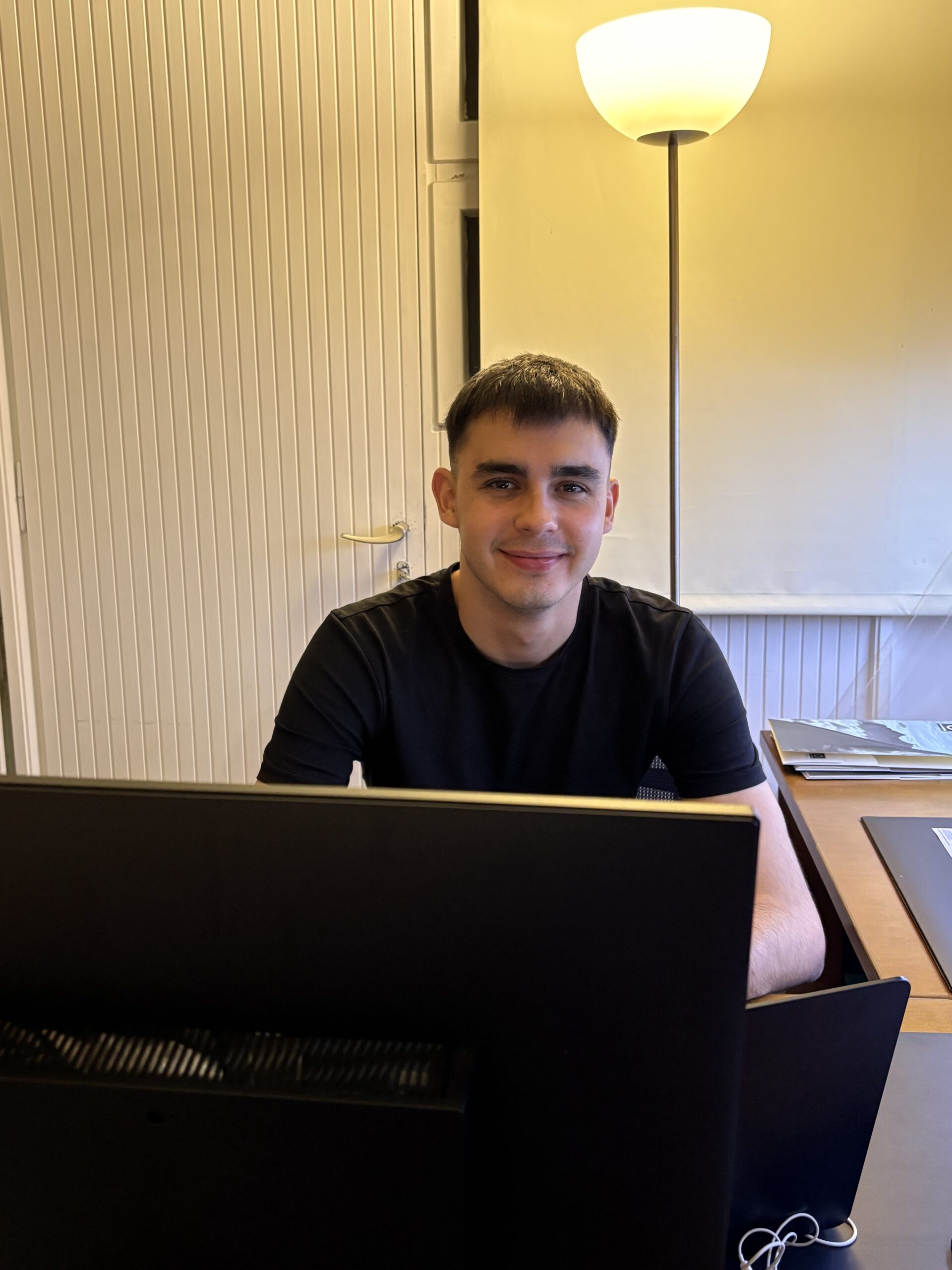
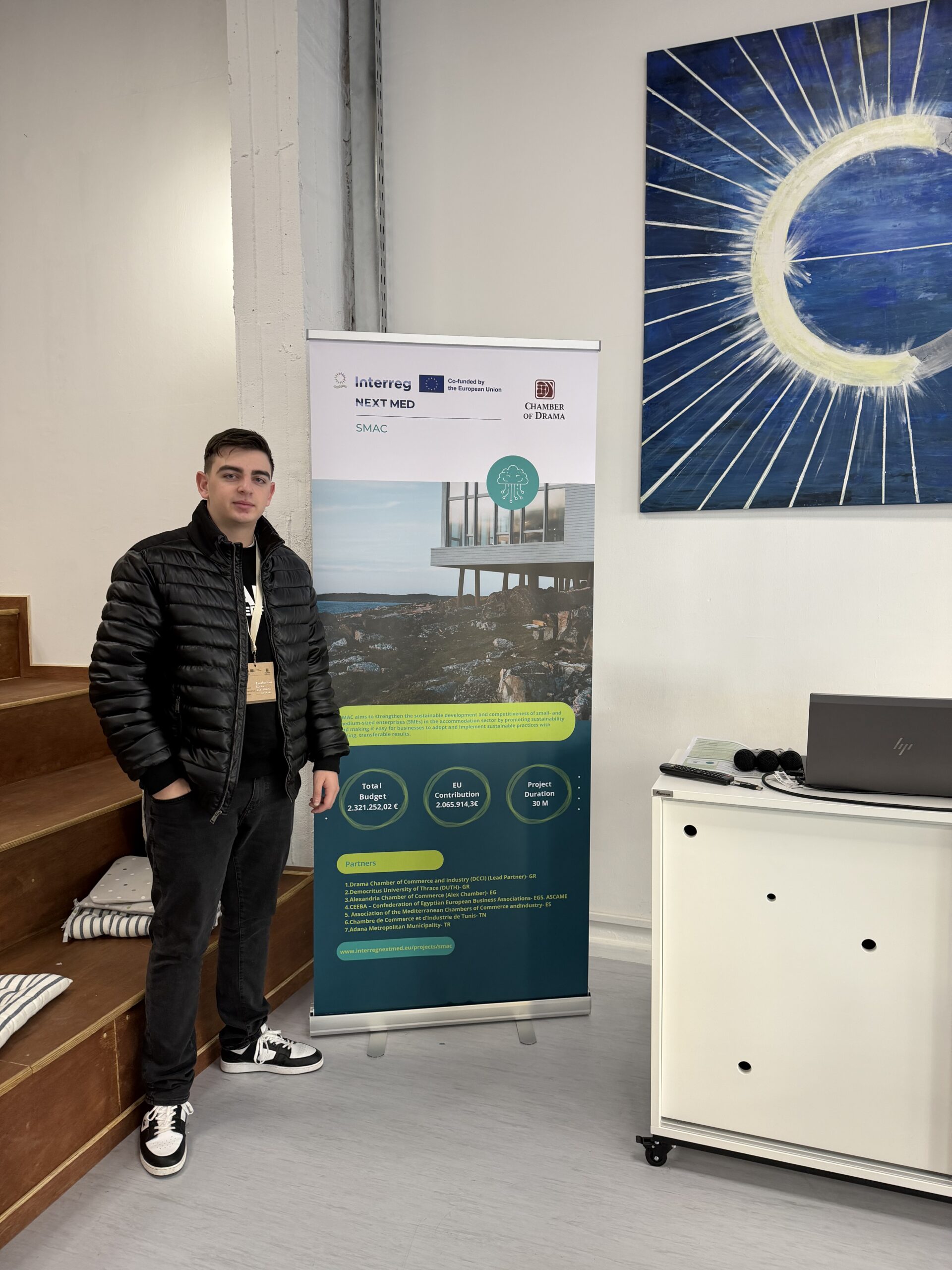
As an IVY Interreg volunteer based at the Chamber of Commerce of Drama, Greece, I have had the opportunity to actively contribute to a project focused on supporting small and medium-sized enterprises in their transition toward more sustainable and environmentally friendly practices.The main goal of the programme is to help local businesses grow while also becoming greener and more environmentally responsible. Through this initiative, we aim to create practical and lasting results, ensuring that SMEs can develop economically while actively contributing to environmental protection. My role as a volunteer is dynamic and hands-on. I support my colleagues in a variety of tasks, always adapting to the needs of the programme. One of the most impactful experiences so far was the international meeting hosted in Drama, where representatives from different countries, including Egypt, Spain, and Turkey, participated. During this event, I had the opportunity to interact directly with partners from various chambers and organisations, exchanging ideas and building meaningful connections.A particularly important moment for me was contributing to the preparation of the PowerPoint presentation delivered by my coach on behalf of the Chamber of Drama. Being part of this process allowed me to actively support the communication of the project’s vision and goals.Through this experience, I have come to deeply understand the importance of European cooperation. The programme highlights how countries can benefit individually through collaboration and shared efforts. Being part of such an international environment has strengthened my belief in the value of the European Union and its initiatives.I especially value the direct interaction with the members of the Chamber of Drama and the opportunity to actively contribute to the project. Looking ahead, I am excited to participate in an upcoming three-day meeting in Barcelona, where I will continue this journey alongside my coach and fellow partners.Overall, this experience has been highly enriching both professionally and personally. I would strongly encourage other young people to take part in similar programmes, as they offer valuable insights, meaningful connections, and the chance to make a real impact. – Konstantinos, IVY Project Partner at Chamber of Commerce and Industry of Drama, for the Interreg project SMAC, under the programme Interreg NEXT MED.
Read More >

Discovering WaterWays: My IVY Volunteering Journey

Hello, my name is Eva, and I’ve spent the past six months volunteering with the WaterWays project as part of the Interreg Volunteer Youth programme at the Lithuanian Countryside Tourism Association. It was an amazing experience that gave me the chance to learn more about European projects, see how they work from the inside, and gain valuable skills not only in international cooperation, but also in the daily work of an organisation. I supported the WaterWays project, which develops tourism connected to rivers, lakes, and inland water routes. The project focuses on promoting hidden gems in smaller regions, supporting local businesses, and encouraging sustainable travel. Through this initiative, partners from Lithuania and Latvia work together to make water tourism more attractive, accessible, and environmentally friendly. At the beginning of my volunteering journey, I learned more about the organisation and how international projects are managed. Soon after, I became involved in communication with local tourism businesses, including kayaking and fishing service providers. I also helped organise two seminars by contacting participants, preparing materials, and assisting during the events. Later, I focused on communication and promotional activities. I reviewed content for a tourism guide featuring 176 lakes across Lithuania and Latvia, updated the project website, and wrote articles about lakes, destinations, and tourist attractions. I also supported social media communication, helping to share the project’s message with a wider audience. One of the most exciting moments of my experience was participating in Lithuania’s largest tourism fair, Adventur 2026. It was the first time I took part in such an event not as a visitor, but as a participant. I helped prepare the exhibition stand and had the chance to speak with visitors about the project and its activities. It was a great opportunity to improve my communication skills and experience the energy of a major tourism event firsthand. This volunteering journey was both valuable and inspiring. It helped me develop professional skills, meet new people, and become part of an international initiative that promotes sustainable tourism and regional development. I am very grateful for this opportunity and for everything I learned during these six months.     – Eva, IVY Project Partner at Lithuanian countryside tourism association, for the Interreg project WaterWays, under the programme Interreg Latvia-Lithuania.

Read More >

Cross-border spatial planning: six months as an IVY for the LATI project

Did you know that Luxembourg’s population is expected to grow almost 50% by 2060? It is in response to challenges such as these that the Interreg project LATI – Laboratory for Territorial Intelligence was created. Hallo zusammen! My name is Yolène and I’m from France (de Bretagne pour être précise, la plus belle région du monde ! 😉). I would like to tell you a little more about this project, for which I’m currently volunteering as an IVY at the University of the Greater Region in Saarbrücken, Germany. First of all, what is the Greater Region? The Greater Region is a cross-border cooperation area in the heart of Europe, bringing together territories from four countries: Germany: Saarland – where I’m working! – and Rhineland-Palatinate France: Lorraine and Grand Est Belgium: Wallonia, the Wallonia-Brussels Federation and the German-speaking Community Luxembourg The University of the Greater Region (UniGR) is a network of universities located within this territory. What is the aim of the LATI project and who is involved? The LATI project brings together cities, municipalities, researchers and citizens from the Greater Region to jointly shape the territorial development of the future. It aims to create practical solutions to current challenges such as climate change, land consumption and mobility. This cross-border cooperation requires multilingual communication, which is also an important aspect of the LATI project. LATI is a partnership between the six member universities of UniGR and many strategic partners from the political and administrative spheres. UniGR is the lead partner, so by working there I have a broad overview of the project and its partners – a real advantage for the role I was given… My role in the UniGR and LATI teams I support LATI mainly in terms of communication. Because having a project is one thing… but making it known and understandable to everyone is even better! Writing contributions for the website in German, French and English, creating posts for social media, taking pictures during workshops on spatial planning, designing visuals such as posters or brochures, conducting short interviews during the project monitoring committee meetings to introduce the LATI team… my tasks are quite diverse. However, the goal remains the same: to raise awareness of the project’s objectives among as many people as possible. After a year in the European Solidarity Corps in Germany and an internship at a Luxembourg newspaper, this IVY project is a new opportunity for me to work in an international environment. In addition to improving my language skills, I am developing my writing and graphic design abilities, as well as learning to use various software programs. Step by step, I am also learning to take a more critical look at my own work in order to refine it and achieve higher-quality results. The importance of cross-border projects It was during my Franco-German master’s degree in “Cross-border Communication and Cooperation” that I first heard about Interreg projects. Taking part in them made me realize how much organization cross-border projects require, including aspects such as simultaneous interpretation or multilingual glossaries for technical terms. A cross-border project also relies on effective coordination and trust-based partnerships – trust that has developed over time, as UniGR partners have been collaborating for more than 15 years. I also realized that cross-border projects exist not only because they are geographically convenient, but also because they provide enriching experiences. By working together, project partners compare perspectives from different cultures, build on what already works in one country and avoid approaches that have proven unsuccessful elsewhere. This knowledge-sharing is reflected in a compilation of spatial planning documents from every country in the Greater Region. The aim is to better understand how others work and thereby contribute to a more united and sustainable Europe. In this way, I believe that in 2026 – with environmental policies under threat and nationalist sentiment on the rise – being part of a project like LATI is a way of responding to these challenges. I encourage everyone to try the IVY experience and become part of Europe! – Yolène, IVY Project Partner at UniGr – Université de la Grande Région, for the Interreg project LATI, under the programme Interreg France-Belgium-Germany-Luxembourg (Grande Région/Großregion).

Read More >

My Experience as an IVY Volunteer at Project CRADLES

Hello! My name is Georgios Kyritsis, I am 22 years old and I have studied Computer Science. I am currently participating as an IVY volunteer in the CRADLES project, which is being implemented at the University of Ioannina. Through this experience, I have the opportunity to learn more about environmental protection while also gaining experience with modern technologies and scientific tools.   The main goal of the CRADLES project is to protect and restore important coastal and wetland ecosystems in the Adriatic and Ionian region. These areas function as “nursery habitats”, meaning they support the early life stages of many aquatic species.  However, they are increasingly threatened by pollution, habitat degradation and climate change. The project works to identify, protect and restore these ecosystems so they can continue supporting biodiversity and providing important ecosystem services.  The project brings together partners from different countries in the Adriatic and Ionian region, who collaborate by sharing knowledge, research results and practical experience. Through this cooperation, the partners aim to develop effective strategies for protecting nursery habitats and strengthening the resilience of these ecosystems. My role in the project focuses on the collection and processing of environmental data from satellite imagery. By analyzing satellite images, we can monitor water quality and the condition of habitats, providing useful information for environmental monitoring and restoration planning. This work is carried out in close collaboration and with the guidance from professors from the University of Ioannina who participate in the project. In addition, I review and monitor the actions and methods used by the project partners in other regions. This helps us identify effective practices and approaches that could potentially be applied to our own research areas. Through this process, we can better understand how different partners address environmental challenges and contribute to the overall goals of the CRADLES project. The project benefits both nature and society. By protecting these ecosystems, we support biodiversity, sustainable fisheries and healthier coastal environments for local communities. Being part of this project as an IVY volunteer allows me to contribute to an important environmental effort while also gaining valuable professional and research experience.   – Georgios, IVY Project Partner at the University of Ioannina, for the Interreg project CRADLES, under the programme Interreg IPA Adrion.

Read More >

My experience as a volunteer in the European program “PR.O.GR.E.S.S.”

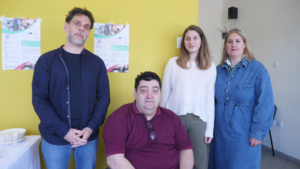
Hello everyone, my name is Themis Papandreou. I am a 23-year-old social worker. For the past three months, I have been volunteering at the Regional Federation of Persons with Disabilities in Western Greece and the Southern Ionian Islands, based in Patras. The Regional Federation participates in the European program “PR.O.GR.E.S.S.”, which stands for Promoting Opportunities, Growth and Education for Social Success. The project’s mission is simple but powerful: to make education, training, and employment more inclusive and accessible for everyone in both Italy and Greece. PR.O.GR.E.S.S. addresses significant common territorial challenges faced by people with disabilities in the Greece–Italy area. The main goal is to respond to real challenges that people with disabilities (PWDs) face in their daily lives, such as limited access to training, difficulties in entering the labour market, and a lack of adapted digital tools. These challenges include limited access to inclusive training, disparities in employment rates, and technological barriers that hinder the integration of people with disabilities into the workforce. The target group that benefits from the program is people with disabilities. The program also benefits employers, employment agencies, the general public, and public authorities, as it contributes to making workplaces and public services more accessible for people with disabilities. The need for this project is underscored by alarming statistics: employment rates for people with disabilities remain significantly lower than those of the general population, while poverty rates are also disproportionately higher for this group. This collaborative effort involves six main partners: Lead Beneficiary Mestieri Puglia Consortium SCS Cohesion Network 2Gether ELPENDÙ – Consortium of Social Cooperatives Achaia Chamber’s Development Entity – ACHADE IDEA Employment Agency – Consortium of Social Cooperatives Regional Federation of Persons with Disabilities in Western Greece and the Southern Ionian Islands My role as a volunteer within the framework of the European PR.O.GR.E.S.S. program is multidimensional. I prepare presentations for various meetings, communicate with both local community stakeholders and people with disabilities, study deliverables in order to provide feedback, participate in coordination meetings to define the next steps of the program, and create audiovisual material for social media posts. Depending on the needs of the program and the Federation, I take on corresponding tasks and responsibilities in order to help achieve its objectives.   – Themis, IVY Project Partner at the REGIONAL FEDERATION OF PERSONS WITH DISABILITIES OF WESTERN GREECE AND SOUTHERN IONIAN ISLANDS (P.OM.A.meA D.E. & N.I.N.), for the Interreg project PR.O.GR.E.S.S., under the programme Interreg Greece-Italy.

Read More >

My Journey with Dialogue 4 Tourism

  Hello everyone,   My name is George Dandolos, I am 20 years old and I am proudly collaborating as an IVY Volunteer for the Interreg Euro-MED Dialogue4Tourism project at the European Public Law Organization (EPLO) This experience has broadened my perspective on how significantly important sustainable tourism governance is, not only for presenting the environmental and cultural assets of the Mediterranean region, but also for promoting local communities, enhancing community engagement and ensuring that sustainability is considered in many destinations across Europe. Through my involvement in Dialogue4Tourism, I have gained valuable insights into how European Territorial Cooperation can support sustainable development while promoting solidarity, knowledge exchange, and collaboration across borders. Dialogue4Tourism addresses some of the most pressing challenges currently facing the Euro-Mediterranean tourism sector, including overtourism, climate change, seasonality, insufficient coordination among public authorities, and the need for greater stakeholder participation in decision-making processes. The project aims to strengthen governance structures and institutional capacities by fostering cooperation among public authorities, policy-makers, programmes, initiatives, and stakeholders throughout the Mediterranean region. The project promotes a common vision for tourism transformation based on four key pillars: circular tourism services, environmental neutrality, sustainable ecosystem services, and the preservation of cultural and natural resources. Through enhanced dialogue and collaboration, Dialogue4Tourism contributes to making tourism greener, smarter, and more resilient. During my volunteering period, I actively contributed to several activities coordinated by EPLO. I participated in project meetings, workshops, coordination events, and capitalization activities, supporting their preparation and organization. I contributed to the Digital Awareness Days and assisted in activities related to communication, stakeholder engagement, and dissemination. In addition, I supported activities connected to the Sustainable Tourism Policy Labs (STPLs), which aim to strengthen policy dialogue and encourage cooperation among public authorities and tourism stakeholders. I also contributed to research and advocacy activities related to the Driving Tourism Transition governance mechanisms and the Network of Sustainable Tourism Observatories. Furthermore, I helped my mentor Ioannios in the preparation of educational and communication materials for the Interreg Euro-MED Academy, My experience with Dialogue4Tourism has highlighted the importance of cooperation, knowledge sharing, and institutional dialogue in achieving sustainable tourism development. The project demonstrates how effective governance and stakeholder engagement can create meaningful solutions to complex environmental and socio-economic challenges. It also illustrates how European Territorial Cooperation can support regions in developing innovative approaches that balance economic growth, environmental protection, and social well-being. As an IVY Volunteer, I am grateful for the opportunity to contribute to this important initiative and to learn from professionals and stakeholders working towards a more sustainable future for tourism in the Mediterranean. – Georgios, IVY Project Partner at European Public Law Organisation – EPLO, for the Interreg project D4T Dialogue4Tourism, under the programme Interreg Euro-Med.

Read More >

Empowering Local Businesses through Green Development: My IVY Experience

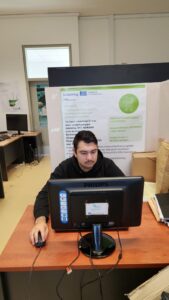
As an IVY Interreg volunteer based at the Chamber of Commerce of Drama, Greece, I have had the opportunity to actively contribute to a project focused on supporting small and medium-sized enterprises in their transition toward more sustainable and environmentally friendly practices.The main goal of the programme is to help local businesses grow while also becoming greener and more environmentally responsible. Through this initiative, we aim to create practical and lasting results, ensuring that SMEs can develop economically while actively contributing to environmental protection. My role as a volunteer is dynamic and hands-on. I support my colleagues in a variety of tasks, always adapting to the needs of the programme. One of the most impactful experiences so far was the international meeting hosted in Drama, where representatives from different countries, including Egypt, Spain, and Turkey, participated. During this event, I had the opportunity to interact directly with partners from various chambers and organisations, exchanging ideas and building meaningful connections.A particularly important moment for me was contributing to the preparation of the PowerPoint presentation delivered by my coach on behalf of the Chamber of Drama. Being part of this process allowed me to actively support the communication of the project’s vision and goals.Through this experience, I have come to deeply understand the importance of European cooperation. The programme highlights how countries can benefit individually through collaboration and shared efforts. Being part of such an international environment has strengthened my belief in the value of the European Union and its initiatives.I especially value the direct interaction with the members of the Chamber of Drama and the opportunity to actively contribute to the project. Looking ahead, I am excited to participate in an upcoming three-day meeting in Barcelona, where I will continue this journey alongside my coach and fellow partners.Overall, this experience has been highly enriching both professionally and personally. I would strongly encourage other young people to take part in similar programmes, as they offer valuable insights, meaningful connections, and the chance to make a real impact. – Konstantinos, IVY Project Partner at Chamber of Commerce and Industry of Drama, for the Interreg project SMAC, under the programme Interreg NEXT MED.
Read More >

Discovering WaterWays: My IVY Volunteering Journey

Hello, my name is Eva, and I’ve spent the past six months volunteering with the WaterWays project as part of the Interreg Volunteer Youth programme at the Lithuanian Countryside Tourism Association. It was an amazing experience that gave me the chance to learn more about European projects, see how they work from the inside, and gain valuable skills not only in international cooperation, but also in the daily work of an organisation. I supported the WaterWays project, which develops tourism connected to rivers, lakes, and inland water routes. The project focuses on promoting hidden gems in smaller regions, supporting local businesses, and encouraging sustainable travel. Through this initiative, partners from Lithuania and Latvia work together to make water tourism more attractive, accessible, and environmentally friendly. At the beginning of my volunteering journey, I learned more about the organisation and how international projects are managed. Soon after, I became involved in communication with local tourism businesses, including kayaking and fishing service providers. I also helped organise two seminars by contacting participants, preparing materials, and assisting during the events. Later, I focused on communication and promotional activities. I reviewed content for a tourism guide featuring 176 lakes across Lithuania and Latvia, updated the project website, and wrote articles about lakes, destinations, and tourist attractions. I also supported social media communication, helping to share the project’s message with a wider audience. One of the most exciting moments of my experience was participating in Lithuania’s largest tourism fair, Adventur 2026. It was the first time I took part in such an event not as a visitor, but as a participant. I helped prepare the exhibition stand and had the chance to speak with visitors about the project and its activities. It was a great opportunity to improve my communication skills and experience the energy of a major tourism event firsthand. This volunteering journey was both valuable and inspiring. It helped me develop professional skills, meet new people, and become part of an international initiative that promotes sustainable tourism and regional development. I am very grateful for this opportunity and for everything I learned during these six months.     – Eva, IVY Project Partner at Lithuanian countryside tourism association, for the Interreg project WaterWays, under the programme Interreg Latvia-Lithuania.

Read More >

Cross-border spatial planning: six months as an IVY for the LATI project

Did you know that Luxembourg’s population is expected to grow almost 50% by 2060? It is in response to challenges such as these that the Interreg project LATI – Laboratory for Territorial Intelligence was created. Hallo zusammen! My name is Yolène and I’m from France (de Bretagne pour être précise, la plus belle région du monde ! 😉). I would like to tell you a little more about this project, for which I’m currently volunteering as an IVY at the University of the Greater Region in Saarbrücken, Germany. First of all, what is the Greater Region? The Greater Region is a cross-border cooperation area in the heart of Europe, bringing together territories from four countries: Germany: Saarland – where I’m working! – and Rhineland-Palatinate France: Lorraine and Grand Est Belgium: Wallonia, the Wallonia-Brussels Federation and the German-speaking Community Luxembourg The University of the Greater Region (UniGR) is a network of universities located within this territory. What is the aim of the LATI project and who is involved? The LATI project brings together cities, municipalities, researchers and citizens from the Greater Region to jointly shape the territorial development of the future. It aims to create practical solutions to current challenges such as climate change, land consumption and mobility. This cross-border cooperation requires multilingual communication, which is also an important aspect of the LATI project. LATI is a partnership between the six member universities of UniGR and many strategic partners from the political and administrative spheres. UniGR is the lead partner, so by working there I have a broad overview of the project and its partners – a real advantage for the role I was given… My role in the UniGR and LATI teams I support LATI mainly in terms of communication. Because having a project is one thing… but making it known and understandable to everyone is even better! Writing contributions for the website in German, French and English, creating posts for social media, taking pictures during workshops on spatial planning, designing visuals such as posters or brochures, conducting short interviews during the project monitoring committee meetings to introduce the LATI team… my tasks are quite diverse. However, the goal remains the same: to raise awareness of the project’s objectives among as many people as possible. After a year in the European Solidarity Corps in Germany and an internship at a Luxembourg newspaper, this IVY project is a new opportunity for me to work in an international environment. In addition to improving my language skills, I am developing my writing and graphic design abilities, as well as learning to use various software programs. Step by step, I am also learning to take a more critical look at my own work in order to refine it and achieve higher-quality results. The importance of cross-border projects It was during my Franco-German master’s degree in “Cross-border Communication and Cooperation” that I first heard about Interreg projects. Taking part in them made me realize how much organization cross-border projects require, including aspects such as simultaneous interpretation or multilingual glossaries for technical terms. A cross-border project also relies on effective coordination and trust-based partnerships – trust that has developed over time, as UniGR partners have been collaborating for more than 15 years. I also realized that cross-border projects exist not only because they are geographically convenient, but also because they provide enriching experiences. By working together, project partners compare perspectives from different cultures, build on what already works in one country and avoid approaches that have proven unsuccessful elsewhere. This knowledge-sharing is reflected in a compilation of spatial planning documents from every country in the Greater Region. The aim is to better understand how others work and thereby contribute to a more united and sustainable Europe. In this way, I believe that in 2026 – with environmental policies under threat and nationalist sentiment on the rise – being part of a project like LATI is a way of responding to these challenges. I encourage everyone to try the IVY experience and become part of Europe! – Yolène, IVY Project Partner at UniGr – Université de la Grande Région, for the Interreg project LATI, under the programme Interreg France-Belgium-Germany-Luxembourg (Grande Région/Großregion).

Read More >

My Experience as an IVY Volunteer at Project CRADLES

Hello! My name is Georgios Kyritsis, I am 22 years old and I have studied Computer Science. I am currently participating as an IVY volunteer in the CRADLES project, which is being implemented at the University of Ioannina. Through this experience, I have the opportunity to learn more about environmental protection while also gaining experience with modern technologies and scientific tools.   The main goal of the CRADLES project is to protect and restore important coastal and wetland ecosystems in the Adriatic and Ionian region. These areas function as “nursery habitats”, meaning they support the early life stages of many aquatic species.  However, they are increasingly threatened by pollution, habitat degradation and climate change. The project works to identify, protect and restore these ecosystems so they can continue supporting biodiversity and providing important ecosystem services.  The project brings together partners from different countries in the Adriatic and Ionian region, who collaborate by sharing knowledge, research results and practical experience. Through this cooperation, the partners aim to develop effective strategies for protecting nursery habitats and strengthening the resilience of these ecosystems. My role in the project focuses on the collection and processing of environmental data from satellite imagery. By analyzing satellite images, we can monitor water quality and the condition of habitats, providing useful information for environmental monitoring and restoration planning. This work is carried out in close collaboration and with the guidance from professors from the University of Ioannina who participate in the project. In addition, I review and monitor the actions and methods used by the project partners in other regions. This helps us identify effective practices and approaches that could potentially be applied to our own research areas. Through this process, we can better understand how different partners address environmental challenges and contribute to the overall goals of the CRADLES project. The project benefits both nature and society. By protecting these ecosystems, we support biodiversity, sustainable fisheries and healthier coastal environments for local communities. Being part of this project as an IVY volunteer allows me to contribute to an important environmental effort while also gaining valuable professional and research experience.   – Georgios, IVY Project Partner at the University of Ioannina, for the Interreg project CRADLES, under the programme Interreg IPA Adrion.

Read More >

My experience as a volunteer in the European program “PR.O.GR.E.S.S.”

Hello everyone, my name is Themis Papandreou. I am a 23-year-old social worker. For the past three months, I have been volunteering at the Regional Federation of Persons with Disabilities in Western Greece and the Southern Ionian Islands, based in Patras. The Regional Federation participates in the European program “PR.O.GR.E.S.S.”, which stands for Promoting Opportunities, Growth and Education for Social Success. The project’s mission is simple but powerful: to make education, training, and employment more inclusive and accessible for everyone in both Italy and Greece. PR.O.GR.E.S.S. addresses significant common territorial challenges faced by people with disabilities in the Greece–Italy area. The main goal is to respond to real challenges that people with disabilities (PWDs) face in their daily lives, such as limited access to training, difficulties in entering the labour market, and a lack of adapted digital tools. These challenges include limited access to inclusive training, disparities in employment rates, and technological barriers that hinder the integration of people with disabilities into the workforce. The target group that benefits from the program is people with disabilities. The program also benefits employers, employment agencies, the general public, and public authorities, as it contributes to making workplaces and public services more accessible for people with disabilities. The need for this project is underscored by alarming statistics: employment rates for people with disabilities remain significantly lower than those of the general population, while poverty rates are also disproportionately higher for this group. This collaborative effort involves six main partners: Lead Beneficiary Mestieri Puglia Consortium SCS Cohesion Network 2Gether ELPENDÙ – Consortium of Social Cooperatives Achaia Chamber’s Development Entity – ACHADE IDEA Employment Agency – Consortium of Social Cooperatives Regional Federation of Persons with Disabilities in Western Greece and the Southern Ionian Islands My role as a volunteer within the framework of the European PR.O.GR.E.S.S. program is multidimensional. I prepare presentations for various meetings, communicate with both local community stakeholders and people with disabilities, study deliverables in order to provide feedback, participate in coordination meetings to define the next steps of the program, and create audiovisual material for social media posts. Depending on the needs of the program and the Federation, I take on corresponding tasks and responsibilities in order to help achieve its objectives.   – Themis, IVY Project Partner at the REGIONAL FEDERATION OF PERSONS WITH DISABILITIES OF WESTERN GREECE AND SOUTHERN IONIAN ISLANDS (P.OM.A.meA D.E. & N.I.N.), for the Interreg project PR.O.GR.E.S.S., under the programme Interreg Greece-Italy.

Read More >

My Journey with Dialogue 4 Tourism

  Hello everyone,   My name is George Dandolos, I am 20 years old and I am proudly collaborating as an IVY Volunteer for the Interreg Euro-MED Dialogue4Tourism project at the European Public Law Organization (EPLO) This experience has broadened my perspective on how significantly important sustainable tourism governance is, not only for presenting the environmental and cultural assets of the Mediterranean region, but also for promoting local communities, enhancing community engagement and ensuring that sustainability is considered in many destinations across Europe. Through my involvement in Dialogue4Tourism, I have gained valuable insights into how European Territorial Cooperation can support sustainable development while promoting solidarity, knowledge exchange, and collaboration across borders. Dialogue4Tourism addresses some of the most pressing challenges currently facing the Euro-Mediterranean tourism sector, including overtourism, climate change, seasonality, insufficient coordination among public authorities, and the need for greater stakeholder participation in decision-making processes. The project aims to strengthen governance structures and institutional capacities by fostering cooperation among public authorities, policy-makers, programmes, initiatives, and stakeholders throughout the Mediterranean region. The project promotes a common vision for tourism transformation based on four key pillars: circular tourism services, environmental neutrality, sustainable ecosystem services, and the preservation of cultural and natural resources. Through enhanced dialogue and collaboration, Dialogue4Tourism contributes to making tourism greener, smarter, and more resilient. During my volunteering period, I actively contributed to several activities coordinated by EPLO. I participated in project meetings, workshops, coordination events, and capitalization activities, supporting their preparation and organization. I contributed to the Digital Awareness Days and assisted in activities related to communication, stakeholder engagement, and dissemination. In addition, I supported activities connected to the Sustainable Tourism Policy Labs (STPLs), which aim to strengthen policy dialogue and encourage cooperation among public authorities and tourism stakeholders. I also contributed to research and advocacy activities related to the Driving Tourism Transition governance mechanisms and the Network of Sustainable Tourism Observatories. Furthermore, I helped my mentor Ioannios in the preparation of educational and communication materials for the Interreg Euro-MED Academy, My experience with Dialogue4Tourism has highlighted the importance of cooperation, knowledge sharing, and institutional dialogue in achieving sustainable tourism development. The project demonstrates how effective governance and stakeholder engagement can create meaningful solutions to complex environmental and socio-economic challenges. It also illustrates how European Territorial Cooperation can support regions in developing innovative approaches that balance economic growth, environmental protection, and social well-being. As an IVY Volunteer, I am grateful for the opportunity to contribute to this important initiative and to learn from professionals and stakeholders working towards a more sustainable future for tourism in the Mediterranean. – Georgios, IVY Project Partner at European Public Law Organisation – EPLO, for the Interreg project D4T Dialogue4Tourism, under the programme Interreg Euro-Med.

Read More >