Month: August 2026

My Journey as an IVY Volunteer in the HERCULES Project

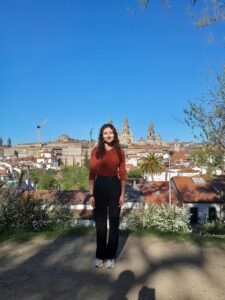
When I started my journey as an IVY volunteer in the HERCULES project in ACIS, Santiago de Compostela, Spain, I was excited to step into the world of European cooperation but I didn’t fully realize how enriching the experience would be. From day one, I became part of an international partnership working to improve how regions support healthcare innovation. HERCULES focuses on helping public authorities adopt innovative solutions more effectively, and being involved in this process has given me a unique perspective on how European projects can influence real policy change. One of the highlights of my experience has been participating in the Interregional Learning Event in Umeå, Sweden. These meetings bring together the partners and stakeholders from different countries to exchange Good Practices and discuss how they can be adapted to different regional contexts. Seeing these exchanges happen in real life and understanding how ideas travel from one region to another has been incredibly inspiring. At the same time, I’ve been actively involved in communication tasks, from drafting newsletter content to supporting dissemination activities. This has shown me how important it is to make project results visible and accessible, so they can have a real impact beyond the partnership. On a personal level, this experience has helped me grow a lot. Volunteering in an international environment improved my communication skills, adaptability and confidence. I also gained a better understanding of how European projects are structured and managed, something that is often hard to grasp from the outside. If you are thinking about joining the IVY programme, I would definitely encourage you to go for it. It’s a unique chance to gain hands-on experience, work in an international setting and be part of projects that make a difference. – Renata, IVY Project Partner at the GALICIAN HEALTH KNOWLEDGE AGENCY  – ACIS, for the Interreg project HERCULES, under the programme Interreg Europe.
Read More >

Green solutions through dialogue – My IVY journey with “Dialogue 4 Living Areas” (D4LA)

Hello everyone!  My name is Marina and for the last months I have had the pleasure of participating as an IVY volunteer in the Dialogue 4 Living Areas project.  This great opportunity manifested to me through my university (University of Patras), which encouraged me to see how European projects work in practice. So, what is D4LA all about? D4LA stands for Dialogue for Living Areas and, as anyone can imagine, this project promotes dialogue. Although this answer seems obvious, as we take a deeper dive into the project, we understand that this institutional dialogue takes place between policymakers and public stakeholders at the Euro-Mediterranean level.  As one of the two main Governance projects, its main goal is to create a more sustainable environment for the countries and cities involved and at the same time ameliorate their citizens’ everyday lives. By fostering this communication, it is ensured that the development and the green transition is not just top-down, but a result of collective ideas and local needs. As a volunteer I don’t just observe, I participate! I support these efforts by organizing data, arranging and participating in meetings or assisting with the outputs of various Policy Instruments. While every task helps me understand the value of the programme, I had the opportunity to engage with a Policy Champion, the island of Chalki. Chalki is pioneer in the field of renewable energy, aiming for sustainable economic development. Having spoken with the deputy mayor of Chalki, I experienced firsthand the challenges of implementing such vital changes. Through exchanges with other European municipalities, such as Nice Côte d’Azur, and by observing the diverse scales and needs of coastal and island communities across the Mediterranean, I gained valuable insight into how different Mediterranean regions collaborate to address shared challenges. I also witnessed how good practices are adapted and transferred to different local contexts. It has been truly enlightening to see how a successful model from one part of the Mediterranean can inspire and guide solutions in another. All in all, this has been an eye-opening journey into the world of green approaches to problem-solving and European cooperation as well. – Marina, IVY Project Partner at the Special Account for Research Grants, UNIVERSITY OF PATRAS, for the Interreg project D4LA, under the programme Interreg Euro-Med.

Read More >

Volunteering for a MISSION (Multi-modal Inclusive Smart urban mobility SolutIONs)

Greetings everyone! I am Konstantinos Koutsovoulos, a final year Civil Engineering student and sustainable mobility enthusiast. Having a passion for urban planning and ITS. I’m all about innovation to shape the ultimate smart city experience. For the past two months I volunteer with MISSION (Multi-modal Inclusive Smart urban mobility SolutIONs) project, as part of the Interreg Volunteer Youth programme, at the University of Patras in Greece. Supported by Interreg IPA ADRION programme, MISSION focuses on decarbonizing urban transport through technology-based solutions and testing innovative mobility strategies, in various cities in the Adriatic-Ionian region. To achieve this, MISSION brings together a strong network of partners: Politecnico di Milano (Italy) as the Lead Partner, PLUSERVICE S.R.L. (Italy), Municipality of Maribor (Slovenia), University of Patras (Greece), City of Novi Sad (Serbia), City of Sarajevo (Bosnia and Herzegovina) and Capital City of Podgorica (Montenegro). Core of the project, is the promotion of multimodal transport, encouraging people to combine public transit, cycling and walking. To make this a reality, a user-friendly SmartApp is developed and designed to provide real-time assistance to users, guiding them to the fastest and greenest travel routes. As a volunteer, my tasks are directly linked to the success of the SmartApp. To make the SmartApp a success, as a volunteer, I help with research and urban planning, learning the actual needs of the local community and also to explore how to integrate real-time transit information into the app. It’s an exciting challenge to turn traditional transportation planning into a dynamic digital tool. However, technology alone is not enough! Its success relies on active citizen participation. The app design focuses on people who will actually use it, through frequent communication with local stakeholders, businesses, and citizens. Feedback is gathered to ensure the app meets the everyday needs of travelers. Would I recommend the IVY programme? To anyone thinking about joining the IVY programme: Go for it! I was welcomed into a friendly and supportive environment. Their enthusiasm for sustainable urban mobility is remarkable and their advice has been tremendous to my personal and professional growth. If you want to make a real impact and learn from experts, IVY is the place to be! – Konstantinos, IVY Project Partner at University of Patras for the Interrreg Project “MISSION”, under the programme Interreg IPA ADRION.

Read More >

Finding My Place in European Cooperation: My Experience at the Interreg Italy Croatia Programme

Hi everyone! I am Emma, a 23-year-old International Relations student from Venice, Italy. Currently, I am volunteering as an IVY Reporter for the Interreg Italy-Croatia Programme, also based in my home city.  Unlike IVY Project Partners, who collaborate on a single project, being an IVY Reporter means working with the entire Programme. Our role is dedicated to disseminating its efforts and results, including those of its funded projects, while raising awareness of Interreg as a whole. This position has allowed me to see the bigger picture of how an Interreg Programme functions, from the initial drafting of a Call for Proposals to the final capitalisation of results.  Working with the Communication Unit has been the best opportunity to see how the Programme’s five priorities are actually put into practice. I quickly realised that learning the titles of these priorities was just scratching the surface. The more I helped share projects’ activities, the more I learned about incredibly diverse topics: from AI in the Blue Economy and firefighting practices to age-old cheese-making traditions. I found myself surrounded by environmental engineers, young movie directors, biologists – all people from worlds I never would have guessed could intersect with my International Relations background.  One of my tasks over the past few months was contributing to the joint communication campaign, Insights from Standard Projects. This consisted of 13 publications across social media, spotlighting articles produced by the Programme’s 1st Call for Proposals Standard Projects. Born out of a desire to showcase their achievements, the campaign focused on turning complex and technical concepts into engaging stories.  The variety of the work was remarkable: from research findings, such as studies on consumer perceptions of aquaculture and climate risk assessments in the Adriatic, to initiatives with great social impact, like the redistribution of surplus school meals to vulnerable populations, to technical innovation, including insights on hydrophone sound analysis and the integration of cycling routes with public transport.  What struck me most was that every single publication sparked significant interest, regardless of the distance between topics. I wondered: how could matters such as, for instance, biodiversity and accessible tourism resonate with the same audience?  Eventually, I realised that the success of the campaign proved that these seemingly disparate themes matter deeply to the same people because of a common concern: the preservation of our shared territory. I learned that our environment needs to be cared for in numerous ways and saw the concrete, human results of this cooperation.  Being an IVY Reporter has not only meant meeting fascinating people and learning about their specific fields of action. Before this experience, I struggled to see how I could cooperate with them to help my territory without being a scientist or an engineer myself. Now, I understand that everyone can make a difference from their own niche, as cooperation is only truly effective when it tackles a wide range of issues simultaneously. – Emma, IVY Reporter at the Joint Secretariat Interreg Italy-Croatia.

Read More >

6 months at the heart of Atlantic Cooperation!

My name is Flavie, and I recently completed a six-month Interreg Volunteer Youth placement in Rennes, France, working with the Conference of Peripheral Maritime Regions (CPMR) on the GRAAL project (Governance and Regional Atlantic Area Lighthouse). The GRAAL project is a strategic initiative within the Interreg Atlantic Area program as it is the only project in the program officially designated as an “operation of strategic importance” by the European Commission. The project brings together a transnational partnership of 11 main organisations and 15 associated partners from France, Ireland, Portugal, and Spain. Our primary mission is to bridge the gap between cooperation project results and public policy by ensuring that successful outcomes from the Atlantic Area are effectively integrated into regional, national, and European strategies. The project focuses its efforts on five priority thematic areas: Renewable marine energy. Ocean pollution. Climate change adaptation and risk management. Nature preservation and protection. Sustainable tourism. It also addresses three essential cross-cutting dimensions: digitalisation and innovation, the circular economy, and governance. I chose to become an IVY volunteer because I wanted to gain practical, first-hand experience in European cooperation through a high-impact project. Working on GRAAL was the ideal opportunity, especially since it is the only project in the entire program designated as an ‘Operation of strategic importance’. Spending six months in Rennes with the CPMR placed me at the center of a transnational network involving partners from France, Ireland, Portugal, and Spain. I was actively involved in transnational exchanges where I regularly worked in both English and Spanish. I contributed to drafting key project deliverables and gained a thorough understanding of the administrative and management processes essential to Interreg projects. This experience really opened my eyes to how we can take concrete project results and turn them into actual public policy. Now that my placement has ended, I am determined to build my career in Atlantic cooperation and continue specialising in the field of Interreg. If you’re looking for an experience that allows you to deepen your understanding of European cooperation while connecting with professionals from across different countries, improving your language skills, traveling, and building meaningful professional expertise, an IVY volunteering placement is an excellent choice and I highly recommend it! – Flavie, IVY Project Partner at Conference of Peripheral Maritime Regions (CPMR), for the Interreg project GRAAL, under the programme Interreg Atlantic Area.

Read More >

Volunteering for the Interreg project ZDrauA

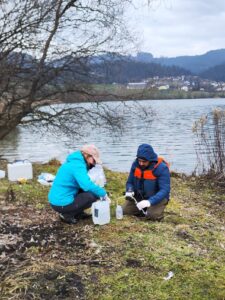
Hello, my name is Maïwenn, and I am a French volunteer working on the ZDrauA project: Next-Generation Biomonitoring of the Drava/Drau for Sustainable and Healthy Regional Development.   I am based in Klagenfurt, Austria, at the Carinthia University of Applied Sciences. The ZDrauA project aims to monitor biodiversity and pathogens along the Drava River, which flows through Austria and into Slovenia. My role is to develop protocols for detecting three invasive species. Invasive species are organisms that are non-native to an ecosystem and cause ecological harm, in this case, two freshwater mussels and one freshwater crustacean: Dreissena polymorpha, Dreissena bugensis, and Dikerogammarus haemobaphes. To do so, I use environmental DNA (eDNA) methodology, and more specifically quantitative Polymerase Chain Reaction (qPCR). The process involves collecting water samples from the river, which contain trace amounts of DNA shed by organisms.   This DNA is then extracted and amplified using a species-specific fluorescent signal, which allows us to obtain a relative concentration of the target DNA — serving as an indicator of the species’ abundance in the river. This approach is intended to enable rapid sample analysis and early detection of these species, which is critical for effective management, as invasive species are most successfully controlled when identified at an early stage.   The protocols I am developing will ultimately be made available to local stakeholders and any other parties with an interest in monitoring these species. During this experience, I learned the fundamentals of molecular biology techniques, applied the eDNA method, and explored a new region from an ecological perspective. I feel very grateful to be contributing to this project, as it allows me to expand my knowledge while putting my scientific background to use. This experience has made me more confident in my identity as an ecologist. – Maiwenn, IVY Project Partner at Fachhochschule Kärnten gemeinnützige GmbH, for the Interreg project ZDrauA, under the programme Interreg Slovenia-Austria.

Read More >

My Journey as an IVY Volunteer in the HERCULES Project

When I started my journey as an IVY volunteer in the HERCULES project in ACIS, Santiago de Compostela, Spain, I was excited to step into the world of European cooperation but I didn’t fully realize how enriching the experience would be. From day one, I became part of an international partnership working to improve how regions support healthcare innovation. HERCULES focuses on helping public authorities adopt innovative solutions more effectively, and being involved in this process has given me a unique perspective on how European projects can influence real policy change. One of the highlights of my experience has been participating in the Interregional Learning Event in Umeå, Sweden. These meetings bring together the partners and stakeholders from different countries to exchange Good Practices and discuss how they can be adapted to different regional contexts. Seeing these exchanges happen in real life and understanding how ideas travel from one region to another has been incredibly inspiring. At the same time, I’ve been actively involved in communication tasks, from drafting newsletter content to supporting dissemination activities. This has shown me how important it is to make project results visible and accessible, so they can have a real impact beyond the partnership. On a personal level, this experience has helped me grow a lot. Volunteering in an international environment improved my communication skills, adaptability and confidence. I also gained a better understanding of how European projects are structured and managed, something that is often hard to grasp from the outside. If you are thinking about joining the IVY programme, I would definitely encourage you to go for it. It’s a unique chance to gain hands-on experience, work in an international setting and be part of projects that make a difference. – Renata, IVY Project Partner at the GALICIAN HEALTH KNOWLEDGE AGENCY  – ACIS, for the Interreg project HERCULES, under the programme Interreg Europe.
Read More >

Green solutions through dialogue – My IVY journey with “Dialogue 4 Living Areas” (D4LA)

Hello everyone!  My name is Marina and for the last months I have had the pleasure of participating as an IVY volunteer in the Dialogue 4 Living Areas project.  This great opportunity manifested to me through my university (University of Patras), which encouraged me to see how European projects work in practice. So, what is D4LA all about? D4LA stands for Dialogue for Living Areas and, as anyone can imagine, this project promotes dialogue. Although this answer seems obvious, as we take a deeper dive into the project, we understand that this institutional dialogue takes place between policymakers and public stakeholders at the Euro-Mediterranean level.  As one of the two main Governance projects, its main goal is to create a more sustainable environment for the countries and cities involved and at the same time ameliorate their citizens’ everyday lives. By fostering this communication, it is ensured that the development and the green transition is not just top-down, but a result of collective ideas and local needs. As a volunteer I don’t just observe, I participate! I support these efforts by organizing data, arranging and participating in meetings or assisting with the outputs of various Policy Instruments. While every task helps me understand the value of the programme, I had the opportunity to engage with a Policy Champion, the island of Chalki. Chalki is pioneer in the field of renewable energy, aiming for sustainable economic development. Having spoken with the deputy mayor of Chalki, I experienced firsthand the challenges of implementing such vital changes. Through exchanges with other European municipalities, such as Nice Côte d’Azur, and by observing the diverse scales and needs of coastal and island communities across the Mediterranean, I gained valuable insight into how different Mediterranean regions collaborate to address shared challenges. I also witnessed how good practices are adapted and transferred to different local contexts. It has been truly enlightening to see how a successful model from one part of the Mediterranean can inspire and guide solutions in another. All in all, this has been an eye-opening journey into the world of green approaches to problem-solving and European cooperation as well. – Marina, IVY Project Partner at the Special Account for Research Grants, UNIVERSITY OF PATRAS, for the Interreg project D4LA, under the programme Interreg Euro-Med.

Read More >

Volunteering for a MISSION (Multi-modal Inclusive Smart urban mobility SolutIONs)

Greetings everyone! I am Konstantinos Koutsovoulos, a final year Civil Engineering student and sustainable mobility enthusiast. Having a passion for urban planning and ITS. I’m all about innovation to shape the ultimate smart city experience. For the past two months I volunteer with MISSION (Multi-modal Inclusive Smart urban mobility SolutIONs) project, as part of the Interreg Volunteer Youth programme, at the University of Patras in Greece. Supported by Interreg IPA ADRION programme, MISSION focuses on decarbonizing urban transport through technology-based solutions and testing innovative mobility strategies, in various cities in the Adriatic-Ionian region. To achieve this, MISSION brings together a strong network of partners: Politecnico di Milano (Italy) as the Lead Partner, PLUSERVICE S.R.L. (Italy), Municipality of Maribor (Slovenia), University of Patras (Greece), City of Novi Sad (Serbia), City of Sarajevo (Bosnia and Herzegovina) and Capital City of Podgorica (Montenegro). Core of the project, is the promotion of multimodal transport, encouraging people to combine public transit, cycling and walking. To make this a reality, a user-friendly SmartApp is developed and designed to provide real-time assistance to users, guiding them to the fastest and greenest travel routes. As a volunteer, my tasks are directly linked to the success of the SmartApp. To make the SmartApp a success, as a volunteer, I help with research and urban planning, learning the actual needs of the local community and also to explore how to integrate real-time transit information into the app. It’s an exciting challenge to turn traditional transportation planning into a dynamic digital tool. However, technology alone is not enough! Its success relies on active citizen participation. The app design focuses on people who will actually use it, through frequent communication with local stakeholders, businesses, and citizens. Feedback is gathered to ensure the app meets the everyday needs of travelers. Would I recommend the IVY programme? To anyone thinking about joining the IVY programme: Go for it! I was welcomed into a friendly and supportive environment. Their enthusiasm for sustainable urban mobility is remarkable and their advice has been tremendous to my personal and professional growth. If you want to make a real impact and learn from experts, IVY is the place to be! – Konstantinos, IVY Project Partner at University of Patras for the Interrreg Project “MISSION”, under the programme Interreg IPA ADRION.

Read More >

Finding My Place in European Cooperation: My Experience at the Interreg Italy Croatia Programme

Hi everyone! I am Emma, a 23-year-old International Relations student from Venice, Italy. Currently, I am volunteering as an IVY Reporter for the Interreg Italy-Croatia Programme, also based in my home city.  Unlike IVY Project Partners, who collaborate on a single project, being an IVY Reporter means working with the entire Programme. Our role is dedicated to disseminating its efforts and results, including those of its funded projects, while raising awareness of Interreg as a whole. This position has allowed me to see the bigger picture of how an Interreg Programme functions, from the initial drafting of a Call for Proposals to the final capitalisation of results.  Working with the Communication Unit has been the best opportunity to see how the Programme’s five priorities are actually put into practice. I quickly realised that learning the titles of these priorities was just scratching the surface. The more I helped share projects’ activities, the more I learned about incredibly diverse topics: from AI in the Blue Economy and firefighting practices to age-old cheese-making traditions. I found myself surrounded by environmental engineers, young movie directors, biologists – all people from worlds I never would have guessed could intersect with my International Relations background.  One of my tasks over the past few months was contributing to the joint communication campaign, Insights from Standard Projects. This consisted of 13 publications across social media, spotlighting articles produced by the Programme’s 1st Call for Proposals Standard Projects. Born out of a desire to showcase their achievements, the campaign focused on turning complex and technical concepts into engaging stories.  The variety of the work was remarkable: from research findings, such as studies on consumer perceptions of aquaculture and climate risk assessments in the Adriatic, to initiatives with great social impact, like the redistribution of surplus school meals to vulnerable populations, to technical innovation, including insights on hydrophone sound analysis and the integration of cycling routes with public transport.  What struck me most was that every single publication sparked significant interest, regardless of the distance between topics. I wondered: how could matters such as, for instance, biodiversity and accessible tourism resonate with the same audience?  Eventually, I realised that the success of the campaign proved that these seemingly disparate themes matter deeply to the same people because of a common concern: the preservation of our shared territory. I learned that our environment needs to be cared for in numerous ways and saw the concrete, human results of this cooperation.  Being an IVY Reporter has not only meant meeting fascinating people and learning about their specific fields of action. Before this experience, I struggled to see how I could cooperate with them to help my territory without being a scientist or an engineer myself. Now, I understand that everyone can make a difference from their own niche, as cooperation is only truly effective when it tackles a wide range of issues simultaneously. – Emma, IVY Reporter at the Joint Secretariat Interreg Italy-Croatia.

Read More >

6 months at the heart of Atlantic Cooperation!

My name is Flavie, and I recently completed a six-month Interreg Volunteer Youth placement in Rennes, France, working with the Conference of Peripheral Maritime Regions (CPMR) on the GRAAL project (Governance and Regional Atlantic Area Lighthouse). The GRAAL project is a strategic initiative within the Interreg Atlantic Area program as it is the only project in the program officially designated as an “operation of strategic importance” by the European Commission. The project brings together a transnational partnership of 11 main organisations and 15 associated partners from France, Ireland, Portugal, and Spain. Our primary mission is to bridge the gap between cooperation project results and public policy by ensuring that successful outcomes from the Atlantic Area are effectively integrated into regional, national, and European strategies. The project focuses its efforts on five priority thematic areas: Renewable marine energy. Ocean pollution. Climate change adaptation and risk management. Nature preservation and protection. Sustainable tourism. It also addresses three essential cross-cutting dimensions: digitalisation and innovation, the circular economy, and governance. I chose to become an IVY volunteer because I wanted to gain practical, first-hand experience in European cooperation through a high-impact project. Working on GRAAL was the ideal opportunity, especially since it is the only project in the entire program designated as an ‘Operation of strategic importance’. Spending six months in Rennes with the CPMR placed me at the center of a transnational network involving partners from France, Ireland, Portugal, and Spain. I was actively involved in transnational exchanges where I regularly worked in both English and Spanish. I contributed to drafting key project deliverables and gained a thorough understanding of the administrative and management processes essential to Interreg projects. This experience really opened my eyes to how we can take concrete project results and turn them into actual public policy. Now that my placement has ended, I am determined to build my career in Atlantic cooperation and continue specialising in the field of Interreg. If you’re looking for an experience that allows you to deepen your understanding of European cooperation while connecting with professionals from across different countries, improving your language skills, traveling, and building meaningful professional expertise, an IVY volunteering placement is an excellent choice and I highly recommend it! – Flavie, IVY Project Partner at Conference of Peripheral Maritime Regions (CPMR), for the Interreg project GRAAL, under the programme Interreg Atlantic Area.

Read More >

Volunteering for the Interreg project ZDrauA

Hello, my name is Maïwenn, and I am a French volunteer working on the ZDrauA project: Next-Generation Biomonitoring of the Drava/Drau for Sustainable and Healthy Regional Development.   I am based in Klagenfurt, Austria, at the Carinthia University of Applied Sciences. The ZDrauA project aims to monitor biodiversity and pathogens along the Drava River, which flows through Austria and into Slovenia. My role is to develop protocols for detecting three invasive species. Invasive species are organisms that are non-native to an ecosystem and cause ecological harm, in this case, two freshwater mussels and one freshwater crustacean: Dreissena polymorpha, Dreissena bugensis, and Dikerogammarus haemobaphes. To do so, I use environmental DNA (eDNA) methodology, and more specifically quantitative Polymerase Chain Reaction (qPCR). The process involves collecting water samples from the river, which contain trace amounts of DNA shed by organisms.   This DNA is then extracted and amplified using a species-specific fluorescent signal, which allows us to obtain a relative concentration of the target DNA — serving as an indicator of the species’ abundance in the river. This approach is intended to enable rapid sample analysis and early detection of these species, which is critical for effective management, as invasive species are most successfully controlled when identified at an early stage.   The protocols I am developing will ultimately be made available to local stakeholders and any other parties with an interest in monitoring these species. During this experience, I learned the fundamentals of molecular biology techniques, applied the eDNA method, and explored a new region from an ecological perspective. I feel very grateful to be contributing to this project, as it allows me to expand my knowledge while putting my scientific background to use. This experience has made me more confident in my identity as an ecologist. – Maiwenn, IVY Project Partner at Fachhochschule Kärnten gemeinnützige GmbH, for the Interreg project ZDrauA, under the programme Interreg Slovenia-Austria.

Read More >