Adapting Alpine Cities to Climate Change
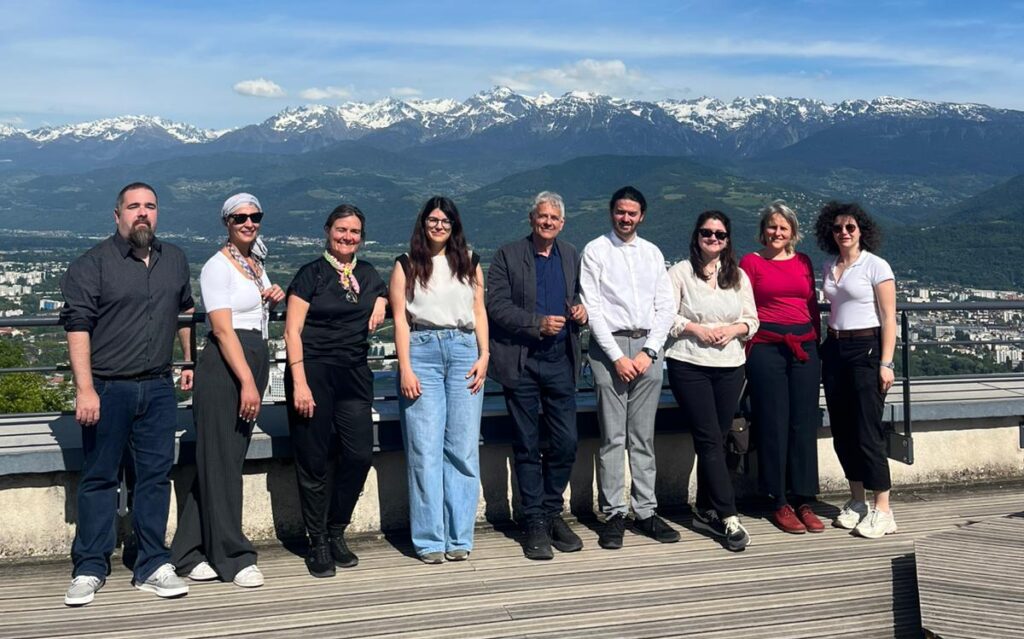
I came to IVY looking for a way to make a positive impact. When I heard a volunteer discuss how the project had changed how she sees the city, I knew I had found the right place. I am currently an IVY Project Partner at COMMONAIR, an Interreg Alpine Space project led by Politecnico di Torino. Our main focus is monitoring and improving how people experience heat in their neighborhoods. Europe at large is affected by climate change more than average, and the Alpine Region is one of the fastest heating regions in the continent, and the latest heatwaves have shown us just how heavy its impact can be. This is why the project feels so important: I am helping four different cities (Torino, Grenoble, Zurich and Vienna) build the technical infrastructure and collective knowledge to adapt to these conditions. Although I can only be in one place at a time, I have already visited two partner cities, and I constantly keep up with the others’ initiatives. When I help install new measurement stations, and see my own city adopting measures to improve climate adaptation, I know I am contributing towards improving cities for everyone. – Francesco, IVY Project partner at Politecnico di Torino (Polytechnic of Turin), for the Interreg Alpine Space project COMMONAIR – COMmon Measurements ONsite in the AlpIne Region
Interreg project “Šumava Fish Jewels” Experience
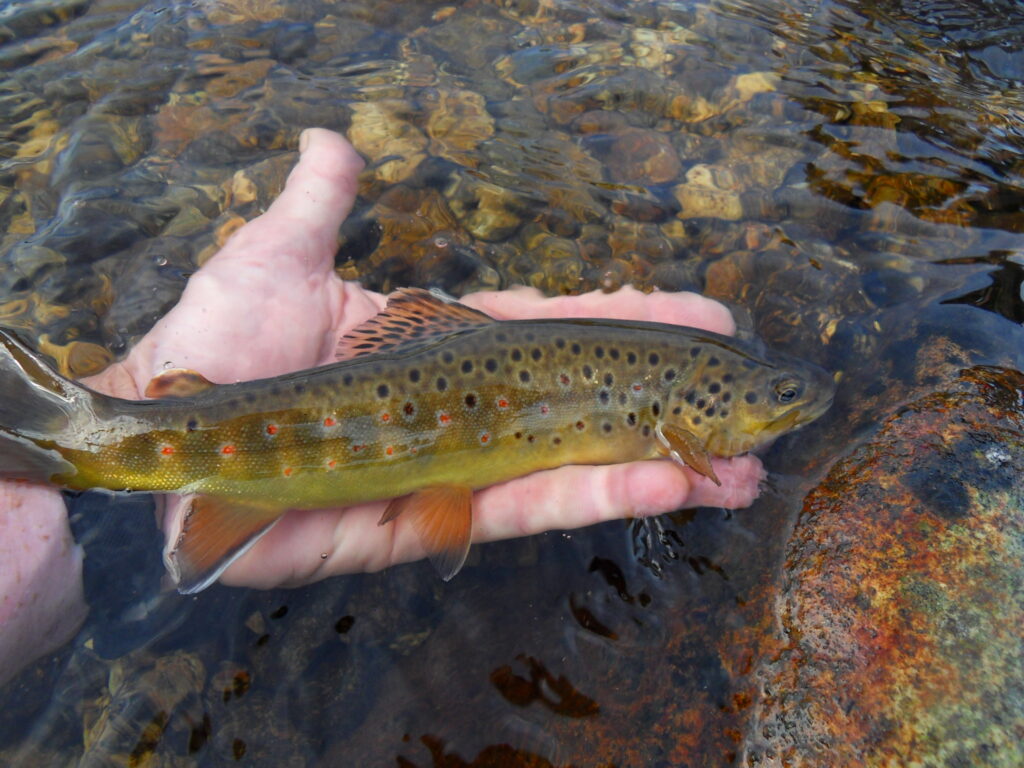
Hello, my name is Anna, and I’m currently volunteering as an IVY Project Partner at the Biology Centre of the Czech Academy of Sciences. I am part of the Interreg project “Šumava Fish Jewels – Living jewels under the water surface of Šumava”, a cross-border collaboration between the Czech Republic and the Free State of Bavaria in Germany. What are “Šumava Fish Jewels”? The project focuses on monitoring the beautiful brown trout (Salmo trutta) in its natural habitat. Many mountain streams on both the Czech and Bavarian sides were heavily affected by acid rain in the past, which led to the disappearance of fish populations in higher altitudes. Today, the project works on monitoring these populations and their environment. It combines field surveys with genetic analyses of brown trout and the use of environmental DNA to detect the presence of their parasites. My experience: As an IVY Project Partner, I am directly involved in scientific fieldwork, where I can build on my background in hydrobiology while continuing to learn new academic and practical skills. I also have the opportunity to collaborate with project partners from both the Czech Republic and Bavaria, which gives me valuable insight into how large international projects funded by the EU operate in practice. Beyond research, I take part in organising public events aimed at raising awareness about the project and its importance. It is especially rewarding to see how scientific work can be communicated to a broader audience and contribute to the protection of these unique aquatic ecosystems. I help review and reflect on the feedback gathered from these sessions, which I find particularly interesting to be part of. Alongside this, I engage directly with youth organisations, and other non-academic stakeholders to help build community engagement around the Nordic Bridge concept, making sure young people become active partners in shaping the platform rather than passive users. Anna, IVY Project Partner at the Biology Centre CAS – Biologické centrum AV ČR, for the Interreg project Sumava Fish Jewels – Living jewels under the water surface of Šumava
Cooperating for better cross-border mobility: my IVY experience in the CROSUSMOB project
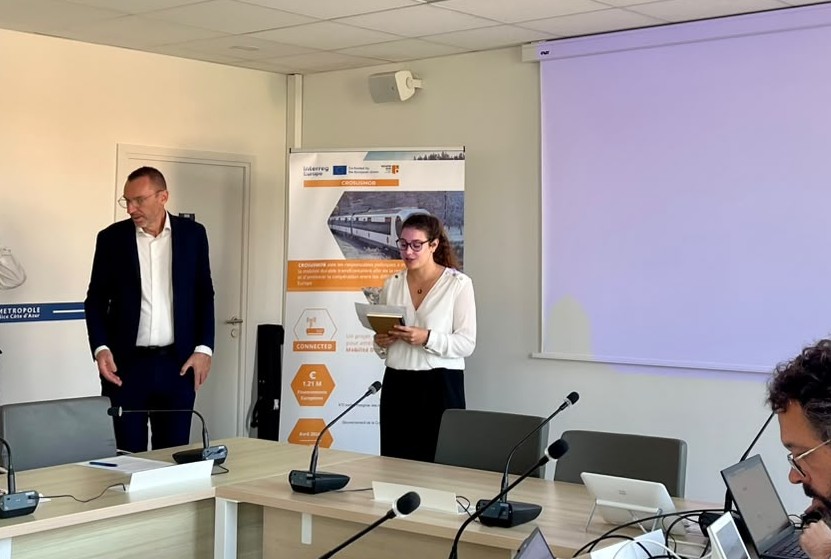
The most valuable lesson I have learned through my IVY experience is how European cooperation steps in to solve very concrete problems, especially when it comes to cross-border mobility. It is easier and easier to travel across Europe by public transport, but travellers may still face difficulties when crossing borders, depending on how well neighbouring countries and their national railways work together. Ticketing systems have to be harmonised, timetables coordinated to have reasonable waiting times for connections and technical issues addressed, like the different voltage systems used on each side of the border. These problems are shared by many European countries. That’s why seven partners from six different countries joined forces to launch the Interreg project CROSUSMOB, within the Interreg Europe Programme. Their countries don’t border one another, but each of them has border regions where crossing the border can be difficult. By sharing their experiences, the project aims to improve public policies on cross-border mobility at different levels, to meet local needs and make public transport a more attractive, competitive and sustainable option. Those who benefit most from smoother cross-border connections are everyday workers and students who commute between countries, especially those who live in less well-connected areas, as well as tourists. The keywords of CROSUSMOB are interoperability and coordination at multiple levels. On the one hand, the project partners work with local stakeholders and with political and technical actors on both sides of their border to make medium- and long-term plans concerning infrastructure and transport service. On the other hand, the partners collaborate closely and regularly among themselves. To see first-hand the cross-border transport services in place and to talk face to face, the partners organise one field visit per semester, each time hosted by a different partner. The partner organising the field visit welcomes a delegation of the other partners and stakeholders and takes them on a cross-border trip by bus or train, to show the difficulties of its border region, the solutions found so far and future projects to improve mobility across the border. In this way partners get to know each other’s situations and can be inspired by solutions that could work in their own territory. As an IVY project partner, I collected and analysed data on cross-border mobility in the territory between the Alpes-Maritimes, Monaco and the Province of Imperia. Gathering data on each side of the border was essential to understand the importance of connections in a context where several borders meet. The territory was challenging because the coast is heavily trafficked and served by trains used by French and Italian commuters and by tourists, especially towards Monaco. Monaco is a major employment hub, yet its only railway station is served by the French line, hence the Principality relies entirely on another country’s railway service to bring its workers in. The French railway also serves Ventimiglia station, so it actually connects three countries. To complete the picture, I interviewed municipalities, local stakeholders and commuters to understand their views on the transport service provided. I also took part in the last field visit in Nice, hosted by the Provence-Alpes-Côte d’Azur Region and it was a great chance to meet partners and stakeholders in person, join the trip and attend the meetings. Behind the scenes, I helped organise the event in the weeks before. I stayed in touch with partners and stakeholders, prepared the agenda and the paperwork and worked on the translation of the speeches so that everyone could follow the discussions. I am grateful for the IVY experience which let me take part in this event and see European cooperation from the inside. – Anna, IVY Project Partner at Region Provence-Alpes-Côte d’Azur – SUD, for the Interreg Europe project CROSUSMOB – Fostering Crossborder Mobility
Building bridges from Bodø: My IVY Journey with Nordic Bridge
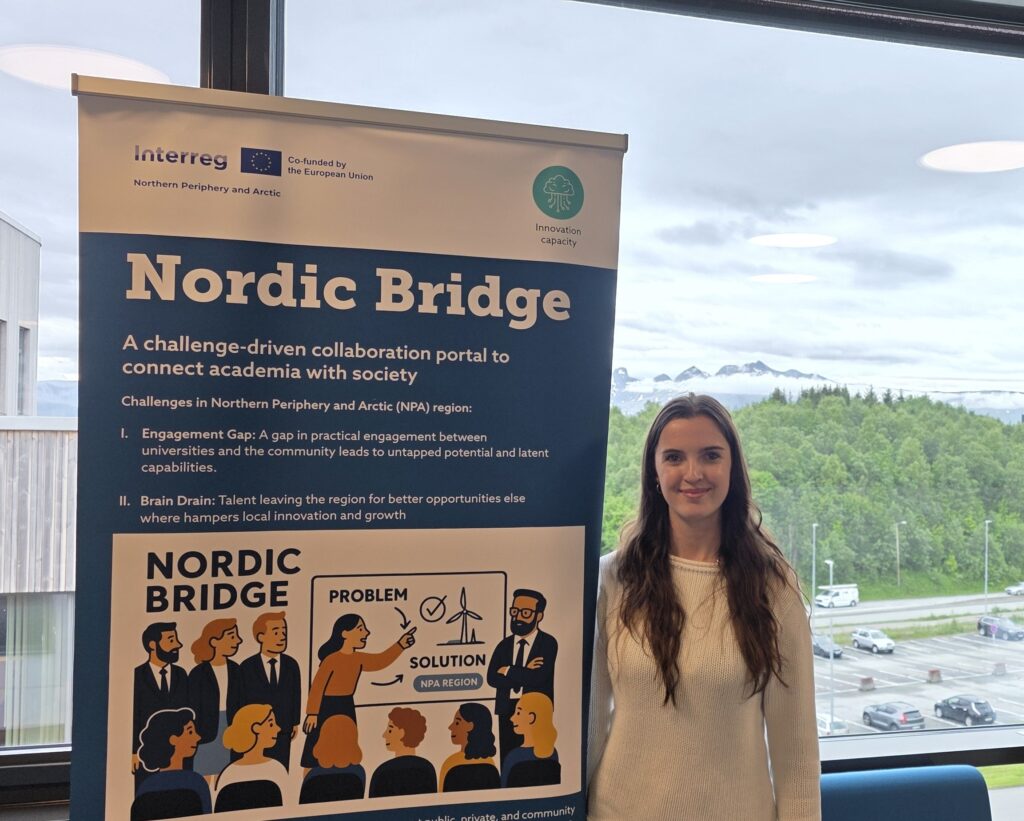
Hi everyone! My name is Elisa, and I have been volunteering as an IVY Project Partner in Bodø, Norway, within the Nordic Bridge Project, part of the Interreg Northern Periphery and Arctic (NPA) Programme, hosted by Nord University. It has been two months since I arrived, and it has already been an inspiring learning experience! What is Nordic Bridge project about? Nordic Bridge is a challenge-driven digital portal connecting academia, students, and local stakeholders across the Northern Periphery and Arctic region. In practice, this looks like the following: challenges are posted on the platform by public, private and community organisations, to which students and researchers can respond. This can lead to thesis, joint research projects and internships that are grounded in the actual needs of a region. This way, it gives municipalities and businesses access to fresh perspectives and research capacity that they might not otherwise have, while providing students and researchers with access to real-world challenges to work on, something that can otherwise be difficult to find independently. As an Interreg Volunteer Youth, my role is centred on stakeholder engagement and communication. I take part in project meetings, co-creation workshops, and discussions related to the development of the Nordic Bridge digital portal. I help review and reflect on the feedback gathered from these sessions, which I find particularly interesting to be part of. Alongside this, I engage directly with youth organisations, and other non-academic stakeholders to help build community engagement around the Nordic Bridge concept, making sure young people become active partners in shaping the platform rather than passive users. What cooperation looks like Through this mission, I have also seen, very concretely, how much groundwork goes into building genuine cross-border cooperation, from partner coordination and stakeholder mapping to the more human side of building trust between people who do not yet know each other. What I find most valuable about Nordic Bridge is that it does exactly this: it connects students, researchers, and organisations from Norway, Finland, Iceland, and Ireland, giving them a shared space to work together on challenges that matter, even though they may never have crossed paths otherwise. And honestly, it is exactly the kind of platform I wish I had access to as a student, especially when finding a thesis topic was never straightforward! A learning experience Beyond the daily tasks, I have also had the joy of discovering a new place to live, and the Arctic light and landscapes that come with it – along with the people who have welcomed me here. This is only the beginning, and I cannot wait to see where the coming months and this project will take me. I encourage you to seize any opportunity to take part in an IVY experience: it is one of the most direct ways to understand what European cooperation is really about and also become part of it yourself. – Elisa, IVY Project Partner at Nord University, for the Interreg project NORDIC BRIDGE, under the programme Interreg Northern Periphery and Arctic
My IVY Experience with SWAMED
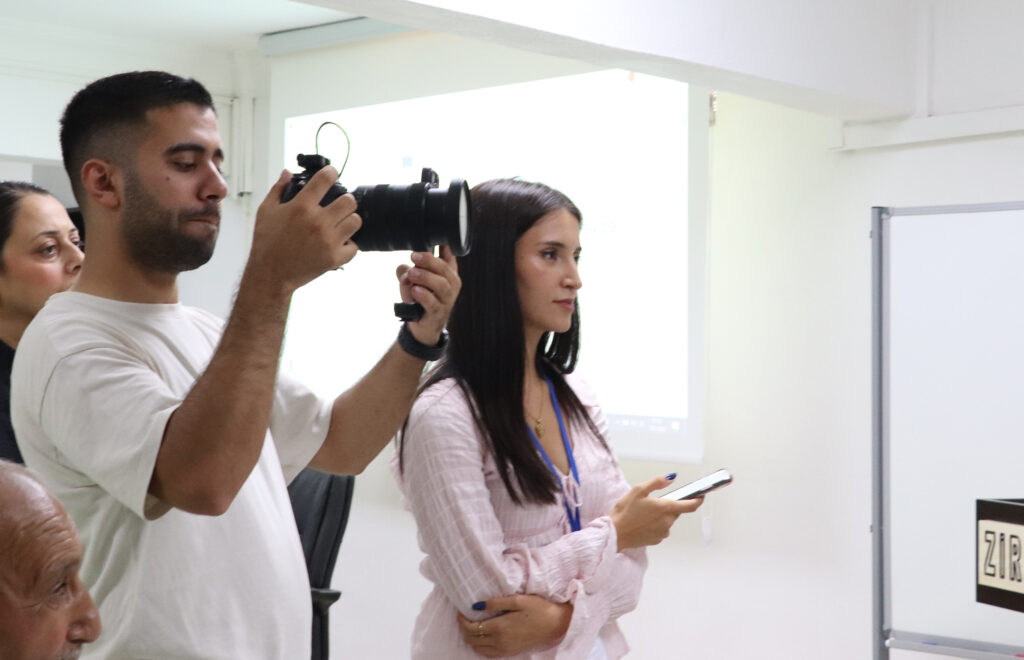
Being part of the SWAMED project as an IVY volunteer has given me the opportunity to experience European cooperation in a very practical way. At Alanya Alaaddin Keykubat University, I have been able to see how an international project works behind the scenes and how different institutions and people cooperate around common challenges. What’s SWAMED? SWAMED focuses on smart agriculture, irrigation management and sustainable water use, which are especially important topics for Mediterranean regions. What I find most interesting is that the project does not only focus on technical solutions, but also on how these solutions can be shared with farmers, local institutions and other stakeholders. My activities As an IVY volunteer, I support different activities related to communication, visibility, training materials, events and project documentation. I also have the chance to observe how the project connects researchers, local stakeholders and project partners. This has helped me understand that communication is a very important part of a project, especially when the goal is to make its results useful outside the project team as well. Values One of the things I value most about this experience is being able to work in an international environment and meet people with different backgrounds and perspectives. It has also changed the way I see programmes such as Interreg and European Territorial Cooperation. Before, these concepts felt quite formal to me, but now I can see more clearly how they translate into real cooperation and real activities. My experience at IVY For me, IVY has been a good opportunity to learn, contribute and gain a better understanding of how European projects work in practice. I am happy to be part of SWAMED and to contribute to a project that focuses on challenges that are very relevant for Mediterranean regions. – Melda, IVY Project Partner at Alanya Alaaddin Keykubat University, for the Interreg project SWAMED, under the programme Interreg NEXT Med.
Borders as Connecting Lines: My IVY Experience at Interreg Italy-Croatia
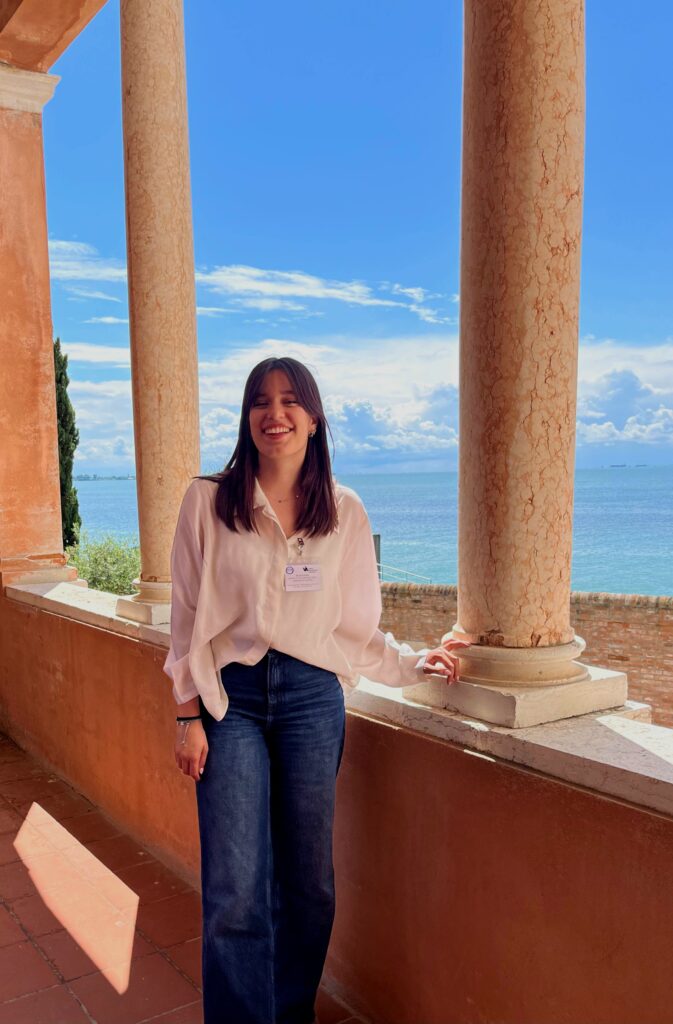
When we learn about borders in Italian school, we are usually taught something along the lines of: “Italy is separated from France by the Alps”, or “Croatia and Italy are separated by the Adriatic Sea”. Borders are described as barriers, stressing the separation of territories. As natural dividers drawn across maps in thick ink. But volunteering at the Interreg Italy-Croatia Programme Managing Authority contributed to changing that perspective. The Role of the Programme Interreg Programmes exists to turn geographical proximity into structured cooperation, pursuing a simple but ambitious goal: tackle shared challenges and promote sustainable development. In short, it helps territories work together not despite the border, but because of it. From the Italian coast, Croatia is not some distant “other side”. The similarities are visible in the mirrored landscapes, in the shared maritime culture, and even in the challenges both sides face: environmental protection, sustainable tourism, blue economy innovation and climate change adaptation. For this reason, the Adriatic should feel more like a bridge, rather than a wall. My Contribution as IVY Reporter: Communication & Events My journey with Interreg started almost by chance. Passing by the Programme headquarters in Venice on my way to university, I noticed the banner outside, looked it up, and soon discovered the world of cross-border cooperation. After completing an internship at the Managing Authority, I continued my experience through the Interreg Volunteer Youth initiative as an IVY Reporter. As a volunteer, I mainly support communication activities and event organisation. One of my first experiences was co-organising the Mediterranean Multi-Programme Meeting in Venice, which brought together 10 Interreg Programmes from across the Mediterranean. Seeing representatives exchange ideas and build synergies made cooperation feel real. Soon after, I participated in Job&Orienta in Verona, where, together with former volunteers, we presented the IVY experience to students. Many had never heard of Interreg before, yet the idea of working across countries on common challenges immediately sparked interest. Moments like this show how important it is to connect young people with European opportunities early on. Over time, I became more involved with Programme projects, supporting seminars for project representatives, organising project study visits for the Monitoring Committee – the Programme’s main decision body – and taking part in initiatives focused on innovation and artificial intelligence. This experience culminated in the conference “Artificial Intelligence, Blue Economy & Interreg Synergies”, held in Bologna in February 2026, which gathered over 200 participants from institutions, research centres and European stakeholders. Finally, I’ve also developed practical skills, like graphic design. I even produced a booklet showcasing Small-Scale Projects, which has already been shared with beneficiaries and is available on the Programme’s website. Through the continuous exchange with the team, I’ve come to understand that communication goes far beyond what we think. It’s not just about promoting projects and Programme initiatives, but about making cooperation understandable and meaningful. The way we communicate ultimately shapes how policies and joint efforts are perceived and valued, helping build a broader understanding of why cross-border cooperation truly matters. Who benefits? The beneficiaries are multiple. Local communities benefit from environmental protection measures and innovation in maritime sectors, SMEs gain access to networks and funding opportunities, public institutions improve their capacity to work across borders, researchers collaborate on shared challenges and young people discover European opportunities they did not know existed. And yes, volunteers like me benefit too. Through Interact courses on social media and storytelling, through hands-on event organisation, through exposure to EU governance in practice, my education in International Relations has moved way beyond theory. A Different Way to See Borders Before this experience, to me a border was a line on a map. Now it feels like a space of interaction. Turns out that sometimes the most ordinary discovery, like noticing a banner on your way to class, can quietly change the way you see an entire region and guide you toward a path you never expected to follow. – Elisa, IVY Reporter for MA Interreg Italy-Croatia.