My IVY Experience with PITER+ GRAIES ClimaLab – A Shared Strategy for Climate Action in the Alps

Since I started my volunteering journey as an IVY (Interreg Volunteer Youth) with the Città Metropolitana di Torino, I’ve had the chance to take part in the PITER+ GRAIES ClimaLab project. This initiative brings together Italian and French mountain communities to tackle a wide range of challenges, all connected to climate change – from water scarcity and forest degradation to biodiversity loss and stagnant local economies, often accompanied by a lack of awareness about these issues. The project’s main goal is to build a shared cross-border strategy for climate adaptation and territorial resilience in the alpine region. What makes GRAIES ClimaLab particularly innovative is its Living Lab approach: a collaborative method where local communities, institutions, researchers, and stakeholders come together to co-design and test solutions in real-life conditions. It’s a space for experimentation, learning, and mutual empowerment – where adaptation strategies are not imposed top-down but emerge through participatory processes. As a volunteer, I’ve been actively involved in communication and outreach, supporting the organisation of the launch event from multiple angles and helping amplify the voices of scientists, political leaders, and community representatives. One of the most inspiring moments so far has been witnessing the kick-off event, where both Italian and French partners gathered to present the strategy and reflect on shared responsibilities. It was clear that cross-border cooperation is not just a technical matter, but something rooted in trust, long-standing relationships, and shared vision. Coming from a more technical academic background, this experience is enriching my understanding of European governance and cohesion policies. I’m discovering how strategies and funding frameworks actually translate into actions that support local communities and make the green transition more inclusive and effective. It’s a new perspective for me, and I truly appreciate the opportunity to contribute to this process. – Laura, IVY Project Partner at Metropolitan city of Turin – Città Metropolitana di Torino, for the Interreg project PITER+ GRAIES ClimaLab – PCC, under the programme Interreg France Italy-Alcotra Learn more about Metropolitan city of Turin Click Here Learn more about Interreg project PITER+ GRAIES ClimaLab- PCC Click Here
Greening Streets and Building Bonds: My IVY Journey in Vienna–Bratislava

Hey everyone! I’m Vilém, coming from Czechia, fresh out of university and diving straight into an awesome new adventure with the Interreg project. This time, I’m exploring things from behind the scenes! The project, called Biodivercity (Städte.Gärten.Vielfalt. / Mestá.Záhrady.Rozmanitosť.), is super aligned with my studies in spatial planning, so naturally, I jumped right in! Right now, I’m volunteering at the environmental NGO Global2000 in Vienna, and our partner city is Bratislava. The city where I enjoy spending time and which holds so much hidden potential. I though each city has its own vibe and specific projects, our big mission is shared: bringing more nature and biodiversity into urban spaces. Here in Vienna’s 20th district, we’re working on greening Jägerstrasse, and it’s pretty coo. Locals can adopt small garden spaces right on their street. Over in Bratislava, people are reviving the historic Koch Garden, turning what was a forgotten spot into a buzzing, vibrant community space. My first month here was packed full of action! We kicked things off with a super inspiring workshop in Vienna, teaming up with partners from Bratislava. We shared tons of ideas about increasing biodiversity and creating green spaces, explored community projects like shared libraries of things, community gardens, and wrapped up the day with an awesome street-based botanical workshop. The next week was even more hands-on. I got to work directly with local residents excited to transform Jägerstrasse. We started early, bringing in special soil, planting seedlings, and building wooden enclosures. Locals arrived eager to pitch in, kids got busy creating their own cool plant tags, and by the evening, what had been a dull street was bursting with life and color. It felt amazing seeing the transformation happen right before our eyes! We regularly connect online to keep each other updated on our progress, and in early June, we even organized bilingual guided tours in Vienna and Bratislava with support from the European Open Parks and Garden Weekend iniciative. And I even attended a meeting with the French Ministry of Culture – it was quite an experience! This is a big part of our cross-border efforts, making EU policies like cohesion and Interreg accessible and understandable through real, engaging experiences. On top of all that, we had a blast at Vienna’s first-ever Klimafest in the Favoriten district. Our Interreg booth taught kids and teachers that biodiversity isn’t just important in massive places like national parks—it matters just as much on your local street or school playground! These highlights are just a peek at what I’ve experienced so far as an Interreg Volunteer Youth. I’m really hopeful that the European Commission keeps supporting this amazing initiative. Young volunteers can genuinely make a difference in building stronger communities and promoting unity in today’s unpredictable world. If you’re curious, check out Interreg initiatives in your area. You might discover your role can have a bigger impact than you ever imagined! – Vilem, IVY Project Partner at Global 2000 Umweltschutz organisation, for the Interreg project Städte.Gärten.Vielfalt, under the programme Interreg Slovakia – Austria Learn more about Global 2000 Umweltschutz organisation Click Here Learn more about Interreg project Städte.Gärten.Vielfalt Click Here
Sustainability Without Borders: My IVY Story at UniGR-CIRKLA

Did you know that in 2022 the average e-waste per person in the EU was around 11,2 kilos? In the same year, the total amount of electronic waste from all EU states together made up 5 million tons. One way of tackling this problem is shifting the focus away from a linear and towards a circular economy, which is the goal of the Interreg Project UniGR-CIRKLA. Hello everybody, my name is Rebecca and I would like to tell you a little bit more about this project, where I’m volunteering at the moment as an IVY-project partner. The project UniGR-CIRKLA is an Interreg project with the topic of circular economy with a special focus on materials and metals. It’s part of the University of the Greater Region, which is an alliance of seven universities located in so-called Greater Region. This area combines seven territories from the countries France, Germany, Belgium and Luxembourg. The University of the Greater Region and its associated partner universities are together with the research center CRITT TJFU the project partners. The primary goal of the project is to implement a center of expertise for a circular economy inside the region, in cooperation with the academic and additional industrial partners. To reach this goal, the project aims to generate more knowledge regarding this topic in the general population, the scientific community as well as in the industry. Specific actions are then, for example, the curation of a travelling exhibition, a doctoral summer school or the creation of a shared database. As a team member at UniGR-CIRKLA I have the opportunity to work alongside the project and contribute with my experiences. I currently support the project in terms of communication. That means I am writing social media posts, I am attending events and help documenting them, I am creating materials, for example designing posters or cutting videos, and I am tasked with translating and correcting texts. A highlight of my volunteering experience so far was the participation at the event: Circular Economy Research Forum, which took place in Liège, Belgium, in May 2025. We did live reporting; we were taking pictures and even had the time to do some interviews. This event really gave me an insight in the communication side of conferences and I could gain a lot of practical experiences. In my Bachelor’s degree I already had the possibility of working as well as living in an international context. That’s why I am really happy to be able to volunteer for a cross-border organization and have this international outlook again. Being connected and working together, across state and regional borders, is a unique opportunity and should be the goal for Europe. I can only invite everybody of taking up this chance of volunteering for a Interreg project and learning more about the region, the people, the possibilities and chances and in general learn more about Europe, as I have. Thank you IVY for this once in a lifetime opportunity. – Rebecca, IVY Project Partner at University of the Greater Region – UniGR, for the Interreg project UniGR-CIRKLA, under the programme Interreg Grande Región/Grossregion. Learn more about University of the Greater Region – UniGR Click Here Learn more about Interreg project UniGR-CIRKLA Click Here
When tourism heals: Voluntourism role in the preservation of nature in Lithuania minor.

Hi, my name is Pau and I’m an IVY volunteer in the project SB Manta through the organization EUCC-Deutschland which focuses in the promotion of sustainable development in the coasts of Germany. The main goal of the project is to help to develop sustainable tourism among the south Baltic while improving the conditions of the natural protected areas of the region, that is why there are organizations involved from the following countries: Denmark, Germany, Lithuania, Poland and Sweden. Ranging from National and Regional Nature Parks to Universities and NGO’s The main tool the project wants to use to develop sustainable tourism is “Voluntourism”. This type of tourism focuses on creating a more stainable way of travelling where the tourist can do voluntary work in the places they travel as a way to improve local infrastructure, ecosystems, etc. Voluntourism finds its origins in the early 20th century (sorry but I’m a historian and I cannot resist, it will be short though, I promise) and consisted in projects, usually conducted by young people who wanted to see the world by helping others. Especially after the 2nd world war this took way more importance and it became a way of establishing international solidarity bonds among different parts of the world. Nonetheless this model was mainly applied towards countries of the global south; it has been just recently when this model also had become popular in countries of the global north in form of environmental volunteering. While tourism is one of the main sources of income for many regions, especially in the rural coastal areas, well known are the negative effects of mass tourism in both social and environmental issues. Among their consequences we can find overuse of limited infrastructure which eventually may lead to deterioration of public services, overcrowded spots, erosion of natural areas or degradation of the cultural and natural heritage places. This is why the current SB Manta project, following this new wave of voluntourism in northern Europe, aims to develop new missions of voluntary works to both improve the management of protected areas as well as to reduce the negative impact of tourism in those regions while still keeping the good parts of it. The activities conducted past week in Lithuania are a model of what the SB Manta project aims to develop. The participants of the pilot activity were 30 young people coming through German, Lithuanian and Polish delegations. People from 9 different countries, from South Africa to Bangladesh, were brought together to work in the protected areas of Lithuania Minor. Each day of the trip was dedicated to a specific regional park of the area; being those, Rambino Regional Park, Neumunos Delta Regional Park and Pajurio Regional Park. All of them containing very important ecosystems inside the program Natura 2000. Each one, very diverse from each other, held different activities of volunteering that helped to some extent the maintenance of this regional park ecosystems and infrastructure. The first day the main task conducted was the removal of biomass from meadows which later was accompanied by a tour around the regional park which, in pagan times was considered to be one of the sacred places of the Lithuanian peoples before Christianisation. On the afternoon leisure time was given and many took the opportunity to paddle around the river with the kayaks and was followed by a night of Lithuanian folklore dances and music. The second day which was the hardest working one, consisted in the reparation and maintenance of educational trails which lasted the whole day and required some intense yet satisfying effort, which later was compensated with great food and even better music. The third and last day the main job was centred in the removal of pine trees from grey dunes in order to improve the quality of the ecosystem and a delicious dinner of Lithuanian traditional cuisine. I would also like to emphasize the importance of the cultural exchange of the experience which was very viewed as one of the most important topics among all the people who assisted the event. All this work which for a group or 30 volunteers only took three days and no more than 10 hours in total can add up for weeks or even months of labour for rangers. As the coordinator of the Regional Parks said “it’s all about mathematics, 30 people working for an hour adds up for a week’s work for a single person”. This is why this experience can become very valuable for regional and national parks if applied correctly. This is just so far a pilot activity and the main goal was to discover the strengths and weaknesses of the experience as a whole which has been very useful since it will help to develop more meaningful voluntourism offers, both to the national parks and the volunteers itself. For the future there are some other proposed activities in pilot programs which will include more diverse type of voluntary work that can be very useful for local administrations. So far has been talked about projects of citizen science such as monitoring of sand dunes or bird species as well as other more hands on work like removing invasive species or the reparation of houses, barns or farms that constitute an important piece of cultural heritage for the region. The cooperation aspect of the project among the regions is especially important. Even though each area might have different needs and objectives for the conservation of their areas there is a common goal of creating more sustainable and resilient tourism that instead of having negative consequences to the environment can have a neutral or even positive effect in nature and local communities. It’s also worth noticing that since voluntourism is still a very little market it is necessary to create cross-border cooperation offers that can reach multiple countries in order to assure its sustainability. All in all, I’m really happy to form part of this initiative since I truly believe that it can make a difference and help to
Innovation, governance and sustainability: my IVY journey with Dialogue4Innovation

Hello everyone!I’m Martina, and I have the pleasure of being an IVY volunteer within the Dialogue4Innovation project, co-funded by the Interreg Euro-MED Programme. This experience is allowing me to gain firsthand insight into how the European Union promotes cooperation in the Mediterranean to address the major challenges of the ecological transition and sustainable development. Dialogue4Innovation aims to strengthen governance in the Mediterranean region and promote a more innovative and sustainable economy, by engaging a wide network of actors from the public sector, academia, business, and civil society. One of the project’s key pillars is capacity building, meaning the reinforcement of skills and competencies of policymakers and stakeholders to address the Sustainable Development Goals (SDGs) more effectively. One of the most interesting tools of the project is the Transformative Innovation Policy Labs (TIPL)—spaces for dialogue and co-design, where territorial actors worktogether to develop more integrated and systemic solutions to environmental andsocial challenges. In these labs, new and practical approaches are tested, with the goal of generating lasting impact on the territory and fostering a stable institutional and social dialogue among Mediterranean countries. I support the organization throughout the project processes by participating in meetings and events, and by contributing to the practical implementation of results. It is a valuable opportunity to enhance my skills, but also to understand how European cooperation can concretely foster change. Another key objective of the project is to increase the visibility of Mediterraneanchallenges and best practices at the European and international levels.Together with the Mission Thematic Community, Dialogue4Innovation buildsalliances among diverse actors to promote more open and inclusive governance. Taking part in this project has made me realize how important it is to build bridges between territories, ideas, and people. Transnational cooperation is truly a powerful tool to make Europe more cohesive, green, and resilient. – Martina, IVY Project Partner at Adriatic Ionian Euroregion, for the Interreg project Dialogue4Innovation, under the programme Interreg Euro-Med. Learn more abut Adriatic Ionian Euroregion Click Here Learn more about Interreg project Dialogue4Innovation Click Here
Connecting Cultures and Brands: My IVY Journey in the Polish–Czech Borderland
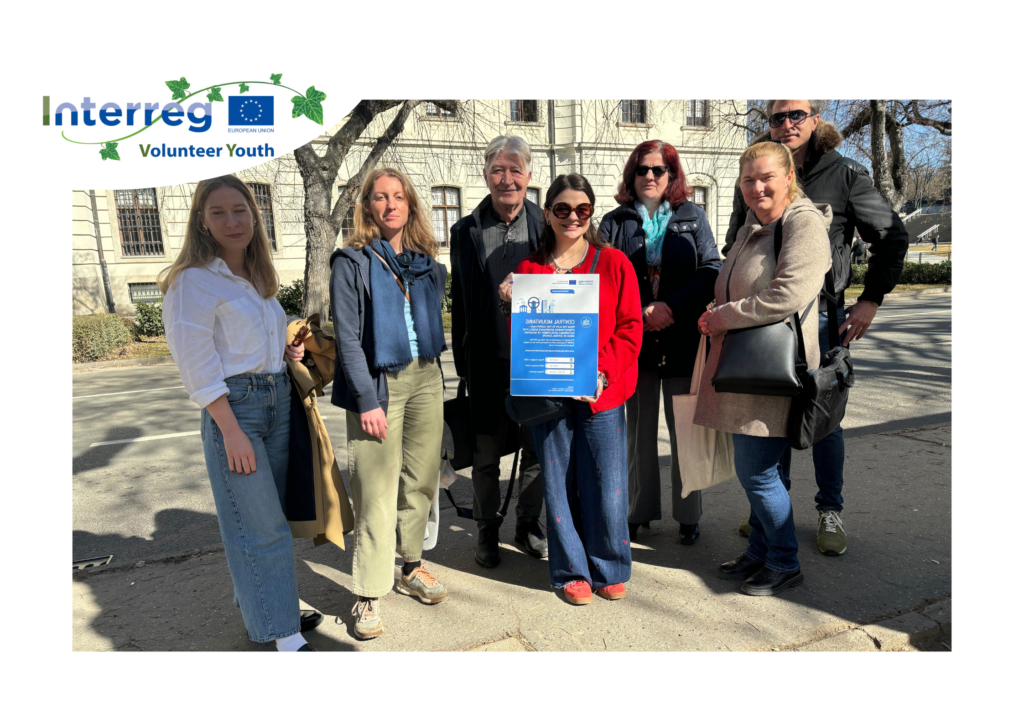
Hi everyone! My name is Marta and since January I have been IVY volunteer at Fundacja Ochrony Krajobrazu (FOK) in Poland. I am working on the programme Central Mountains: From the Alps to the Carpathians – strengthening governance models for sustainable development of mountain areas in Central Europe which is implemented in the framework of Interreg Central Europe. I am working on the transborder pilot project called House of Brands (HoB) which is led by my host institution (FOK) and Association of Regional Brand (ARZ) from the Czech Republic. HoB brings together Polish and Czech regional brands. The task of the project is to create a platform for the exchange of experience for existing Local Brands in the Polish-Czech borderlands. The aim of the HoB is to strengthen the market position of the brands, activities for the promotion of the mentioned institutions and the possibility of establishing relations between Polish and Czech stakeholders. Among other things, a calendar of events has been created as part of the project, webinars are held for Polish HoB members on marketing and branding, and individual consultations are offered in the aforementioned area. My task is to conduct meetings for members of the House of Brands, in which we address the topics of branding of local brands, promotion in social media or involvement of young audiences in the history of the regions. It is an amazing experience for me to be able to combine the topics of localism, tradition and heritage together with new media and technologies. As a student of journalism and social communication, I like the opportunity to put my knowledge into practice in such an important area. The development of border areas, along with the activities of local and regional brands, is an important area for the economy and culture. Using the experience of Czech partners, we can pass on the best opportunities for development to Polish stakeholders. They are constantly faced with new challenges and tasks, the implementation of which contributes to the development of the area of the Polish-Czech border. Getting to know the institutions, working for the benefit of the region is extremely inspiring. I am glad that thanks to the IVY programme I could join such an important project! – Marta, IVY Project Partner at Foundation for Landscape Protection, for the Interreg project Central Mountains, under the programme Interreg Central Europe. Learn more about Foundation of Landscape Protection Click Here Learn more about Interreg project Central Mountains Click Here